





 Portuguese
  English
  Spanish
  4 min of reading
  12 comments


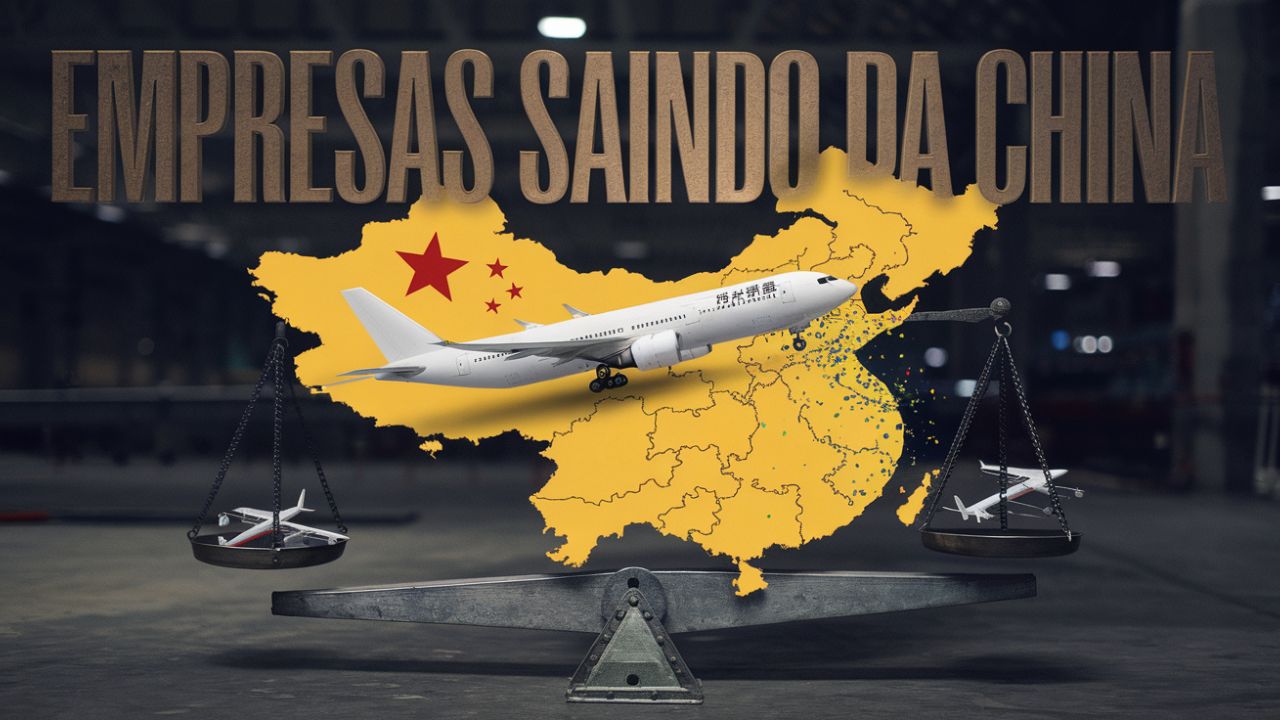


Multinationals Such as LVMH, Volkswagen, and L’Oréal Face Declining Sales, Intense Competition, and Economic Challenges in China While Assessing Strategies to Survive the Slowdown of the World’s Second-Largest Economy.
China, once seen as the world’s economic engine, is now facing headwinds that challenge its status as a key market for global companies. After decades of explosive growth and unprecedented transformation, the second-largest economy on the planet is now experiencing a moment of stagnation. Are we witnessing the end of the modern “Silk Road”?
In recent years, several Western multinationals have begun to reassess their presence in the Asian giant. Factors such as the economic crisis, geopolitical tensions, and intense competition are causing companies to rethink their strategies. But what exactly is happening and which sectors are being most affected?
The Impact of China’s Economy on the World
Between 2001 and 2020, China impressed the world by growing from a GDP of US$ 1.2 trillion to over US$ 15 trillion. As a result, it established itself as the second-largest global economy and threatened the leadership of the United States. However, the post-pandemic period has revealed structural weaknesses that undermine the country’s growth.
-
Brazilian city bets on the business environment to generate jobs and attract investments in the energy sector — secretary reveals strategy at Macaé Energy 2026.

-
50 viaducts, 4 tunnels, 28 bridges, and 40 kilometers of bike paths: BR-262 in Espírito Santo will receive 8.6 billion reais for the largest engineering project in the state’s history, inspired by the Immigrant Highway in São Paulo.

-
Brazil produces too much clean energy and doesn’t know what to do with it: over 20% of solar and wind capacity was wasted in 2025 while investors flee and 509 renewable generation projects were abandoned in the last year.

-
Piauí will produce a new fuel that replaces diesel without needing to change anything in the truck’s engine and reduces pollutant gas emissions by half: truck drivers from all over the Northeast are already celebrating the news that will arrive later this decade.


Crises in the real estate market, rising corporate debt, and low domestic demand are some of the obstacles China needs to overcome. Consumer confidence is shaken, which directly impacts the global market since the country is one of the largest consumers of luxury goods, food, and technology.
The economic slowdown in China does not only affect the domestic market, but it also shakes the economies that depend on it as a main trading partner. The real estate market crisis, for example, is not just an internal issue but a ticking time bomb that could affect banks and global investors.
The Strategic Exit of Western Companies
The luxury sector, which has always counted on China as one of its most lucrative markets, is suffering. Brands like LVMH, Kering, and Hermès have reported declining sales due to changes in the behavior of Chinese consumers. After years of high consumption, particularly among the wealthiest, the local audience is now more cautious.
Actions such as expanding online sales and opening new stores have been attempts by brands to minimize losses, but consumer confidence is still far from being recovered.
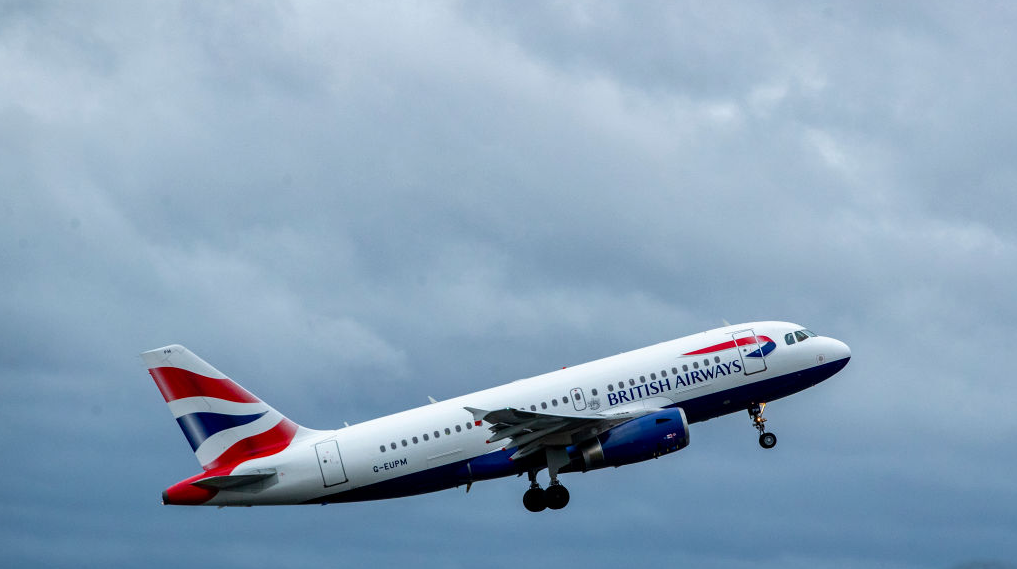
The airlines have also not escaped the crisis. Companies like Finnair, British Airways, and Lufthansa have drastically reduced their routes to China. Rising costs due to the closure of Russian airspace, combined with low demand, have made these operations less viable.
Even giants like L’Oréal are not immune. The decline in demand for beauty and skincare products is forcing companies to adapt their strategies, such as reducing prices and reconfiguring their sales channels.
The Trade War and Automakers
The rise of Chinese brands like BYD has put Western giants like Volkswagen and Tesla in a difficult position. Strong local competition is redefining the automotive market, especially in the electric vehicle segment.
In response to increased tariffs imposed by the U.S. and Europe, the Chinese government has adopted retaliatory measures, further escalating the climate of tension. These disputes directly impact sectors such as food and beverages, as well as increasing product costs for global consumers.
Strategies to Deal with the Crisis
Companies like Danone and Nestlé are investing in more specialized products to remain competitive. Price cuts and the expansion of digital channels have been common strategies to attract consumers.
While some companies abandon the market, others, like Apple, continue to invest heavily, offering aggressive discounts and strengthening local partnerships.
The Relationship Between Technological Innovation and Local Competition
Technology companies, such as Apple, face the challenge of competing with local brands that offer equally advanced products but at more accessible prices. This intense competition is forcing Western giants to diversify their operations and invest in other markets, like India.
China is still an economic powerhouse, but the days of rampant growth seem to be behind. For Western companies, reducing their presence in the country is as much a matter of survival as it is of adapting to a constantly changing global landscape.
Does the end of the modern “Silk Road” signify the beginning of a new era for the global economy? What is clear is that the world is learning to navigate without depending so much on the Asian giant.








De Kem e k VCS acham k e a culpa, Kem ker a todo o custo ser o dono do mundo
Empresários ocidentais foram pra China atrás de mão de obra baratissima e quase escrava, o resultado foi o crescimento explosivo da economia chinesa, só que eles foram espertos, investiram em educação e tecnologia, copiaram tudo e agora estão competindo em inovação com os EUA, Japão e Europa. Apesar de ser comunista, a china não tem corrupção escandalosa como na América Latina, principalmente o Brasil. Eles pelo menos são patriotas e querem o crescimento do país dele. Diferente desse país onde os corruptos vendem tudo a preço de **** para os estrangeiros e os dementes ainda votam nos mesmos corruptos de sempre!!!
A China deu o que era para dar, a Índia dominará logo todo esse desenvolvimento que a China estava tendo, um país comunista tem limitação de crescimento, a bolha está estourando, meia dúzia de bilionários, o comando do alto comunismo e o resto, escravo do governo.
Trata-se de uma contradição interna do regime chinês. **** é incompatível com pleno desenvolvimento. U a dialética falará mais alto. Um povo com autonomia econômica quer autonomia política. Não creio queca História da China será diferente da União Soviética.
A oligarquia “socialista” é bem pior que a burguesia, pois é mais adepta do bem estar na Civilização, logo, egoísta e, logo, governam com uma viseira, distante das forças produtivas emergente. Socialismo E barbárie.
Este papo de socialismo é só pra esquerda jurássica do quinto mundo, que não lê Marx e acha que estão imunes das contingências do real.
Não que o socialismo seja impossível. O é com este modelo fracassado e real modelo adotados por neludistas e negadores da História.