





 Portuguese
  English
  Spanish
  3 min of reading
  1 comment


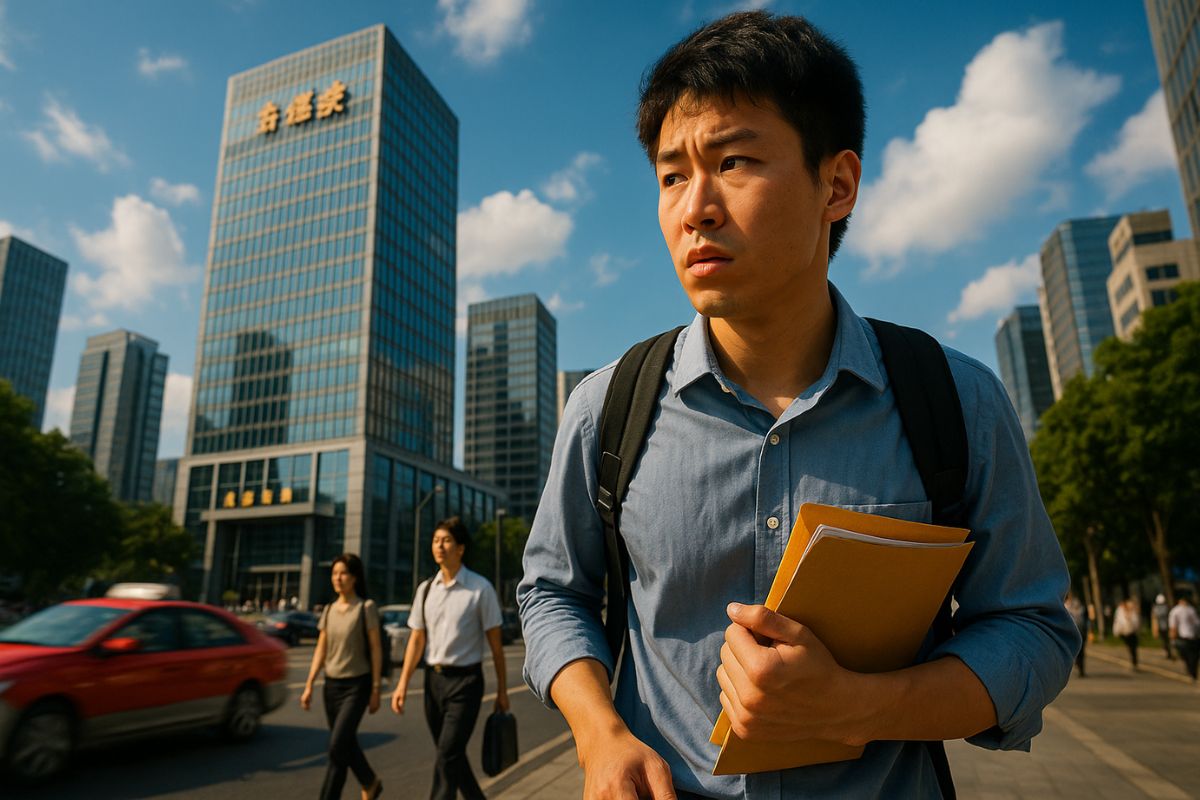


Young Unemployed Pay to Attend Fake Offices and ‘Pretend to Work’ Amid Crisis in China. With Youth Unemployment Rate Above 14%, Paid Spaces Simulate Corporate Routine and Help Maintain Self-Esteem in Difficult Economic Scenario
Amid the crisis in China, a curious phenomenon has been attracting attention: young unemployed people are paying to attend fake offices, where they simulate being at work. According to BBC News, the youth unemployment rate exceeds 14%, worsened by the annual influx of over 12 million graduates into the job market, in a scenario of few openings and slowing economy.
These environments faithfully reproduce a real office, with computers, internet, meeting rooms, snacks, and common areas. They cost between 30 and 50 yuan per day (around R$ 22 to R$ 37) and offer not only structure, but also a sense of belonging and daily discipline. For many, it is a way to preserve their self-esteem and avoid social isolation.
How Fake Offices Work
The service “Pretend To Work”, created by entrepreneur Feiyu after facing unemployment and depression, is one of the most well-known examples. He claims to sell “the dignity of not being a useless person” and sees the initiative as a social experiment.
-
Brazilian city bets on the business environment to generate jobs and attract investments in the energy sector — secretary reveals strategy at Macaé Energy 2026.

-
50 viaducts, 4 tunnels, 28 bridges, and 40 kilometers of bike paths: BR-262 in Espírito Santo will receive 8.6 billion reais for the largest engineering project in the state’s history, inspired by the Immigrant Highway in São Paulo.

-
Brazil produces too much clean energy and doesn’t know what to do with it: over 20% of solar and wind capacity was wasted in 2025 while investors flee and 509 renewable generation projects were abandoned in the last year.

-
Piauí will produce a new fuel that replaces diesel without needing to change anything in the truck’s engine and reduces pollutant gas emissions by half: truck drivers from all over the Northeast are already celebrating the news that will arrive later this decade.


Young people like Shui Zhou, 30 years old, report that the routine in these spaces boosts productivity and fosters connections with other participants. Meanwhile, Xiaowen Tang, 23 years old, used the space to simulate an internship required by her university while writing novels to supplement her income—a creative way to meet academic demands and survive financially.
Motivations Behind the Trend
Experts like economist Christian Yao point out that the phenomenon reflects the mismatch between academic training and labor market demands. Although it is essentially a performance, many young people utilize the space to study, develop skills, and prepare for real opportunities.
Zhou’s case illustrates this productive use: he spends part of his time in the office studying artificial intelligence, trying to increase his employability chances in the future.
Social and Economic Impacts
The practice, despite being controversial, can serve as a bridge between unemployment and professional reintegration. For its supporters, it helps maintain healthy habits, reduce symptoms of depression, and create contact networks.
On the other hand, critics point out that paying to “pretend to work” highlights the severity of the crisis in China and the lack of effective public policies to create qualified jobs.
A Turning Point
For the creator of “Pretend To Work”, the goal is not to perpetuate the act but to offer a starting point. “It’s a space to regain self-esteem and, from there, achieve concrete things,” says Feiyu.
The trend, which is currently niche, could grow if the Chinese economic scenario does not show a quick recovery. In the meantime, young people continue investing small daily amounts in the hope that this simulated routine will provide the necessary push for a real turnaround.
Do you think these offices help or mask the unemployment problem? Would you pay to have a work routine even without a job? Leave your opinion in the comments—we want to hear from those who live or observe this reality.








Algo me causou curiosidade. Onde arranjar dinheiro pra pagar uma empresa sem renda, só mesmo na China, de ve existir algum fundo para quem está no desemprego, porque Brasil fica difícil.