





 Portuguese
  English
  Spanish
  4 min of reading
  5 comments


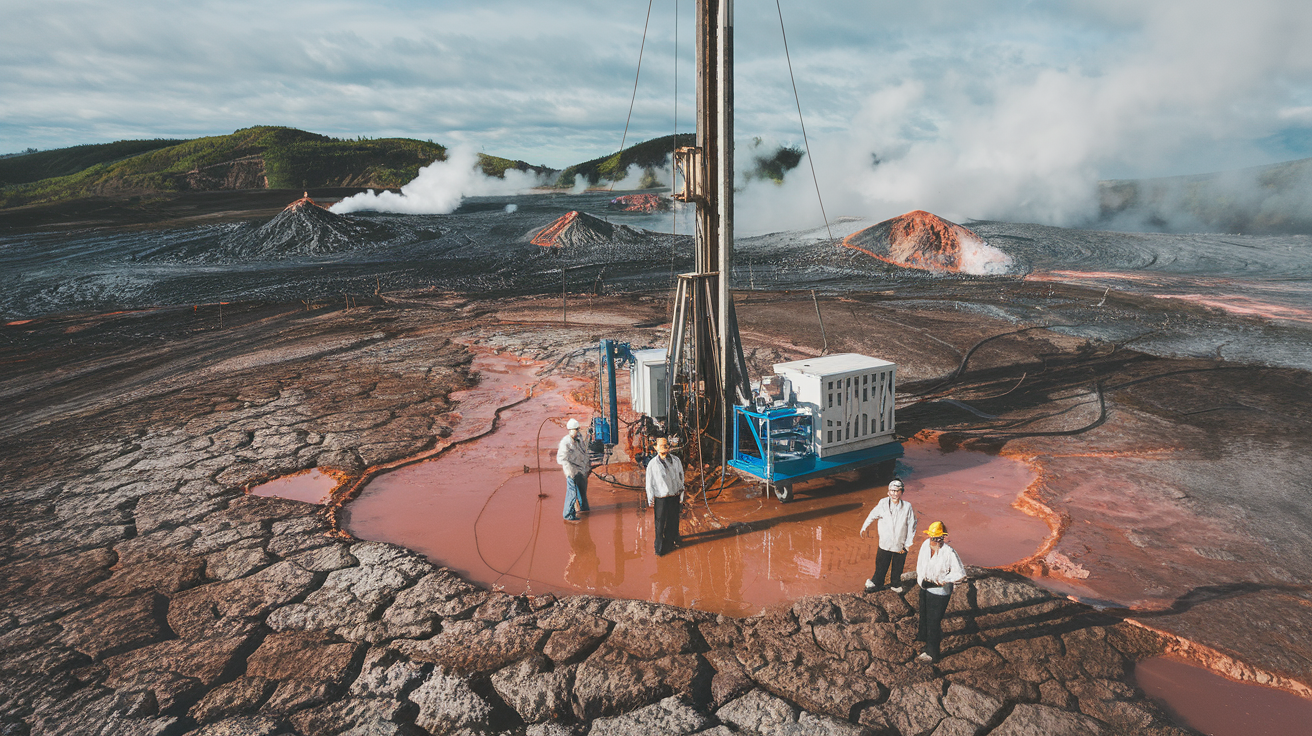


Reservoir With 81 Billion Cubic Meters of Water Discovered by Scientists and Could Change the Future of the Planet. Understand How the Water Reservoir Under the Volcanos of the Cascade Range Was Discovered
A surprising new discovery has revealed a giant water reservoir beneath the peaks of the volcanos in the Cascade Range. This reservoir of 81 billion cubic meters, equivalent to 2.86 trillion cubic feet, could meet the growing water demands of the western United States.
The discovery suggests that the porosity of volcanic rocks can store large amounts of water, acting as a natural reservoir. This new evidence reinforces the importance of geological formations in maintaining underground water resources. While this reservoir could provide relief for areas affected by droughts in the western U.S., experts warn that more studies are needed to assess its accessibility and environmental impact.
The existence of this reservoir also raises questions about the interaction between volcanic activity and underground water cycles, potentially providing new insights into the geological dynamics of the region. Scientists are now investigating how this reservoir persists over time and whether it could be sustainably tapped without compromising the local ecological balance.
-
Friends have been building a small “town” for 30 years to grow old together, with compact houses, a common area, nature surrounding it, and a collective life project designed for friendship, coexistence, and simplicity.

-
This small town in Germany created its own currency 24 years ago, today it circulates millions per year, is accepted in over 300 stores, and the German government allowed all of this to happen under one condition.

-
Curitiba is shrinking and is expected to lose 97,000 residents by 2050, while inland cities in Paraná such as Sarandi, Araucária, and Toledo are experiencing accelerated growth that is changing the entire state’s map.

-
Tourists were poisoned on Everest in a million-dollar fraud scheme involving helicopters that diverted over $19 million and shocked international authorities.


Cascade Range Formed by Millions of Years of Volcanic Activity
Researchers from the University of Oregon have discovered a water reservoir with 81 billion cubic meters, hidden beneath the rocks of the Cascade volcanos. This discovery, which promises to open new perspectives on water resource management in a region experiencing recurring droughts, was published in the Proceedings of the National Academy of Sciences.
The reservoir with 81 billion cubic meters of water has nearly three times the capacity of Lake Mead, the largest artificial reservoir located in the United States. This water, stored more than a kilometer deep, flows through cracks in the volcanic rocks. Scientists used drilling data from the 1980s to map this resource.
However, this water reservoir beneath the volcanos is not infinite. Its recharge depends mainly on snow, a resource that is greatly threatened by global warming. Future precipitation, in the form of rain instead of snow, could impact the sustainability of this aquifer.
The Cascade Range, formed by millions of years of volcanic activity, hosts various landscapes. Scientists studied how water interacts with these volcanic rocks, impacting both ecosystems and geological risks.
How Was the Discovery of the Water Reservoir in the Volcanos Made?
Water that seeps deep underground can have a significant impact on volcanic activity. When water comes into contact with magma, it turns into steam, increasing pressure and potentially triggering violent eruptions. This interaction between water and magma highlights the importance of studying the relationships between hydrological systems and volcanic processes.

Researchers used drillings from the 1980s and 1990s, initially aimed at geothermal energy research. By analyzing rock temperatures at varying depths, they identified areas where infiltrated water cools the rocks underground.
This method allowed scientists to map the extent of the reservoir with 81 billion cubic meters of water. Although the drillings did not cover the entire region, they provide a minimum estimate of the size of this water reservoir, showcasing the scale of this discovery.
Reservoir With 81 Billion Cubic Meters of Water May Be Threatened
Although this water reservoir is a blessing for the region, its use requires careful management. Scientists emphasize the need for more studies to assess its resilience to climate change.
The projected reduction in snowpack and the increase in droughts could jeopardize the recharge of the reservoir with 81 billion cubic meters of water. A series of dry winters would be enough to put this resource at risk, despite its enormous volume.
It is worth mentioning that Spanish authorities have declared a state of emergency due to drought, unprecedented water shortages reach Mexico City, and Zambia, severely dry, warns of a national disaster. All of these are symptoms of a world undergoing what experts call a water crisis.
At least 50% of the global population, 4 billion people, experience water scarcity for at least one month of the year. By 2025, it is likely that 1.8 billion people will face what the Food and Agriculture Organization of the United Nations (FAO) describes as absolute water scarcity. In this way, the scientists’ discovery is highly significant.
Source: Techno-Science.net










Precisa de fazer uma análise da concentração de contaminantes, antes de fazer-se a exploração comercial do aquífero.
Que achado maravilhoso!
Gente, antes de publicar uma matéria, sugiro que leiam, ou melhor ainda, peçam para outra pessoa ler. Isso evitaria esses vários erros bobos de português que, pelo menos para mim, diminuem a credibilidade de qualquer site sério.