





 Portuguese
  English
  Spanish
  5 min of reading
  0 comments


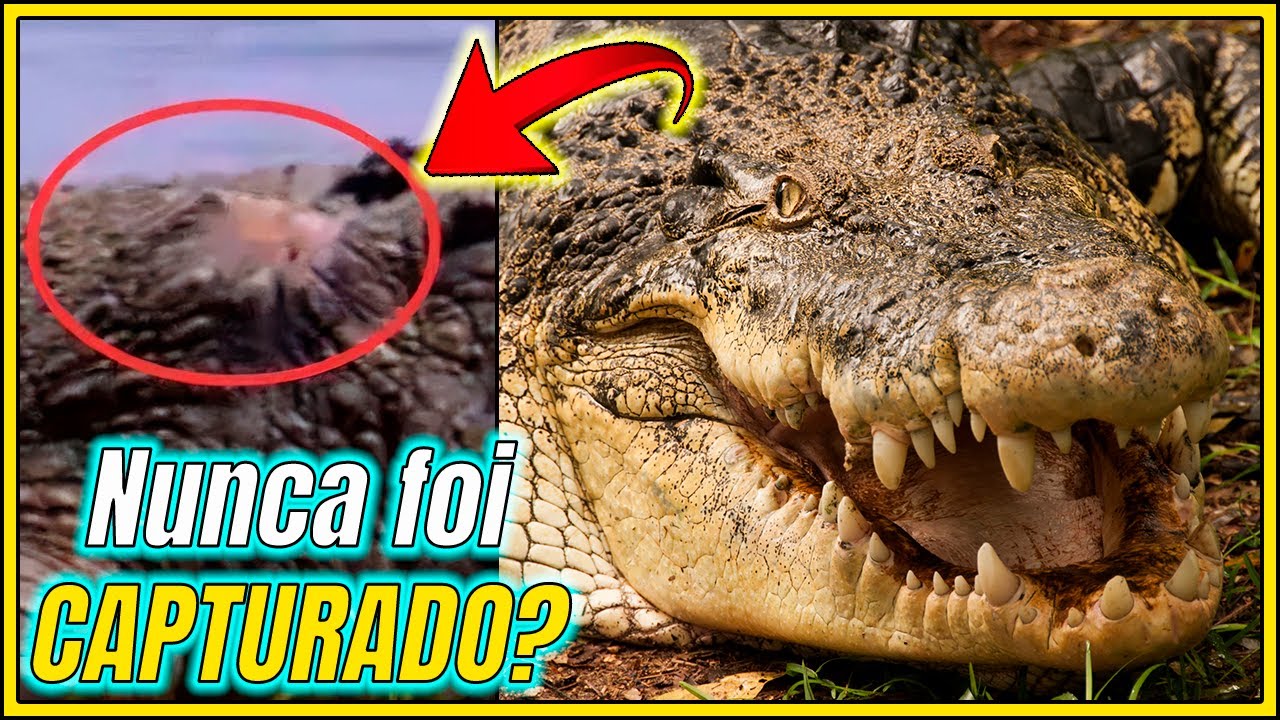
Known as Gustave, a giant Nile crocodile from Burundi can surpass 6 meters, weigh almost 1 ton, and challenge science for more than 30 years.
The Nile crocodile is, in itself, one of the largest living reptiles on the planet. A dominant species in African rivers and lakes, capable of killing prey much larger than itself and living for decades, it has produced some of the largest modern predators known to science. Nevertheless, no individual draws as much attention as Gustave, a real animal, documented but never captured, that has made Burundi the stage for one of the greatest contemporary zoological mysteries.
Unlike officially measured giants like Lolong in the Philippines, Gustave remains free. This means that his exact size has never been confirmed, but it also explains why he continues to fascinate researchers, biologists, and documentarians for more than three decades.
Where The Giant Nile Crocodile Known as Gustave Lives and Why He Became a Real Legend
Gustave inhabits the region of Lake Tanganyika, one of the largest and deepest freshwater lakes on the planet, as well as rivers and wetlands in Burundi. It is an ideal environment for a crocodile to reach extreme dimensions: deep waters, a high availability of fish, hippopotamuses, antelopes, and a low presence of natural predators.
-
Motorola launched the Signature with a gold seal from DxOMark, tying with the iPhone 17 Pro in camera performance, Snapdragon 8 Gen 5 that surpassed 3 million in benchmarks, and a zoom that impresses even at night.

-
Satellites reveal beneath the Sahara a giant river buried for thousands of kilometers: study shows that the largest hot desert on the planet was once traversed by a river system comparable to the largest on Earth.

-
Scientists have captured something never seen in space: newly born stars are creating gigantic rings of light a thousand times larger than the distance between the Earth and the Sun, and this changes everything we knew about stellar birth.

-
Geologists find traces of a continent that disappeared 155 million years ago after separating from Australia and reveal that it did not sink, but broke into fragments scattered across Southeast Asia.

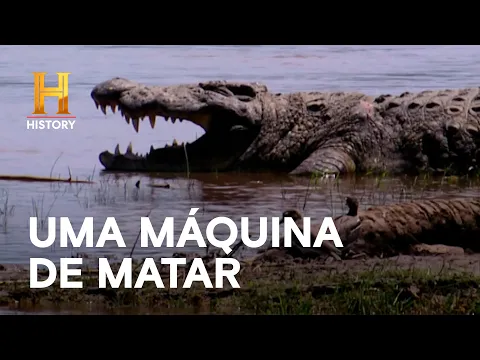

Consistent reports began to intensify in the 1990s when riverside residents started repeatedly describing a crocodile much larger than any other seen in the region. The difference was not only in size, but in the pattern: the same animal seemed to occupy different points in the river system over the years, always described with similar proportions.
The recurrence of these reports, combined with photographic records and videos analyzed by specialists, ruled out the hypothesis of simple popular exaggeration. Gustave came to be treated as a specific individual, not as a collective myth.
Estimated Size of the Crocodile Gustave and Why He May Rival the Largest Ever Measured
The average size of an adult Nile crocodile ranges from 4 to 5 meters. Individuals over 5.5 meters are considered exceptional. In Gustave’s case, the most accepted estimates indicate lengths over 6 meters, with some analyses suggesting he may be nearing the biological maximum limit of the species.
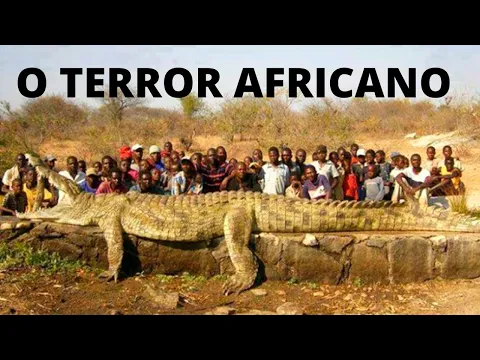
The estimated weight ranges from 800 kg to almost 1 ton, a value consistent with an animal of this body length. These estimates were made by comparing images of the animal with boats, banks, logs, and known structures, as well as accounts from experienced fishermen who have lived with crocodiles for decades.
The crucial point is that Gustave has never been captured. Without direct measurement, he cannot officially enter record books, even if he may have surpassed already certified individuals.
Extreme Age and Ongoing Growth Explain How a Crocodile Can Reach Colossal Dimensions
Crocodiles do not completely stop growing throughout their lives. Although growth slows with age, very old individuals continue to increase in size slowly. Based on the first reliable reports and the persistence of similar sightings over decades, experts estimate that Gustave may be over 60 years old.
This longevity is a key factor. A crocodile living for six or seven decades in a food-rich environment with little direct human interference has ideal conditions to become a true biological colossus.
Advanced age may also explain the cautious and seemingly strategic behavior of the animal observed during capture attempts.
Real Attempts to Capture the Crocodile Gustave and Why They All Failed
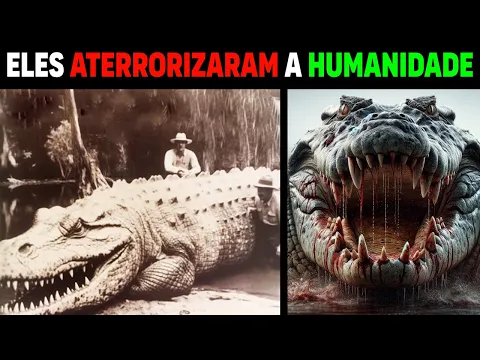
Contrary to what many sensationalist stories suggest, there have been real and documented attempts to capture Gustave. The most well-known occurred in the early 2000s when an international team built a giant metal trap, about 9 meters long, designed specifically to contain an extreme crocodile.
The operation was accompanied by cameras, reptile specialists, and local authorities. On several occasions, Gustave approached the trap, circled the area, and even touched the structure. However, he never fully entered.
After these attempts, the animal simply disappeared for long periods, reappearing months later in different regions of the lake and adjacent rivers. This reinforced the perception that he dominates a vast territory and possesses highly adaptive behavior.
Attacks Attributed to Gustave and the Line Between Real Data and Popular Attribution
For years, Gustave has been associated with various fatal attacks. Scientifically, this is the most delicate part of the case. In areas with high crocodile density, attacks unfortunately occur, and identifying the individual responsible is rarely possible.
Modern researchers are cautious in separating verifiable facts from popular attributions. There is no direct evidence that Gustave is responsible for a specific number of deaths. What exists is a consensus that he is a dominant predator, capable of killing large prey, including young hippos.
However, his reputation has had a real effect: entire communities have changed routines, fishing locations, and crossing times because of the animal’s presence.
Why Gustave Never Entered the Record Books Even Though He Is Possibly the Largest
For an animal to be officially recognized as a record holder, capture, direct measurement, and formal documentation are necessary. This was the case with Lolong. Gustave, by remaining free, does not meet these criteria.
This creates a fascinating paradox: he may have been larger than any officially recorded crocodile, but he will never be recognized unless he is measured — something that many experts today consider unlikely or even undesirable from an ecological standpoint.
Ecological Importance of a Giant Free Crocodile in One of Africa’s Largest Lakes
Top predators play an essential role in ecosystems. A crocodile the size of Gustave regulates populations of fish, aquatic mammals, and even smaller crocodiles. His presence indicates that the ecosystem still supports high levels of biological complexity.
The removal of an individual of this size could generate significant imbalances, which is why modern approaches advocate for monitoring and conservation, not capture.
Gustave as One of the Last Great Living Enigmas of Modern Zoology
In an increasingly monitored world via satellites, sensors, and drones, the existence of a giant animal not yet fully understood is something rare. Gustave occupies a unique space between science and the collective imagination.
He is not a fossil, he is not a zoo specimen, and he is not a certified record. He is something rarer: a living colossus that remains beyond the reach of human metrics.
Until there is definitive confirmation of his fate, Gustave will continue to be one of the greatest symbols that nature still harbors giants capable of challenging modern science.








-

-

-

-

8 pessoas reagiram a isso.