





 English
  Francês
  Alemão
  Italiano
  Japonês
  Norueguês
  Portuguese
  Spanish
  2 min of reading


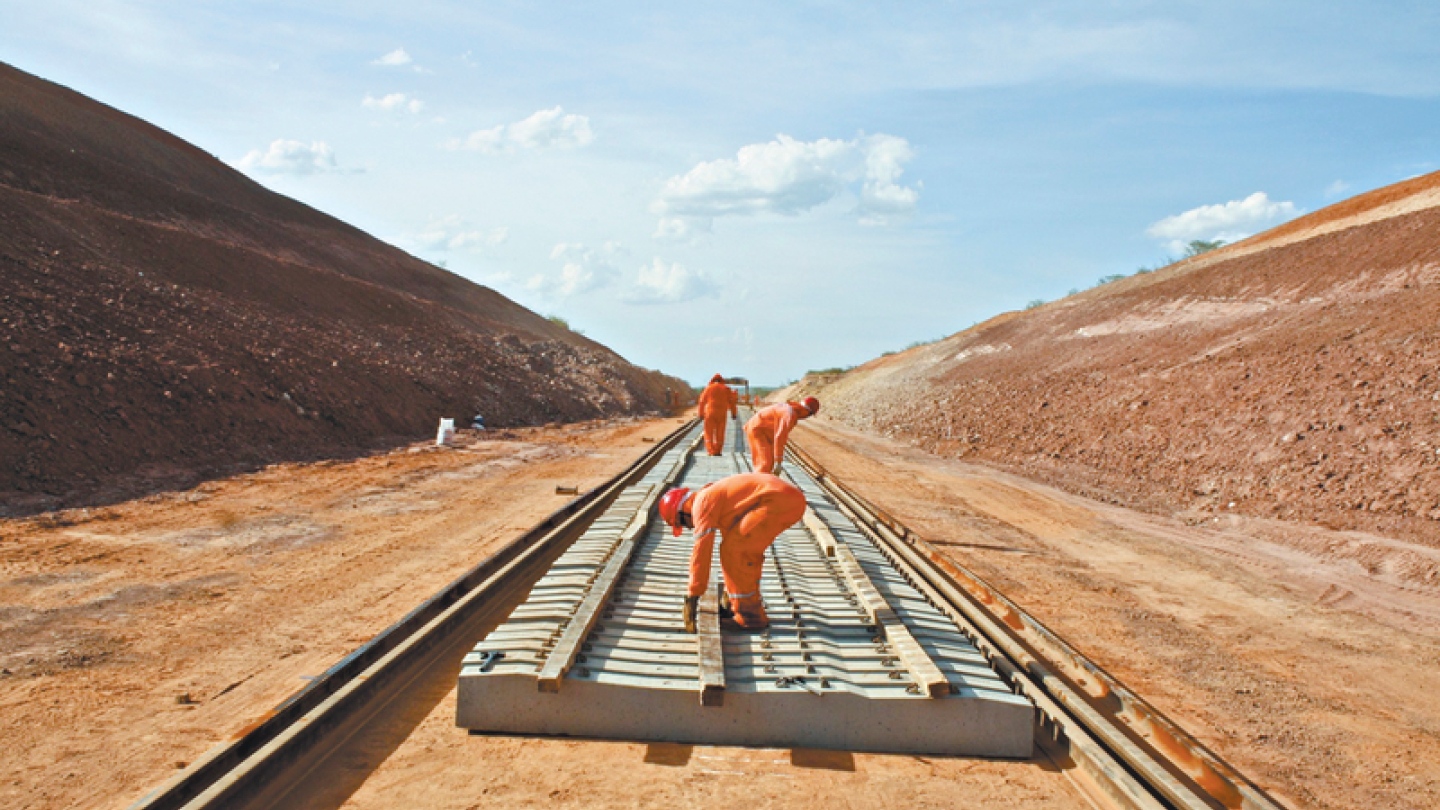
R$ 6.2 billion has already been invested in the project, and R$ 6.7 billion is still needed to complete the remaining 48% of the railroad.
This Friday, the 13th, Companhia Siderúrgica Nacional (CSN) confirmed that it has been in talks with the Federal Government to resume construction of the Transnordestina railroad, which will connect the interior of Piauí to the ports of Pecém (CE) and Suape (PE). The company risks losing its concession due to two administrative proceedings from the National Land Transportation Agency (ANTT). The government will connect the Port of Itaqui in Maranhão to the Port of Santos by rail.
The most advanced process involves the operational network of the so-called old Transnordestina – the result of the privatization of the railway network in the Northeast in the 1990s. The future of the railroad will be decided by the Ministry of Infrastructure.
-
Government unlocks R$ 554 million for a highway that has been requested for decades and accelerates the duplication of BR.
-
Without bricks, without cement, and without endless construction: the cardboard house that is assembled in modules and can be moved.

-
Billions of barrels on the equatorial margin could lead Amapá to double its oil production in Brazil — the state aims to enter the route of companies in the Campos Basin, attract investments, and boost jobs and businesses in the oil and gas sector.
-
Without bricks, without cement, and without endless construction: the cardboard house that is assembled in modules and can be moved.

The most serious case involves the new Transnordestina, under construction for 13 years. Since last year, the works have been halted by a determination from the Federal Court of Accounts (TCU), which identified “technical and financial issues.” According to the Court, the progress of the works is incompatible with the initially projected financial execution.
R$ 6.2 billion has already been invested in the work, which has been stalled since the beginning of 2017. R$ 6.7 billion is still needed to complete the remaining 48% of the railway.
Started in 2006, the project has had its budget revised several times. The initial studies indicated that a more reasonable value would be around R$ 8 billion. But the Government requested changes and reduced it to R$ 4.5 billion. In 2012, the budget was already at R$ 5.4 billion and increased to R$ 7.5 billion after a series of negotiations among the shareholders. Today, the project stands at R$ 11.2 billion.
Of the amount invested so far, R$ 1.3 billion – 20% of the total – came from CSN’s coffers. Another 61% was financed by public funds allocated for projects in the Northeast, such as Finor, FNE, and FDNE, and by the National Bank for Economic and Social Development (BNDES). The state-owned company Valec contributed R$ 1.2 billion to the project.
The continuity of the Transnordestina works was highlighted by representatives of the nine northeastern states, plus Minas Gerais and Espírito Santo, as one of the priority actions of the Regional Development Plan for the Northeast (PRDNE) to be included in the Multi-Year Plan (PPA).
Rio will collapse if the law altering the distribution of oil royalties is approved in November.









Seja o primeiro a reagir!