





 Portuguese
  English
  Spanish
  5 min of reading
  0 comments


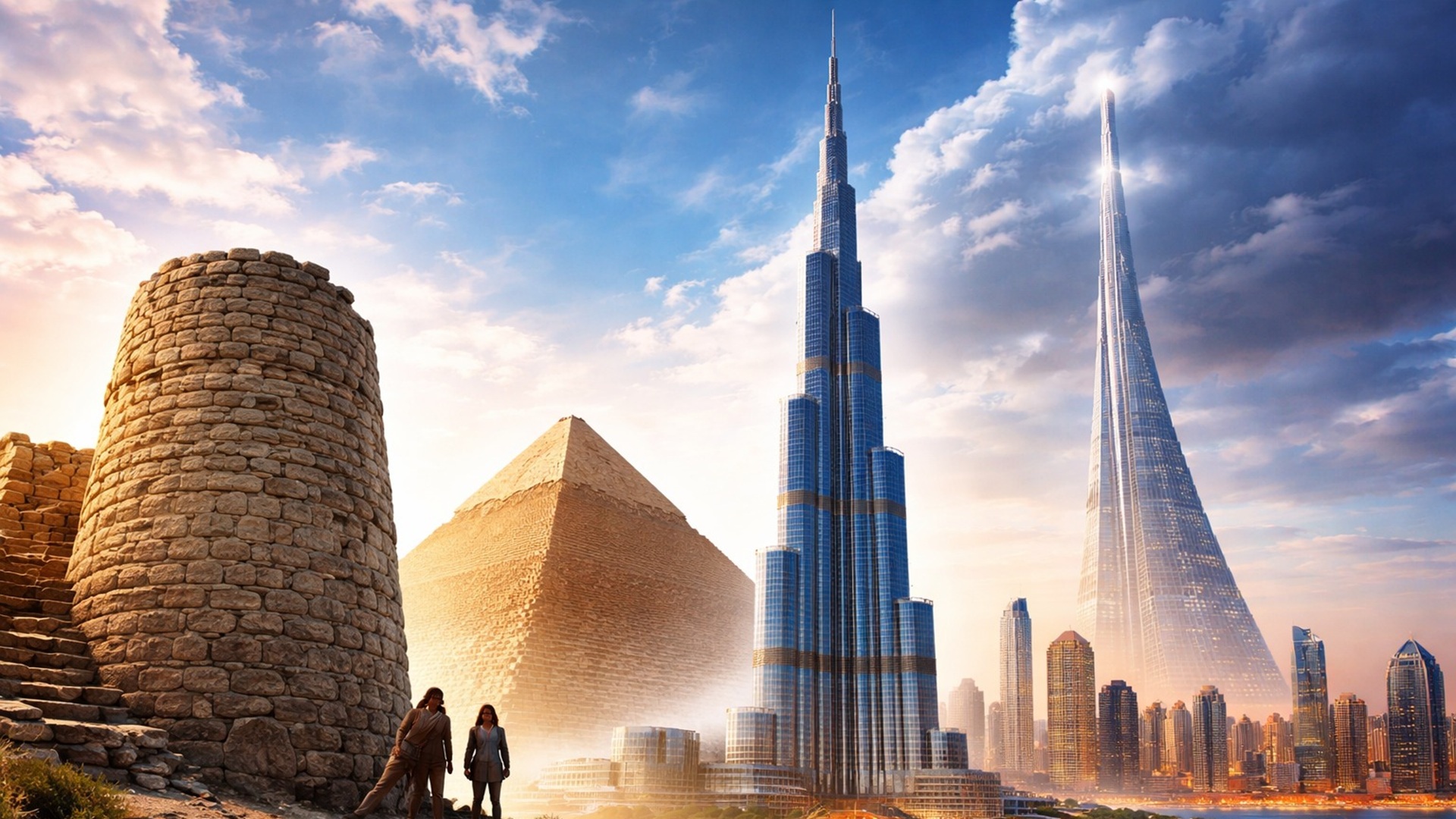
From The Tower of Jericho Standing 8.5 Meters Built About 10 Thousand Years Ago to The Burj Khalifa at 830 Meters Inaugurated in 2009, The Search for Maximum Height Follows The Evolution of Engineering and Includes Futuristic Projects That Aim to Reach Up to 10 Kilometers or More
Since the earliest civilizations, humanity has attempted to build taller and taller structures. The quest for maximum height began about 10,000 years ago and continues to this day, with projects aiming to exceed several kilometers in height.
Throughout history, different societies have created increasingly taller works in an attempt to reach new engineering limits. The search for maximum height follows technological advancements and reflects the evolution of construction techniques used in each period.
The first major known structure in this context was the Tower of Jericho. Built about 10,000 years ago in the region that is now Palestine, the tower stood approximately 8.5 meters tall.
-
From sertanejo star to international investor: Ana Castela invests millions in a mansion in the USA, creates a themed accommodation in Orlando, and shows that the “boiadeira” also wants to grow away from the stage.

-
The 10 most stunning motorhomes in the world: a $3 million trailer with a rooftop nightclub and garage for a Ferrari, “palaces on wheels” with Italian marble, private cinema, and five-star hotel luxury for billionaires.

-
Trump wanted to spend $400 million on the White House, but the courts prohibited the million-dollar construction.

-
How the Egyptians erected giant structures like pyramids, temples, and obelisks without modern technology, cranes, or engines still amazes the world and reveals the power of engineering based on ramps, levers, ropes, and colossal organization.
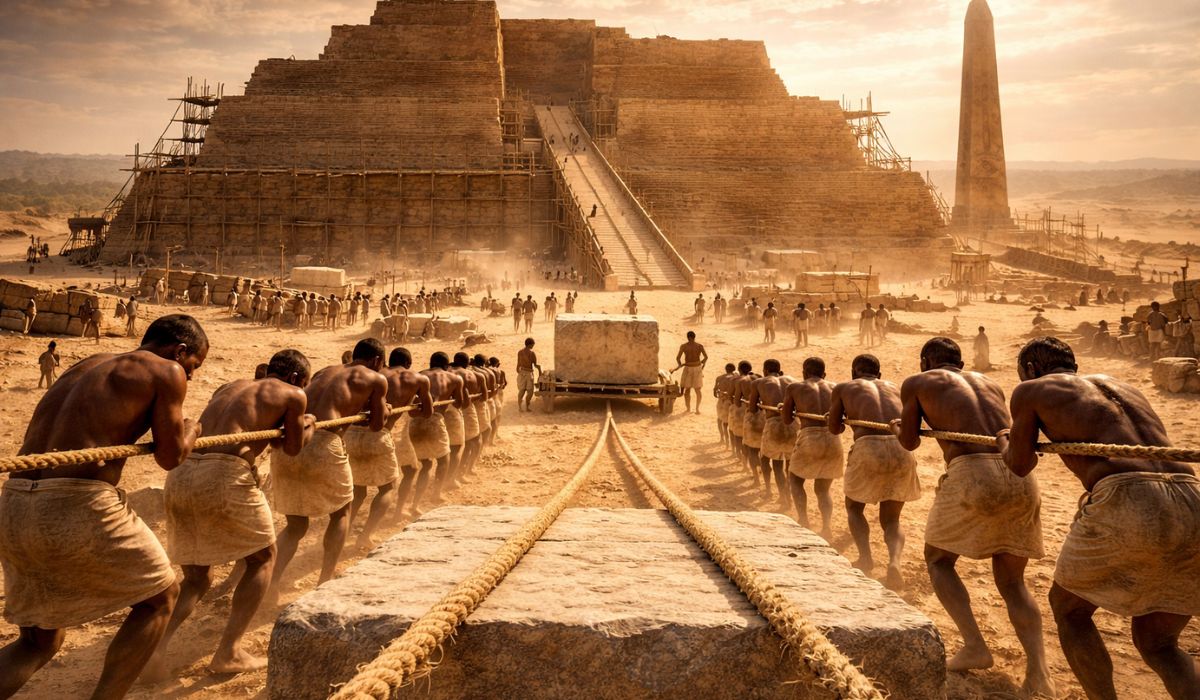

Although modest by today’s standards, this construction represented a significant milestone for its time. It demonstrates one of humanity’s earliest efforts to raise structures to great maximum heights using available resources.
The Great Pyramid of Egypt Sets a Maximum Height Record for Nearly Four Thousand Years
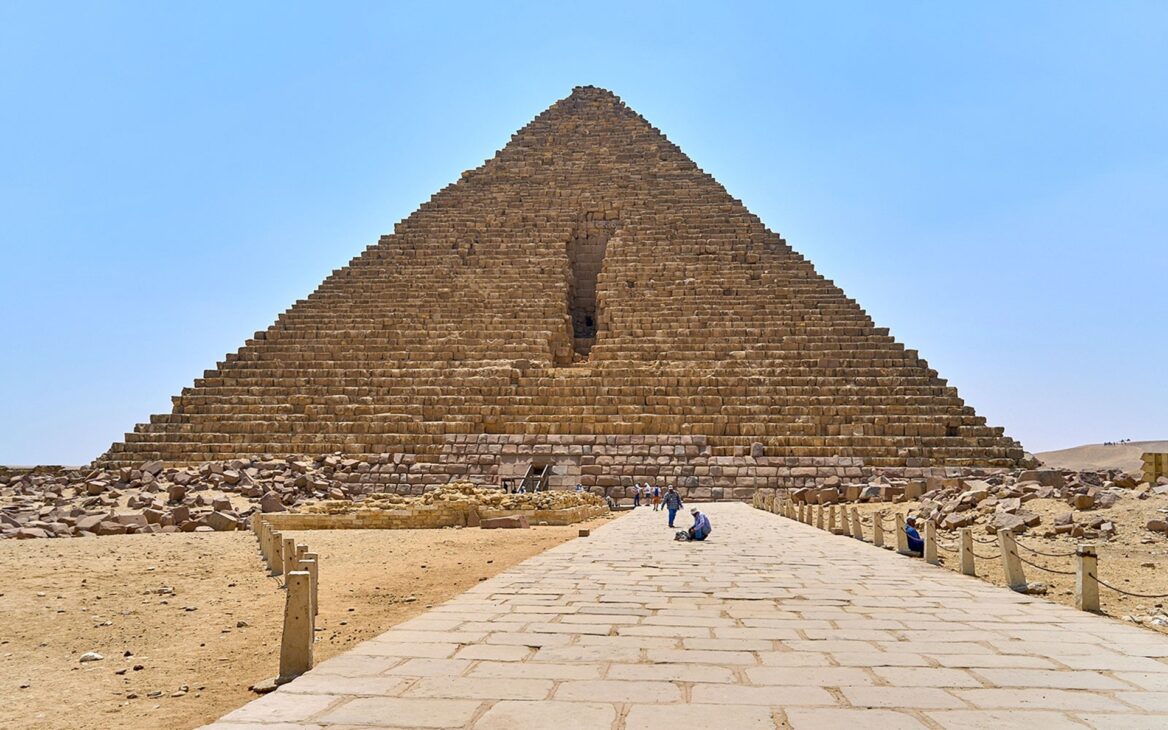
The search for taller structures gained new dimension with the ancient Egyptians. In 2560 BC, the Great Pyramid of Giza was completed, reaching a maximum height of 146 meters.
The pyramid held the record for the tallest building in the world for approximately 3,871 years. This extremely long period highlights the monumental scale of the work by ancient engineering standards.
By comparison, some modern constructions still remain below this height. The Sanctuary of Truth, considered the tallest wooden building in the world, reaches 105 meters and is scheduled for completion in 2025.
Other structures also illustrate different levels of maximum height in contemporary buildings. The tallest lighthouse in the world, located in Saudi Arabia, measures 133 meters, while the tallest hospital in the United States reaches 165 meters.
Churches and Monuments Take on the Record for Maximum Height After The Era of the Pyramids
The dominance of the Great Pyramid ended when Lincoln Cathedral was built in England. This structure reached 160 meters and became the new world record for maximum height for buildings.
For approximately 570 years, the record passed through eight different churches. This period demonstrates how religious constructions played a central role in the quest for greater height in European cities.
Subsequently, the Washington Monument was erected in the United States, reaching 169 meters. A few years later, a new leap occurred with the construction of the Eiffel Tower.
The French tower reached a maximum height of 300 meters and established a new standard for metal structures. This measure is about 50 meters taller than the highest building in Spain.
Skyscrapers and Towers Raise the Maximum Height of Modern Structures
With advancements in engineering in the 20th century, skyscrapers began to dominate the maximum height records. One of the landmarks of this phase was the Empire State Building.
This building was the first to exceed 100 stories. Its total height reaches 381 meters, or 443 meters when the antenna is included.
Other structures also stand out during this period. The tallest chimney in the world, built by the Soviet Union, reached 420 meters.
In Europe, the tallest structure is the Ostankino Tower, located in Moscow. It stands at 540 meters and represents one of the largest examples of vertical engineering on the continent.
Burj Khalifa Defines the Current World Record for Maximum Height
The current record belongs to the Burj Khalifa, inaugurated in 2009. The building located in Dubai has a maximum height of 830 meters and features 163 floors.
Since then, several skyscrapers have been built in different countries. Nevertheless, none have managed to surpass the height of the Burj Khalifa.
The closest building to this record is the Shanghai Tower, which stands at 632 meters. This building also has the highest number of elevators in the world, with 97 units.
Some of these elevators can reach speeds of up to 76 kilometers per hour. This speed is about 20 times faster than that of a conventional elevator.
Futuristic Projects Aim to Surpass Several Kilometers in Maximum Height
Although the Burj Khalifa is the current record-holder, several projects aim to exceed this maximum height in the coming decades. Many of them are planned for Tokyo, currently the most populous metropolitan area in the world.
The Japanese city is home to about 37 million inhabitants. This number surpasses the total population of Peru.
Among the proposed projects is Mega-Pyramid City. The structure would be 2 kilometers tall and capable of housing one million people.
Another project is the XSID 4000, with a maximum height of 4 kilometers and about 6 kilometers wide. The construction could have up to 800 stories.
This building would even surpass Mount Fuji, the tallest mountain in Japan. The estimated cost of the work could reach 1.4 trillion dollars.
Massive Structures Could Reach Dozens of Kilometers
Another even more ambitious project is the so-called Tower of Babel in Tokyo. With a maximum height of 10 kilometers, the structure could accommodate around 30 million people.
The building would have over a thousand stories and surpass the height of Mount Everest. Its construction could take approximately 150 years.
The estimated cost would be around 22 trillion dollars. This amount corresponds to the annual gross domestic product of the United States.
Space Structures Expand Theoretical Limit of Maximum Height
Beyond terrestrial constructions, there are projects related to space. One example is the StarTram Generation 2, with about 20 kilometers in height.
Another concept is the Launch Loop, which could reach 80 kilometers. These structures would be used to launch objects into orbit.
There is also the idea of an orbital ring at about 160 kilometers in height. This system would function as a space elevator.
Another model of a space elevator could reach a maximum height of 100,000 kilometers. For comparison, the distance between the Earth and the Moon is approximately 384,400 kilometers.
This system would be formed by a cable connected to a counterweight in space. The rotation of the Earth would keep the cable taut and allow the elevator system to function.








-

-

-

6 pessoas reagiram a isso.