





 Portuguese
  English
  Spanish
  6 min of reading
  0 comments


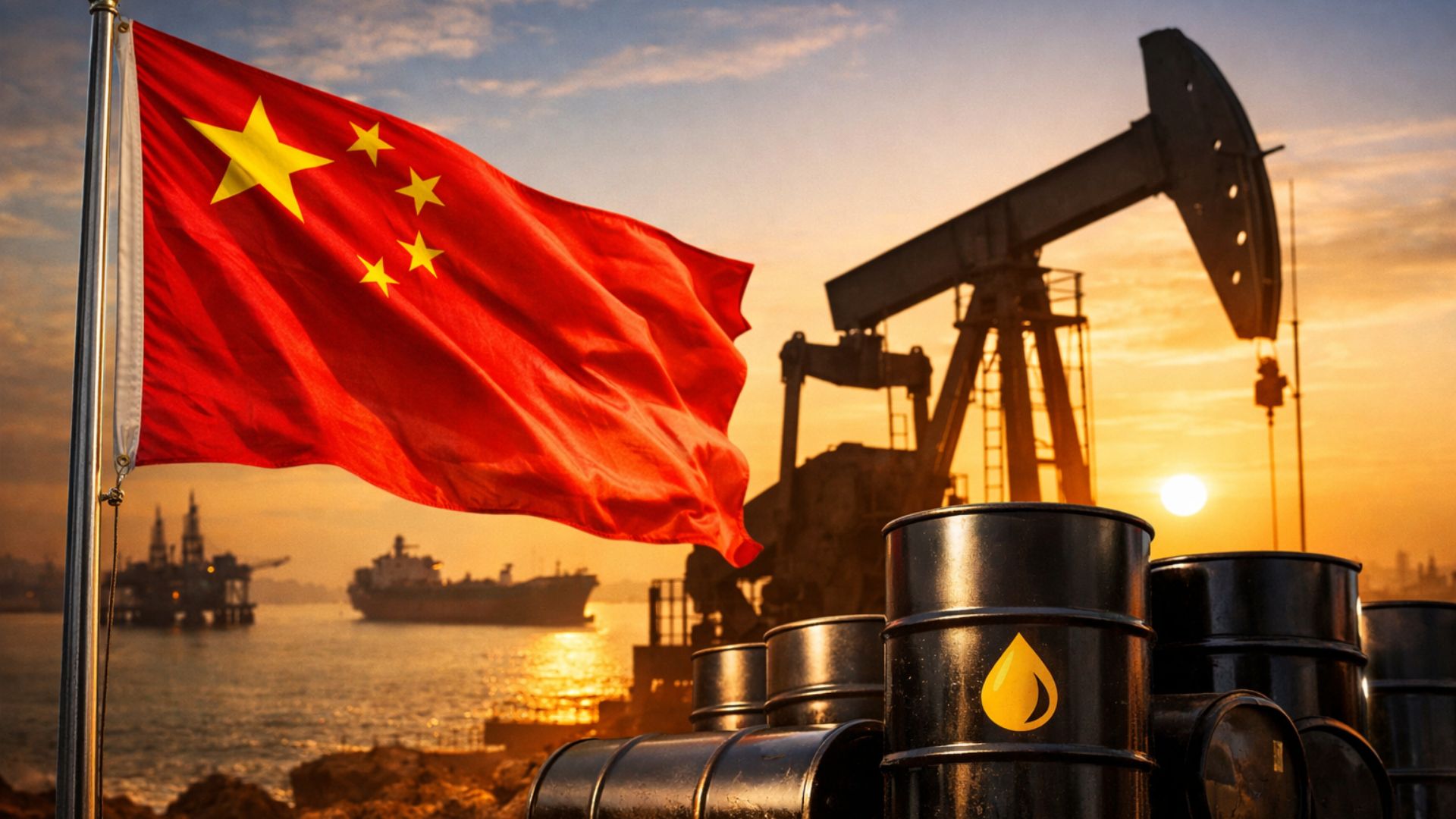
EIA Report Points to China’s Strong Dependence on Oil Passing Through the Strait of Hormuz Amid Middle East Tensions and Rising Brent Prices, Expanding Risks to the Global Energy Market.
The U.S. Energy Information Administration (EIA) revealed that China imported 38% of the oil that passed through the Strait of Hormuz in the first quarter of 2025. According to an article published by VEJA on Tuesday (3), the volume amounts to 5.4 million barrels per day destined for the Asian country, within an average flow of 14.2 million barrels per day transported via the route during the period.
Understand the Relevance of the Strait of Hormuz for the Oil Market
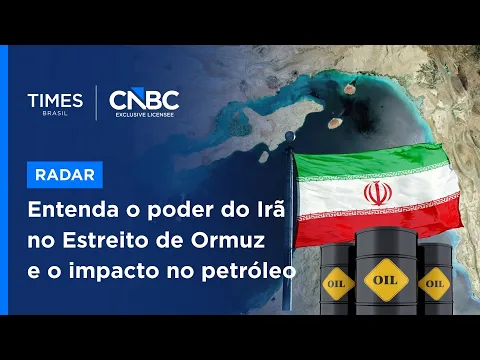
The data places China at the center of one of the planet’s most strategic energy corridors. The Strait of Hormuz concentrates about 20% of all oil consumed globally, making it a key piece for the stability of international markets.
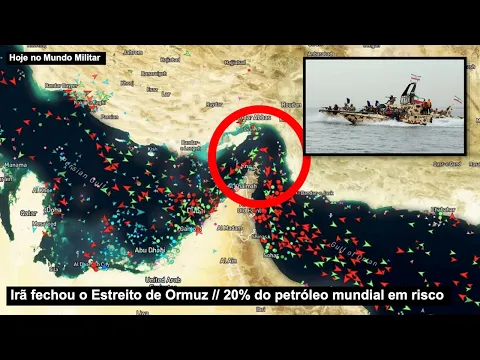
The significance of the figures increased after Iran’s Revolutionary Guard announced the closure of the strait and stated that ships attempting to breach the blockade would be set on fire. The declaration came amid escalating tensions following U.S. and Israeli attacks on Iranian territory.
-
Petrobras evaluates suspension of sales to distributors and considers canceling the cooking gas auction following guidelines from the Federal Government.
-
Lula reveals a masterstroke by Petrobras to undo a deal made by Bolsonaro, which involves the return of an important refinery that currently produces less than half of what was expected and makes Brazil dependent on international diesel.
-
A study confirms that the natural gas sector will reduce greenhouse gas emissions in Brazil by 0.5% and accelerate the energy transition by 2026.

-
Petrobras implements a severe adjustment and confirms a 55% increase in the price of aviation kerosene with a proposal for installment payments for the companies.


In this scenario, Brent crude futures for May rose by 2.3%, reaching $79.53 per barrel. The movement highlighted how any threat to the Strait of Hormuz provokes immediate reactions in global oil prices.
Oil in the Strait of Hormuz Concentrates Vital Flow for China and Asia
According to the EIA, 14.2 million barrels of oil per day flowed through the Strait of Hormuz in the first quarter of 2025. Of this total, 5.4 million barrels per day were destined for China.
India was the second largest importer of oil transported through the region, accounting for 14.78% of the total volume, equivalent to 2.1 million barrels per day. South Korea acquired 1.7 million barrels per day, representing 12%, while Japan accounted for 11.3% of the total, or about 1.6 million barrels per day.
The numbers demonstrate the strong Asian concentration in the consumption of oil passing through the Strait of Hormuz. China, as the largest industrial economy in the region, relies directly on this flow to supply refineries, sustain production chains, and ensure internal price stability.
The EIA emphasizes that interruptions, even temporary, can cause significant delays in supply, increase logistical costs, and put pressure on international energy prices.
Geopolitics of the Strait of Hormuz Expands Risks to China’s Oil Supply
The Strait of Hormuz connects the Persian Gulf to the Gulf of Oman and the Arabian Sea, separating Iran from the Arabian Peninsula. At its narrowest point, it is approximately 33 kilometers wide, with navigational lanes of only 3 kilometers in each direction.
This configuration makes the region one of the main chokepoints for global oil trade. Producing countries such as Saudi Arabia, the United Arab Emirates, Kuwait, Iraq, and Qatar use the passage to export a large part of their production.
When Iranian authorities announced the closure of the Strait of Hormuz, maritime traffic had already been practically halted. International insurers such as Gard, Skuld, NorthStandard, London P&I Club, and American Club announced they would cancel coverage or raise premiums starting March 5, according to notices published on March 1.
The conflict had already left four tankers damaged, two dead, and about 150 ships detained in the region. This context reinforces the EIA’s analysis of the structural vulnerability of concentrated energy routes.

EIA Highlights Direct Impacts of Oil on Global Pricing Formation
The market’s sensitivity was evident with the 2.3% rise in Brent contracts, which reached $79.53 per barrel. The possibility of disruption in the Strait of Hormuz immediately raised risk perception.
According to the EIA, the inability of oil to transit through a significant chokepoint, even temporarily, can cause significant delays in global supply. The result is increased transportation costs, higher shipping insurance rates, and direct pressure on international prices.
As about 20% of the oil consumed worldwide passes through the route, any blockade has the potential to generate a cascading effect. Importing countries, refineries, and distributors adjust future contracts, passing the volatility on to the end consumer.
For China, the largest global oil importer, this dynamic represents significant strategic risk.
China Has Strategic Reserves, but Dependence on the Strait of Hormuz Worries
Experts assess that the immediate impact on China tends to be limited due to the existence of strategic oil reserves. These stocks act as short-term buffers against temporary disruptions.
Helder França, a professor at Fipecafi, highlighted that large buyers have significant reserves capable of alleviating inflationary pressures in the first months of a potential blockade. Still, he emphasizes that a prolonged shutdown could lead to a global price increase.
The longer the Strait of Hormuz remains closed, the higher the likelihood that China will face structural challenges. The need to redirect routes, renegotiate contracts, and seek alternative suppliers may increase logistical costs and pressure industrial sectors.
The EIA’s data reinforces that the dependence is not only commercial but strategic.
Oil, Maritime Security, and China’s Energy Strategy
The relationship between oil and maritime security has gained prominence in recent years. The Strait of Hormuz has become a symbol of how regional tensions can reverberate on a global scale.
For China, the concentration of 38% of oil imports passing through the route demonstrates elevated exposure to geopolitical risks. Although the country maintains diversified partnerships, the relevance of the Persian Gulf remains central.
This scenario reignites the debate on diversification of the energy matrix. Investments in renewable sources, long-term bilateral agreements, and expansion of storage infrastructure are strategies discussed by analysts.
At the same time, dependence on oil is still a concrete reality for the Chinese economy, especially in the industrial, petrochemical, and transportation sectors.
Strait of Hormuz as a Thermometer of Global Energy Stability
The Strait of Hormuz functions as a true thermometer of international energy stability. When there are threats to navigation, markets react almost instantaneously.
The rise of Brent to $79.53 per barrel reflects not only the possibility of physical scarcity but an increase in risk perception. Investors incorporate uncertainty premiums, raising prices even before concrete disruptions.
With 14.2 million barrels of oil transiting daily through the route in the first quarter of 2025, the potential impact’s scale is significant. China, absorbing 5.4 million barrels per day of this flow, occupies a central position on this board.
The concentration of 20% of global consumption in a maritime corridor of only 33 kilometers wide illustrates the structural fragility of the global energy system.
What EIA Data Indicates About China’s Next Moves
The numbers released by the EIA not only quantify China’s dependence on the Strait of Hormuz but also signal future strategic challenges.
In the short term, strategic reserves and long-term contracts may cushion shocks. In the medium and long term, however, the continuation of tensions may accelerate diversification policies.
China is already investing in renewable energy and expanding its presence in alternative trade agreements. Still, oil remains an essential component of its energy matrix.
The Strait of Hormuz remains a critical point. As long as 38% of the oil transported along the route continues to have China as its primary destination, any regional instability will have global repercussions.
The EIA’s data show that energy security and geopolitics go hand in hand. In an interdependent world, the stability of the Strait of Hormuz affects not only China but the entire international oil system.








Seja o primeiro a reagir!