





 Portuguese
  English
  Spanish
  3 min of reading
  19 comments


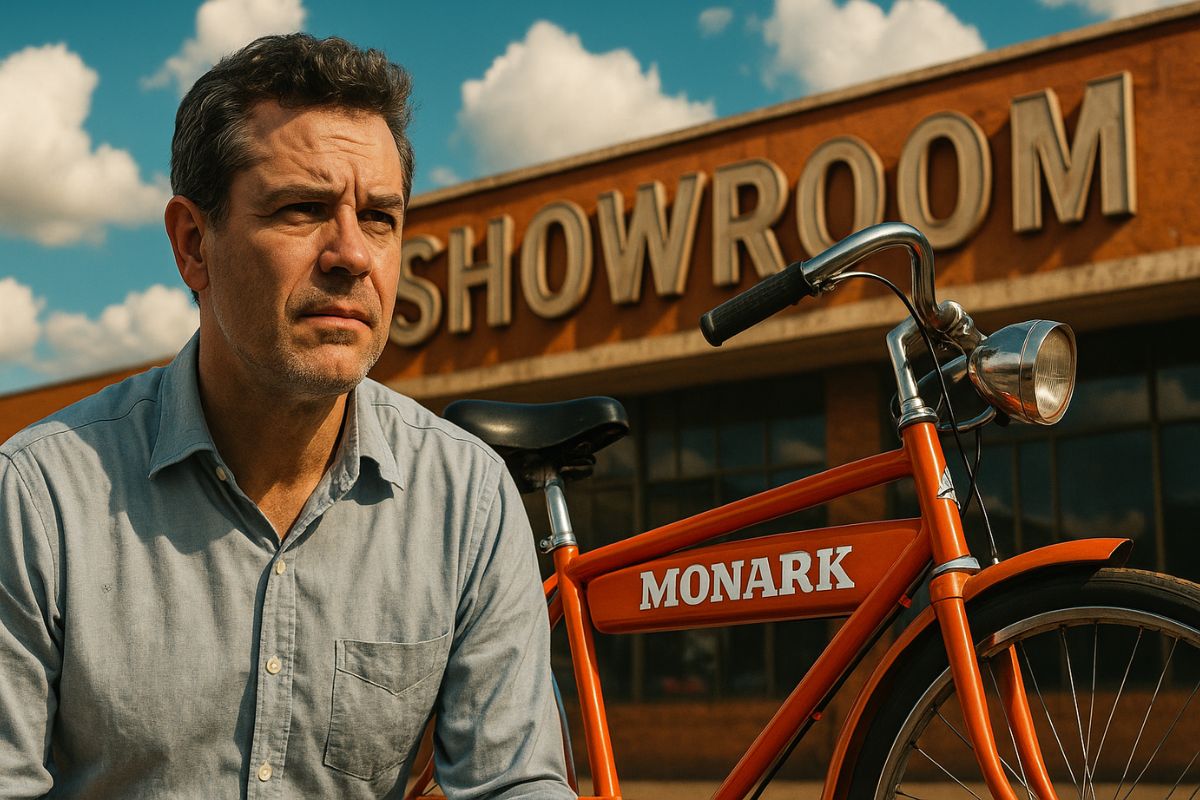


Do You Remember Monark? See How the Queen of Bicycles Is Today. A Company That Has Sold Millions of Bicycles in Brazil Now Survives as an Investor and Keeps Its Brand Alive in Regional Niches.
For decades, Monark was recognized as the queen of bicycles in Brazil. An icon of resilience and popularity, it sold over 2 million units per year and employed around 10,000 people. Today, even far from the market top, the brand remains active — but with a very different business model.
Listed on the stock exchange, Monark maintains a reduced operation in bicycle manufacturing, but derives most of its profit from financial investments. In 2024, it recorded R$ 15 million in net profit, with dividends above 8%, a performance that attracts more investors than cyclists.
Swedish Origin and Arrival in Brazil
The history of the queen of bicycles begins in 1908, in the city of Varberg, Sweden, when Benvenson founded Monark AB. The brand stood out for manufacturing robust bicycles, capable of withstanding harsh winters and cobblestone streets.
-
Brazil produces too much clean energy and doesn’t know what to do with it: over 20% of solar and wind capacity was wasted in 2025 while investors flee and 509 renewable generation projects were abandoned in the last year.

-
Piauí will produce a new fuel that replaces diesel without needing to change anything in the truck’s engine and reduces pollutant gas emissions by half: truck drivers from all over the Northeast are already celebrating the news that will arrive later this decade.

-
A new Brazilian shopping center worth R$ 400 million will be built in an area equivalent to more than 4 football fields, featuring 90 stores, 5 cinemas, a supermarket, a college, and parking for 1,700 cars, potentially generating 3,000 jobs.

-
Larger than entire cities in Brazil: BYD is building a 4.6 km² complex in Bahia with a capacity for 600,000 vehicles per year, but the discovery of 163 workers in conditions analogous to slavery has shaken the entire project.


Thirty years later, Monark arrived in Brazil as an importer, bringing Swedish parts for local assembly. In 1951, it opened its first factory in São Paulo, becoming a national manufacturer and adapting its models for intense daily use in Brazil, especially in cities lacking modern transportation infrastructure.
Expansion and Rivalry with Caloi
In the 1960s, the company ramped up production and became a constant presence on the streets. The rivalry with Caloi marked the golden age of the sector, with Monark betting on durability and competitive pricing, while its competitor invested in marketing and models aimed at urban audiences.
This phase saw the emergence of icons such as the circular bar, the foldable Monareta, and in 1978, Brazil’s first BMX bike, which boosted the popularity of BMX riding and sponsored athletes and sporting events.
The Peak and Listing on the Stock Exchange
In the 1970s, the queen of bicycles reached its peak: over 2 million units sold per year and a listing on the former Bovespa with the ticker BMKS3. The São Paulo factory and other units in the country operated at a fast pace, turning Monark into a symbol of childhood and a popular means of transportation.
The brand’s bicycles were seen as family heirlooms, passed down from generation to generation, thanks to their durability and functional design.
The Decline of Commercial Opening
Starting in the 1990s, with economic opening, imported bicycles from China and Taiwan flooded the market at much lower prices. Even maintaining superior quality, Monark lost ground to cheaper models.
Between 2006 and 2008, it closed factories in Manaus and São Paulo, concentrating production in Indaiatuba (SP). The product portfolio was reduced, and the presence in major retail chains virtually disappeared.
Repositioning and Recent Controversy
In the 2020s, Monark maintained limited production, primarily of the classic circular bar, focusing on consumers in the North and Northeast. In 2022, it gained attention by issuing an official statement distancing itself from the digital influencer “Monark” after his controversial remarks.
Despite its low market share, the company preserves its brand as a valuable asset, sustained by a loyal audience and the profitability of its investments.
From Factory to Investor
Today, the queen of bicycles is almost an asset manager. With a market value of R$ 182 million and modest operating revenue, net profit primarily comes from financial investments. This ensures robust dividends, attracting shareholders who see stability in the business.
In the national scene, Caloi leads by a wide margin, while Sense and Audax compete for smaller shares. Globally, names like Giant, Trek, and Specialized dominate the premium segment.
A Symbol That Changed Gears
Monark has ceased to be a protagonist on the streets, but remains relevant as a historical asset and niche brand. Its trajectory shows how traditional companies can reinvent themselves to survive, even as they radically change their business model.
And you? Do you think the queen of bicycles should invest to compete in the national market again or keep focusing on financial profits? Leave your opinion in the comments.








A Monark está viva no coração das pessoas ,que de um certo modo marcou uma geração, na minha opinião tem muito espaço para ela se reinventar com uma proposta que atenda o público atual .
Criar novos modelos, adequadas para cada região geográfica do Brasil.
Infelizmente o consumidor de hoje que se diz tão exigente não entende que qualidade conforto comodidade tem preço… E se deixa levar por valores baixos que no fim saem muito caro.. Más essa é cultura do país por jamais deveria sair do mercado brasileiro Monark é sinônimo de resistência e quali