





 Portuguese
  English
  Spanish
  8 min of reading
  0 comments


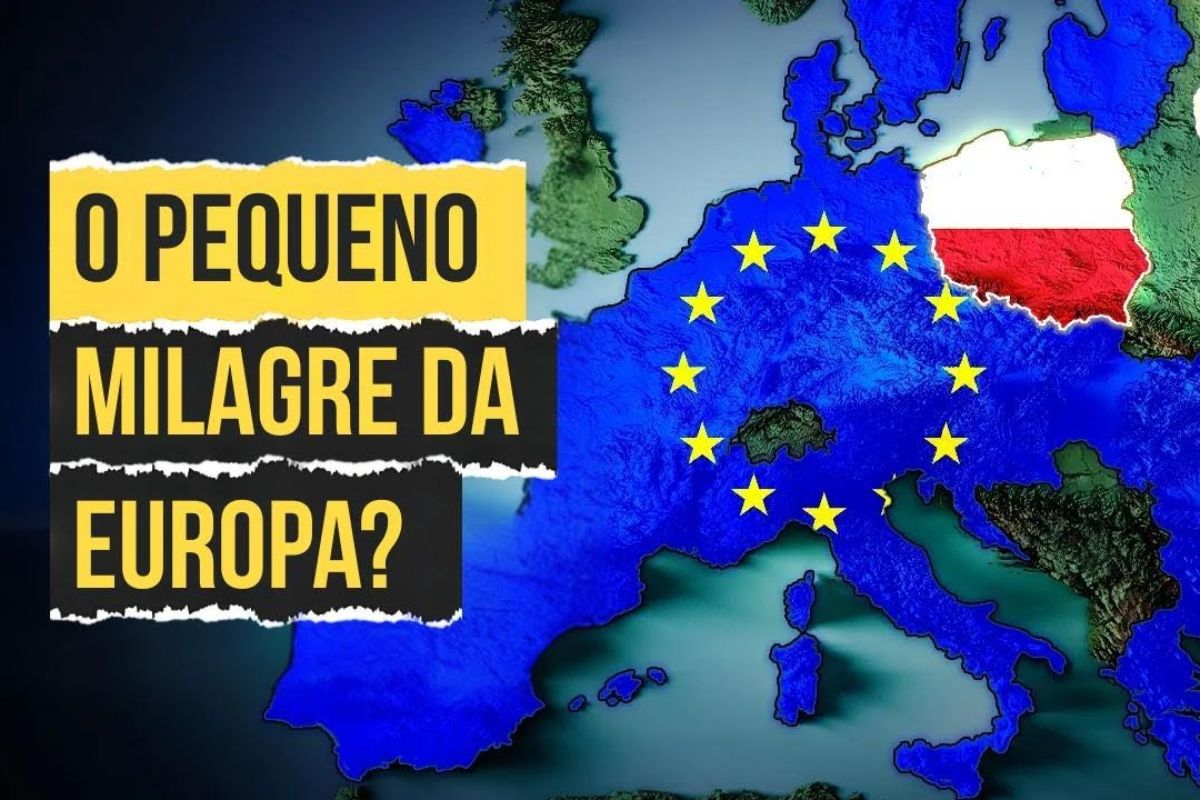
The Recent Trajectory of Poland Exposed the Weaknesses of the European Economy and Showed How Gradual Reforms, Strategic Use of EU Funds, Technology, and Military Spending Transformed the Country into a Regional Highlight, Even with Relevant Risks on the Horizon.
The Poland was, in the 90s, a former satellite state of the former USSR, poor, indebted, and trapped in inefficient economic structures. Today, it is viewed as the fastest-growing economy in Europe, with manageable debt, a population that is aging less rapidly than the average, and a real capacity to innovate and increase productivity using technology, infrastructure, and human capital. In a continent marked by debt crises, aging populations, and low investment, the Polish case has become an uncomfortable exception for a tired Europe.
At the same time, Poland’s progress is far from a perfect tale. The country is still behind the more consolidated economies of the European Union and largely depends on the good functioning of the same bloc that it is now trying to challenge. Comparisons with Spain, Greece, and even with powers like Germany and France reveal an ambiguous picture: the country has grown significantly, is more reliable for investment, but risks falling into the middle-income trap, facing debt pressure and losing competitiveness if wages rise too quickly. Understanding what went right and what could go wrong is essential to assess whether this success becomes an economic miracle or merely a prolonged cycle of convergence without overtaking.
Why Poland Became an Exception in Stagnant Europe

While much of Europe dealt with debt crises, accelerated aging, and weak investment, Poland capitalized on a specific set of conditions.
-
A forgotten cord on the floor of a basement in Vienna leads a plumber to a box containing 30 kilograms of gold with Mozart’s face, hidden before World War II. The treasure, worth 2.3 million euros, was just centimeters away from a worker who ignored the sign a day earlier.
-
A couple buys an old chalet, breaks the kitchen floor for renovation, and finds over a thousand coins of gold and silver hidden since the English Civil War over 4 centuries ago.

-
Rigid bags with their days numbered: new trend prioritizes comfort in 2026.

-
YouTuber creates an excavator equipped with a giant 4.5-meter sword to challenge his brother to a rematch, and the invention quickly goes viral on social media.

The country combined relatively rapid growth, controlled public debt, and an innovation agenda that increased productivity instead of relying solely on low wages.
Poland managed to grow without completely losing fiscal control, without aging as fast as its neighbors, and, most importantly, without giving up on investing in technology and productivity. This made the country stand out in a landscape where other European economies lagged behind the United States, both in dynamism and innovation.
The big question now is whether this pace can be maintained long enough for Poland to stop being just the “promise that catches up” and becomes the economy that truly overtakes stagnant countries like Spain.
From Shock Therapy to Gradual Transition: The Origins of Poland’s Transformation
When Poland and other countries of the former Warsaw Pact left the Eastern Bloc in the 90s, the economic legacy was harsh: low per capita income, heavy state structures, and fragile institutions.
Many neighbors opted for “shock therapy,” transitioning from centrally planned economies to the free market almost overnight, which opened the door to oligarchies and concentration of privatized assets.
Poland chose another path, betting on a gradual transition from public to private.
Instead of selling state assets to a few groups, the country made public offers, attracted foreign investment, and created employee participation plans.
By dispersing control and increasing competition among old and new companies, the country reduced space for monopolies and corruption and built a more competitive market.
Initially, the results seemed unimpressive. Polish per capita income was around $700, less than 10% of the level in Western countries. However, as the years went by, the gap significantly narrowed, while several leading economies slowed down.
With a population now of around 40 million people, Poland has begun to be studied as a possible “lifeline” for Europe in the decades to come.
Advantages and Dilemmas of Poland’s Relation with the European Union
Poland’s integration into the European Union was one of the central engines of its transformation. The country is one of the largest beneficiaries of the cohesion fund, receiving around €213 billion, with expectations of increases until 2027. These resources made possible infrastructure works, modernization of services, and expansion of productive capacity.
At the same time, the same mechanisms that boost Poland also carry risks. The free movement of workers, for example, favors the migration of skilled labor to richer economies in search of better salaries and working conditions. This movement has already provoked brain drain in several Eastern European countries.
Another dilemma involves monetary policy. By refusing to adopt the euro, Poland maintained autonomy to manage inflation and exchange rates, partially protecting itself from external shocks and constraints that harmed countries like Greece and Spain during global financial crises.
The country participates in the European Union, enjoying the single market and funds, but preserves room to calibrate its own currency, which helps avoid the burden of a single monetary policy primarily aimed at more mature economies, like Germany.
Technology, Innovation, and Brain Drain: Poland’s Response to the Middle-Income Trap
In the last decade, Poland diversified its economy and prioritized high-value-added services and technology. The automotive industry has become the fourth-largest employer, accounting for about 11% of industrial production and 4% of GDP, attracting robust investments from companies like Fiat, Toyota, and Volkswagen, especially with the transition to electric vehicles and new battery technologies.
Additionally, the information and communication technology market reached $26.5 billion, growing over 4% per year, in an economy that was not large to begin with.
This movement elevated the weight of the technology sector in GDP and helped build a significant qualification base, with 66,000 students in information and communication technology courses and about 430,000 workers in the sector.
However, the country has been living for years with the threat of the middle-income trap, where a country grows rapidly to a certain point but begins to lose competitiveness when wages rise without productivity keeping pace.
To combat brain drain, Poland has reduced income tax for young people under 26 since 2019 and connected this policy to programs like Poland Digital, focused on digital skills, startups, innovation, and technological infrastructure.
Cities like Warsaw, Kraków, and Wrocław have established themselves as technology hubs, attracting companies and professionals.
The implicit message is clear: instead of being just a cheap labor supplier for rich countries, Poland wants to be the place where innovative projects are born, even if wages are not yet the highest in Europe.
Poland as a European Innovation Hub and Talent Retention Strategy
The internal narrative of Poland is straightforward: in large consolidated centers like Germany, young technicians may earn more, but they will only be a cog in stagnant machines; in Poland, they can work on innovative projects, build careers in growing sectors, and gain real weight in teams.
This combination of a lower cost of living, opportunities in technology, and a narrative of protagonism has helped reduce brain drain, especially in recent years.
Instead of systematically losing its best professionals, the country has begun to offer a more balanced trade-off between security, learning, and long-term perspective, serving as a kind of “rising silicon” within Europe.
Even without full high-income status, Poland compensates for some of this distance with an innovation environment, expansion of technology hubs, and the ability to attract both foreign and domestic investments in strategic sectors.
This is one of the foundations for the argument that the country can overtake stagnant middle-income economies like Spain.
Military Spending, Energy, and the Fiscal Weight of the Polish Strategy

Another decisive component of Poland’s recent trajectory is military spending. The country is one of the largest contributors to NATO’s arms race and ranks among the most relevant military forces in Europe, alongside Lithuania, Latvia, Estonia, and Greece.
In the last decade, military spending has grown over 300%, with plans to recruit almost half a million additional soldiers and expand agreements for equipment procurement.
From an economic perspective, this has two sides. On one hand, military investment fuels the industry, generates jobs, qualifies labor, and requires infrastructure that is often of dual use, such as roads, hospitals, and cybersecurity systems that also benefit the private sector.
Additionally, the energy tension with Russia has accelerated investments in alternatives, such as Poland’s first nuclear power plant, a costly and long-term bet, but essential for providing reliable energy, one of the pillars of lasting economic prosperity.
On the other hand, maintaining this level of military spending is expensive and potentially unsustainable without solid external support. Even with financial mechanisms such as support funds for the armed forces, loans, bond issuance, and budget adjustments, the risk of significant fiscal pressure by 2030 is real.
If external funding decreases, Poland will have to balance security, productive investment, and fiscal responsibility with even more care.
Poland vs. Spain and Other European Economies: Who Could Be Left Behind
Compared to other countries in the European Union, Poland has already surpassed middle-income economies like Greece in some indicators and appears, in several projections, as a candidate to overtake Spain, which is currently affected by decades of high unemployment, a debt crisis, and prolonged effects from the euro crisis.
At the same time, the major European powers also face difficulties.
Germany is dealing with energy challenges and slowdowns that pressure its growth rates.
France, in turn, accumulates one of the highest public debts in the European Union, projected to approach 117% of GDP by 2026, after being significantly affected by the pandemic.
In this scenario, Poland’s relatively better performance during COVID, partly linked to military spending and continuous investment in innovation, helped the country avoid declines as abrupt as those of its neighbors.
However, this does not eliminate the risks: if external funding is reduced, if wages rise too quickly, or if Europe’s stagnant economies slow down enough to hurt exports and investments, the Polish trajectory may lose momentum.
What Poland’s Trajectory Teaches Europe
In summary, Poland grew rapidly, diversified its economy, attracted foreign and domestic investment in high-value-added sectors, aggressively utilized EU funds, and maintained monetary autonomy to manage shocks.
Instead of relying solely on cheap labor, the country invested in innovation, infrastructure, and training to try to escape the middle-income trap.
Surpassing leading economies, even stagnant ones, is much more difficult than simply catching up with them.
A significant part of Poland’s growth relied precisely on these economies, which buy its products, invest in its factories, and feed its supply chains. If these cogs seize up, Poland will have to look for new markets and adjust its model.
Still, the country is playing well with the cards it has: without great natural resources, without a wealth consolidated over centuries, but with a willingness to reform, innovate, and use European instruments to its advantage.
If it manages to maintain innovation, reward its workforce upon reaching the high-income level, and avoid unpayable debts, Poland could, at the very least, establish itself as an essential case study for a Europe seeking to emerge from stagnation.
Quick question for you to comment: in your view, does Poland have the stamina to sustainably overtake stagnant countries like Spain, or does the current model run into limits that will emerge in the coming years?








-

-

2 pessoas reagiram a isso.