





 Portuguese
  English
  Spanish
  4 min of reading
  0 comments


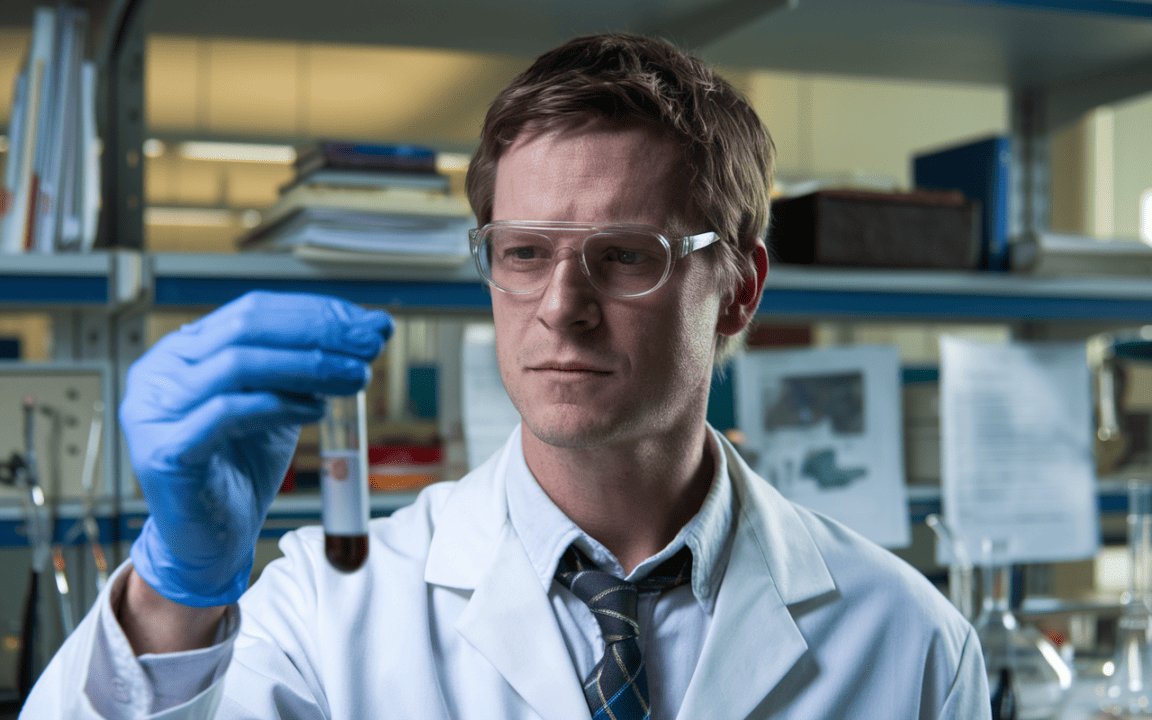
Accidental Discoveries Show How Scientific Errors Shaped Medicine, Technology, and Daily Life, Check Out the Scientific Errors That Led to Discoveries.
Throughout history, humanity has accumulated knowledge based on hypotheses, tests, and conclusions, but not always the greatest advances came from well-planned experiments. Many of the greatest scientific errors have actually become accidental discoveries that changed the course of history — creating everything from the antibiotic that saved millions to the microwave oven that is now a constant presence in kitchens. These stories reveal how curiosity, observation, and the willingness to reinterpret results were essential for scientific progress.
Next, discover eight accidental discoveries that changed the world, born from failures, distractions, or unexpected events in laboratories around the world.
Penicillin Was Discovered by Accident After Fungus Eliminated Bacteria in a Forgotten Plate
In 1928, British physician Alexander Fleming returned from vacation to find a forgotten Petri dish in his laboratory. To his surprise, a fungus had destroyed the cultivated bacteria. It was Penicillium notatum, responsible for the creation of the first antibiotic in history: penicillin.
-
The bizarre train that uses Cold War jet fighter engines to blast air at over 1,000 km/h, melting ice walls and freeing frozen tracks in minutes where ordinary machines would take hours.

-
Japan is transforming dirty diapers from babies and the elderly into an ambitious and surprising project that could forever change the way the world deals with one of the most difficult types of waste to dispose of.

-
Hidden marks on the walls of the site associated with the Last Supper of Jesus for centuries have been deciphered in Jerusalem, revealing medieval inscriptions left by pilgrims, European nobles, and travelers from the Middle East.
-
Goodbye to waste: a Brazilian created a revolutionary brick that uses construction debris, has already entered the markets of the United Kingdom and the USA, and promises to shake up the global construction industry.

This was one of the greatest accidental discoveries of modern medicine. In addition to this, Fleming had already noted the effects of lysozyme, another antimicrobial enzyme found by chance when he sneezed over a bacterial culture. These discoveries earned him the Nobel Prize in Medicine in 1945 and revolutionized the treatment of infections.
Pacemaker Was Invented When Engineer Misplaced the Component in a Heartbeat Recorder
Wilson Greatbatch, an American engineer, was working on a device to record heartbeats when he mistakenly inserted the wrong resistor. The result was a circuit that emitted rhythmic electrical impulses. Thus, the pacemaker was born, now used by millions of people with arrhythmias.
This simple assembly error became one of the most valuable inventions that changed the world in the health field, significantly increasing the quality and life expectancy of heart patients.
X-Rays Were Revealed During Tests with Cathode Ray Tubes by Wilhelm Röntgen
In 1895, physicist Wilhelm Röntgen was conducting experiments with cathode ray tubes when he noticed that a nearby covered screen was glowing. Intrigued, he investigated the emission of invisible radiations — X-Rays — and inaugurated a new era in medicine.
The technique, discovered completely by accident, made it possible to visualize the interior of the human body without surgery and also had applications in archaeology, security, and engineering. Röntgen refused any patent and even donated his Nobel Prize to his university.
Microwaves Were Created After a Chocolate Bar Melted Near Radar Equipment
Percy Spencer, an American engineer, noticed that the chocolate in his pocket melted when he approached a magnetron during radar tests in 1945. His curiosity led him to experiment with other foods, and thus the microwave oven was born.
The device was first marketed in 1947 and is now an essential household appliance, being a classic example of how scientific errors can result in advancements that change the daily lives of millions of people.
Teflon Was Discovered by Chance While Seeking Refrigerant Gases for the Chemical Industry
In 1938, chemist Roy Plunkett from DuPont was trying to create a new refrigerant gas when he realized that the substance had turned into a white powder resistant to heat: it was polytetrafluoroethylene, commercially named Teflon.
The material revolutionized various industries due to its non-stick properties and chemical resistance, being used in cookware, clothing, medical equipment, and even in NASA’s space missions.
Sweetener Saccharin Was Identified After Chemist Ate with Dirty Reagent-Covered Hands
The Russian chemist Constantin Fahlberg, in 1879, forgot to wash his hands after working with chemicals and noticed that his food had a sweet taste. The substance was saccharin, the first artificial sweetener in history.
This discovery, the result of chance and poor hygiene, led to a multibillion-dollar industry responsible for various food products aimed at diabetics or those looking to reduce sugar consumption.
LSD Emerged from an Accidental Pharmaceutical Experiment Absorbed Through the Skin of Scientist Albert Hofmann
In 1938, Swiss chemist Albert Hofmann synthesized lysergic acid diethylamide (LSD-25) while searching for new medicines. Unintentionally, he absorbed a small amount through his skin and experienced intense psychedelic effects.
LSD became a subject of study in psychiatry, neuroscience, and psychology, although its controversial reputation has made legal acceptance difficult. Still, it represents a milestone in the scientific exploration of consciousness.
Safety Glass Was Created After a Bottle Did Not Shatter Upon Falling Thanks to Cellulose Nitrate
The Frenchman Édouard Bénédictus dropped a bottle in his laboratory in 1903, but it did not shatter. It was coated with cellulose nitrate, which prevented the glass from breaking completely.
This accidental discovery led to the creation of laminated safety glass, still used today in car windshields, shop windows, and impact-resistant windows. The scientist registered the patent in 1909 and paved the way for new solutions in vehicle safety and construction.
Source: 10 scientific errors that became great discoveries






Seja o primeiro a reagir!