





 Portuguese
  English
  Spanish
 5 min of reading
  0 comments


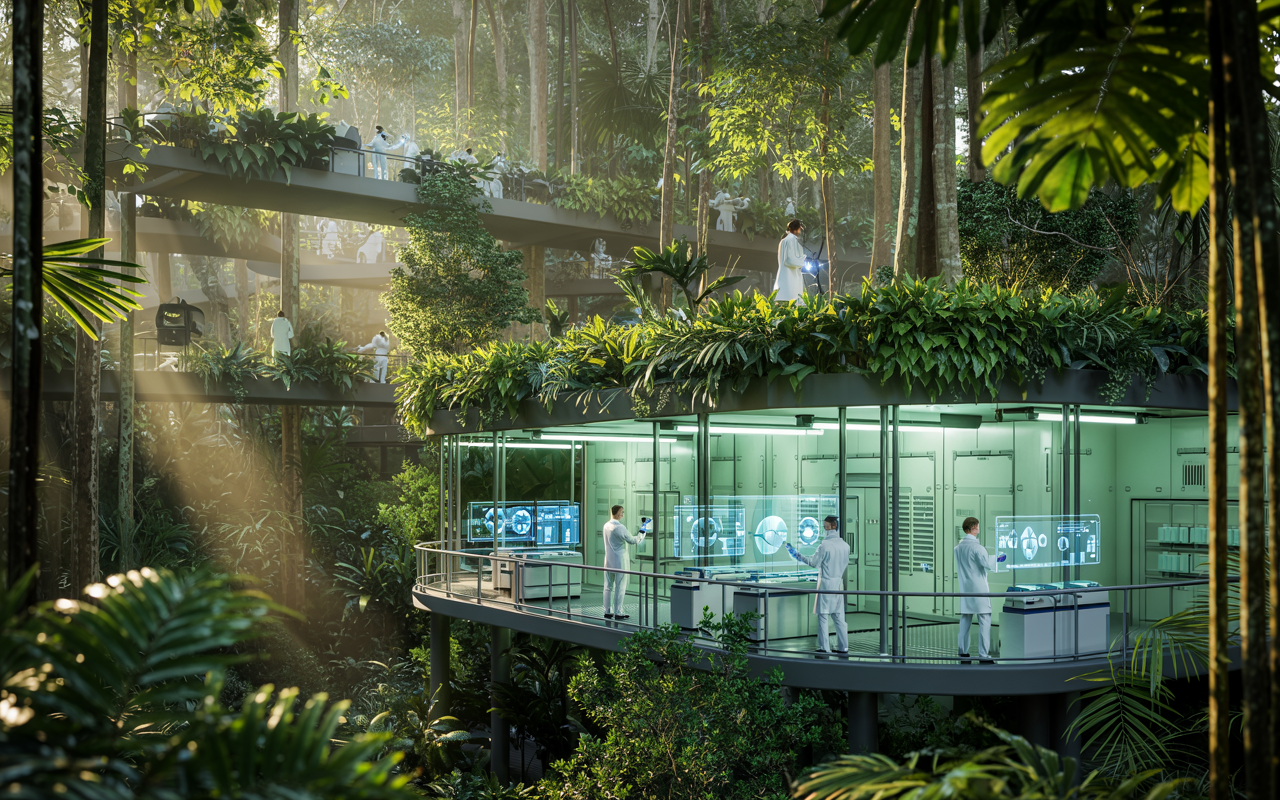
From Free Trade Zone to Center for Scientific Innovation, Manaus (AM) Stands Out as the Amazonian Capital Leading Cutting-Edge Biotechnology Research, Generating Billions with Its Industrial Hub and Leading Bioeconomy in Brazil.
For decades, Manaus (AM) was seen by many as an isolated city in the middle of the Amazon rainforest — a “dead end” with little connection to the rest of Brazil. But that narrative no longer holds. Today, the capital of Amazonas hosts one of the largest industrial hubs in the country, supported by the Free Trade Zone of Manaus (ZFM), generating billions of reais and creating over half a million direct and indirect jobs. At the same time, the city is leading a silent and strategic movement: to become a global reference in cutting-edge biotechnology research. Institutions like the Amazônia Biotechnology Center (CBA) and the National Institute for Amazonian Research (INPA) have transformed Manaus into a scientific hub of the forest, working with biopharmaceuticals, sustainable cosmetics, and technologies that enhance Amazonian biodiversity.
This balance between economic power and scientific leadership makes Manaus a unique model in Brazil and worldwide.
The Free Trade Zone of Manaus: Industrial Engine of the Amazon Generates Jobs and Innovation in the Biotechnology Sector


An Economic Model That Withstood the Test of Time
The creation of the Free Trade Zone of Manaus in 1967 marked the beginning of an economic revolution in the North region. The model was designed to stimulate regional development, using tax incentives to attract industries to the heart of the forest. By 2024, the revenue of the Industrial Hub of Manaus exceeded R$ 180 billion, according to SUFRAMA.
-
NASA issues a warning for the feared Godzilla El Niño that could change the planet’s climate in 2026 with extreme warming of the Pacific capable of causing devastating droughts in some regions and historic floods in others simultaneously.

-
Archaeologists discover a 100-meter ship graveyard in a submerged Greek city, and what has appeared on the seabed of Libya could change what was known about this ancient port.

-
You buy the refrigerator and still have to see ads: Samsung starts displaying advertising on appliances and generates negative reactions among consumers.

-
With an investment of R$ 612 million, a capacity to process 1.2 million liters of milk per day, Piracanjuba inaugurates a mega cheese factory that increases national production, reduces dependence on imports, and repositions Brazil on the global dairy map.


Industrial Diversity and Job Creation
Currently, more than 600 industries operate in the ZFM, working in the sectors of electronics, motorcycles, two-wheelers, plastics, beverages, and chemicals. Companies like Honda, Samsung, LG, Sony, and Yamaha maintain robust operations in the capital. The model supports more than 500,000 jobs directly and indirectly in Manaus and other cities in the state.
Furthermore, the ZFM accounts for around 70% of Amazonas’ industrial GDP, making it essential for state and municipal revenue.
The Transition to Bioeconomy: Science as a New Growth Vector
From Steel to Plant Extract
In recent years, the focus of the Free Trade Zone started to expand. The aim now is to combine the logistical and fiscal potential of the ZFM with bioeconomy, a production model based on renewable natural resources, such as medicinal plants, Amazonian fruits, and microorganisms.
This shift in focus is anchored in institutions like the CBA – Amazon Biotechnology Center, which utilizes local biodiversity to generate knowledge, innovation, and new industrial products.
Bioindustry with Amazonian DNA
Among the innovations promoted are:
- Açaí, cupuaçu, and andiroba bioactives for cosmetics;
- Curauá-based bioplastics;
- Natural fertilizers;
- Substitutes for synthetic medicines with Amazonian phytotherapics.
These researches not only generate high-value products but also involve local communities, respect traditional knowledge, and help preserve the forest.
Amazon Biotechnology Center: Science in Real Time
State-of-the-Art Structure
The CBA has over 12,000 square meters of laboratories, pilot plants, and incubators, with 26 environments dedicated to R&D. The institution works with four axes:
- Plant Biotechnology
- Microbial Biotechnology
- Industrial Biotechnology
- Intellectual Property and Innovation
Products Already Developed
- Production of enzymes for food and cosmetics;
- Development of antimicrobial extracts;
- Functional beverages with bacaba, cupuaçu, and camu-camu;
- Natural biopigments for paint and cosmetic industries.
In 2023, the CBA was restructured and began to be managed by a Social Organization (FUEA), in partnership with UEA and IPT-SP, bringing more agility to attract startups and international partnerships.
INPA: The Scientific Intelligence Behind the Forest
The National Institute for Amazonian Research (INPA), headquartered in Manaus since 1952, is one of the most important scientific institutions in Brazil. With a living library of the forest, it maintains laboratories in genetics, zoology, botany, and ecology. INPA is responsible for discoveries of new species, environmental monitoring, and providing data for public and private decisions.
Additionally, it leads the INCT-CENBAM (Center for Amazonian Biodiversity Studies), a network involving 300 researchers and hundreds of integrated projects with universities and centers worldwide.
Sidia and UFAM: Technology and Education for the New Economy
Sidia Institute of Science and Technology
Founded by Samsung, Sidia is a digital innovation center that works with artificial intelligence, applications, augmented reality, and the internet of things. Its work connects with biotechnology through bioinformatics, traceability of natural assets, and environmental sensors applied to the green industry.
Federal University of Amazonas (UFAM)
UFAM offers graduate programs in biotechnology, biodiversity, and sustainable development. It trains masters, doctors, and technicians who supply the CBA, INPA, and the city’s innovation ecosystem.
Funding and Public Policies: The New Cycle
Tax Incentives Linked to Science
The reformulation of the Computer Law in the ZFM now requires that part of companies’ investments in R&D be applied in the region, prioritizing areas such as bioeconomy, biotechnology, and green transition.
In 2023 alone, over R$ 850 million were allocated to strategic innovation projects, according to data from SUFRAMA.
Bill 411/25
Currently going through Congress, Bill 411/25 provides for the creation of the National Program for Fostering Research in Biotechnology in the Legal Amazon, with:
- Direct federal resources for institutes like the CBA;
- Incentives for local technical and scientific training;
- Benefit-sharing mechanisms with traditional communities.
Socio-Environmental and Cultural Impact
Forest Preservation
A study by Stanford University in partnership with the Brazilian government indicated that the Free Trade Zone of Manaus helped prevent the deforestation of over 2 million hectares since its creation. The new cycle based on bioeconomy promises to strengthen this environmental role.
Income Generation Based on Traditional Knowledge
Bioprospecting projects in partnership with the CBA have ensured royalties for riverside and indigenous communities, respecting the principles of the Nagoya Protocol on access and fair benefit-sharing.
Manaus (AM) is no longer a “dead end.” It is a starting point. One of the largest industrial hubs in Latin America, which also stands out as an international reference in biotechnology applied to Amazonian biodiversity. A territory where forest, science, and economic development converge for a greener, fairer, and more innovative future.
If bioeconomy is the new gold of the 21st century, Manaus is at the center of the race — with knowledge, structure, and prominence.







-

-

-

4 pessoas reagiram a isso.