





 Portuguese
  English
  Spanish
  3 min of reading
  0 comments


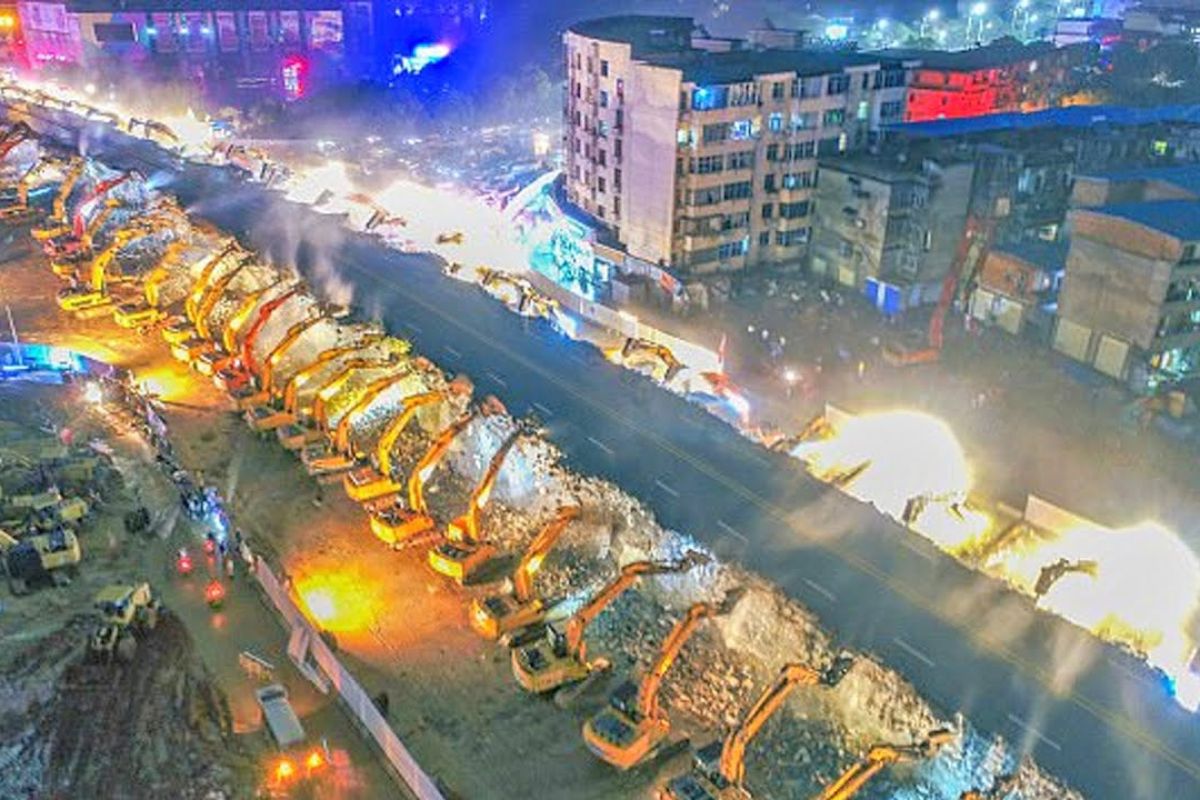
The Complete Reconstruction of a Bridge in Just 43 Hours in Beijing Summarizes the Capacity of Chinese Engineering to Combine Precision, Speed, and Scale, Reaffirming the Country’s Reputation as a Global Power in Infrastructure.
The bridge built in 43 hours, known as the Sanyuan Bridge, has become a symbol of modern China’s construction efficiency. Fully reconstructed in less than two days, the structure was replaced without significant disruption to traffic in the capital, a feat that challenged global standards of civil engineering.
The project, which involved hundreds of workers, continuous logistics, and precise coordination, represents more than a time record: it is a portrait of the integration of urban planning, construction technology, and a culture of precise execution that defines the Chinese development model.
The Context of the Bridge and the Efficiency Milestone
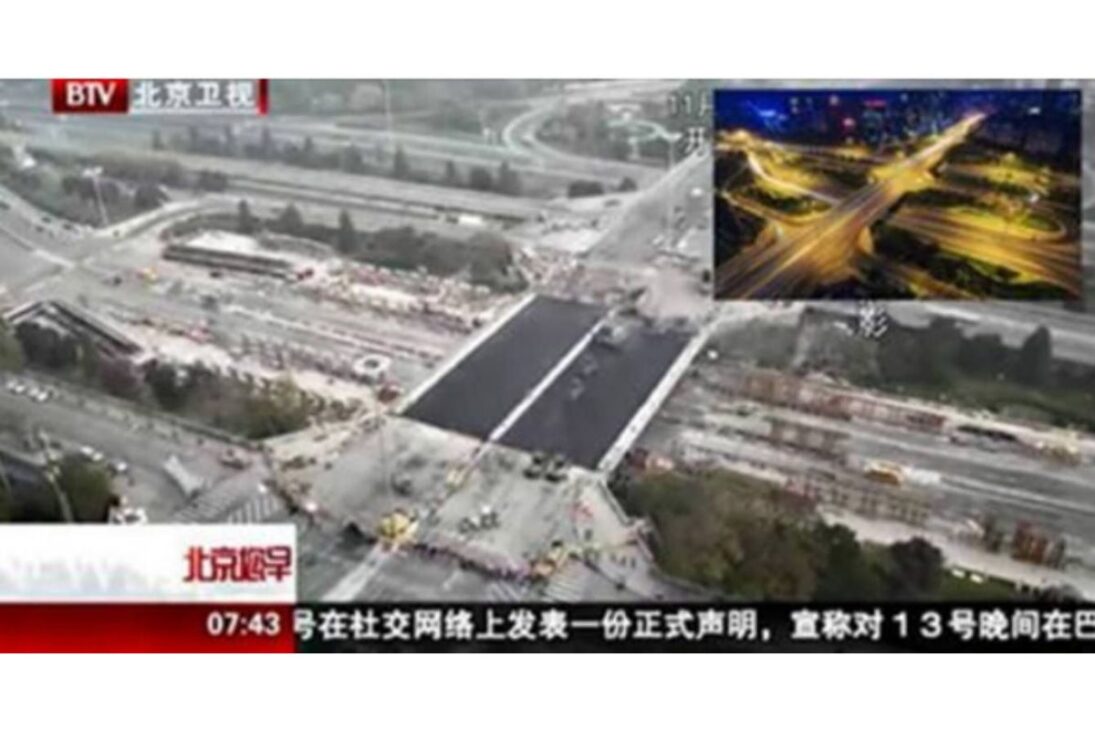
Located at one of the busiest intersections in Beijing, the Sanyuan Bridge required urgent intervention to accommodate the new road network and increase traffic capacity.
-
The induction stove you know may be numbered: a new invisible technology hides the stove under the stone countertop, heats only the pot, and promises to cook up to 50% faster while using less energy.

-
Garlic with pure honey undergoes a natural fermentation that transforms the two ingredients into a versatile condiment for marinades, sauces, and roasted vegetables, and it can also be used as a natural treatment in your garden.

-
A woman in the United States hired six immigrants for a $10,000 job on her house, and when the work was almost done, she allegedly called ICE to avoid paying and to have the workers deported.

-
iPhone in 2026: the technological innovations that go beyond cameras and processors

In any other country, a project of this magnitude would take months, but in China, the operation was completed in 43 hours.
The replacement included total removal of the old beams, installation of new prefabricated structures, and realignment of the pavement, all carried out in an uninterrupted work cycle.
The process involved digital load monitoring and the use of automated equipment, allowing for millimeter precision in fitting the sections, without compromising the safety or durability of the bridge.
Applied Engineering and Record Time Execution
The operation was coordinated by high-level technical teams, who planned each step in advance and transformed the construction site into a temporary assembly line.
More than 400 workers operated in continuous shifts, supported by large cranes, positioning sensors, and integrated communication systems.
The technique adopted was based on pre-assembly and direct replacement, a strategy that drastically reduces the intervention time.
The new beams and structural modules were pre-produced, transported by high-capacity trucks, and positioned in a timed sequence.
Each phase of the operation was simulated digitally before execution, eliminating uncertainties and optimizing efficiency.
Comparisons and International Impact
The contrast with similar works in the West generated wide repercussions. American professors and engineers highlighted that a comparable reform in Massachusetts took four years to complete, with costs tripled compared to the original budget.
In China, the same type of project was delivered in less than two days, with engineering precision and cost control.
This performance reinforced China’s image as a global power in infrastructure.
The bridge built in 43 hours has become a case study in universities and international conferences, representing a milestone in integrated urban construction management in high population density areas.
The Symbolism of Chinese Efficiency


The success of the reconstruction is not limited to the technical aspect.
The speed of execution reflects a model of social and industrial organization that prioritizes synchronicity, discipline, and innovation.
Each engineering operation is treated as a mission of collective interest, mobilizing human and technological resources on a national scale.
This approach explains why China leads the construction of simultaneous megaprojects, such as sea bridges, railway tunnels, and high-speed networks.
The Sanyuan Bridge is a microcosm of this system, which combines state planning, business execution, and cutting-edge technology in a unified development axis.
Since the reconstruction, the bridge has become a symbol of national pride and a reference for urban efficiency.
Its accelerated replacement method has been replicated in infrastructure projects across the country, including overpasses, intersections, and subway lines.
In addition to the record time, the case has established new quality and sustainability standards, with material reuse and continuous monitoring of the structures.
For engineers and planners, the project synthesizes what is expected from the next generation of smart infrastructure: precision, speed, and controlled impact.
Do you believe that other countries could replicate the Chinese model of efficiency in public works, or does it depend on unique factors of China’s management and culture?







Seja o primeiro a reagir!