





 Portuguese
  English
  Spanish
  10 min of reading
  0 comments


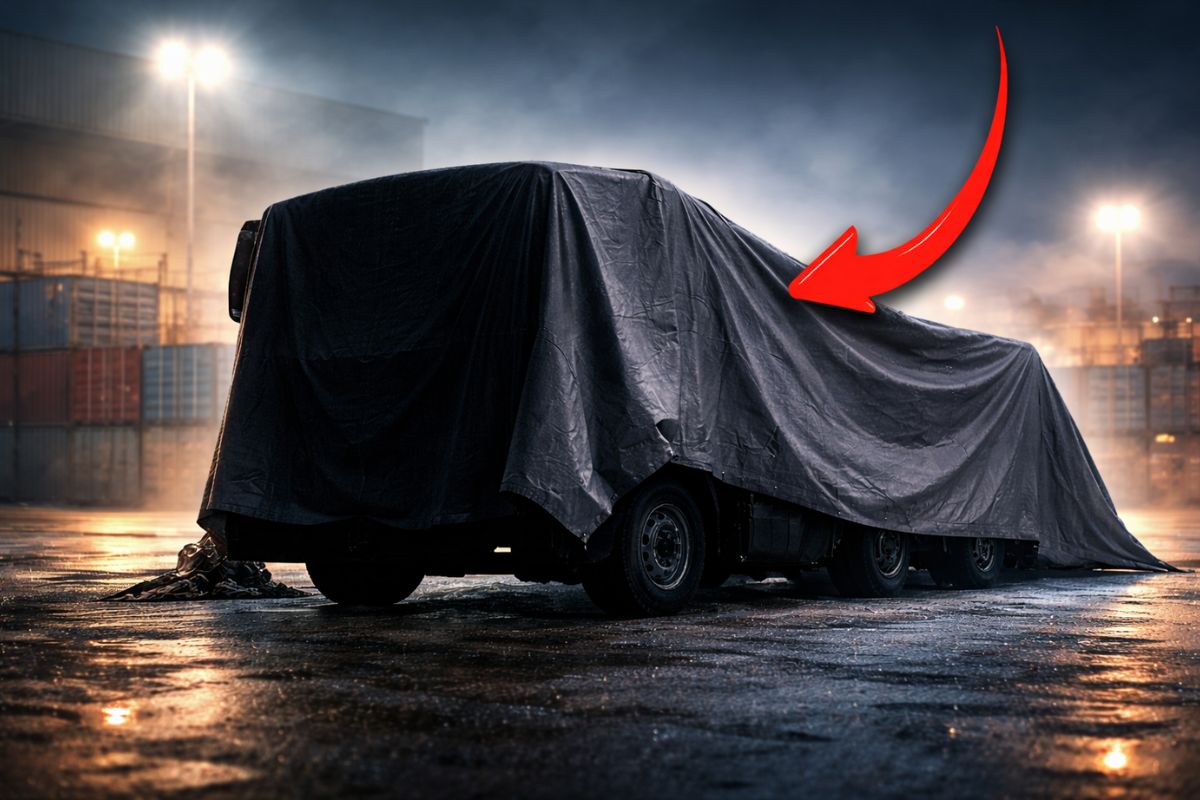
From Orange Scania to Noisy Mercedes, Brazilian Trucks Gained Nicknames So Strong That They Erased The Factory Name and Created A Culture Apart On The Highways, Uniting Emotional Memory, Striking Design, and Stories of Hard Work.
On the country’s roads, Brazilian trucks are often worth more for their nickname than for the initials on the document. Instead of L111, LP321, or F600, what sticks in the mind are jacaré, cara chata, sapão, torpedo, Fenemê cabeça de bagre, cara larga, João de Barro, carreta Vanderleia, and Muriçoca. These names tell not only the story of cargo transport but also of the creativity of truck drivers and truck enthusiasts who transformed machines into characters and created true legends on wheels.
Why Brazilian Trucks Get Nicknames and Forget Their Baptism Name
Among truck owners and fans, initials like L111, LP321, F600, or D9500 might appear in the manual, but what really counts is the name that comes from the road.
A nickname is a way of appropriation, affection, and banter at the same time, and it functions as a shortcut to remember the model by its appearance, color, sound, or some striking characteristic.
-
Spain surprises the world by erecting 62 artificial dunes, mixing sand with natural remains of posidonia, and causing the structure to lose only 1.4% of its volume in 1 year.

-
With 16 Bulava missiles, improvements in acoustic stealth, and a design focused on silent patrols, Russia’s nuclear submarine was born to ensure Moscow’s invisible retaliation and has become one of the pillars of its maritime strength.

-
‘Populous’ city in Rio among the worst in Brazil in national ranking and exposes silent development crisis.
-
Couple buys house in the South Zone of São Paulo, opens a hidden door in the garage, and finds a secret wine cellar with dozens of old wines forgotten since the 1970s.

In practice, when a Brazilian truck has a very long hood, a strange front, bulging headlights, or different axles, imagination comes into play.
Someone makes a comparison at the gas station, another repeats it, the nickname sticks, and over time, almost nobody remembers the official name.
That’s how jacaré, cara chata, sapão, torpedo, João de Barro, Fenemê cabeça de bagre, cara larga, Vanderleia, and Muriçoca became part of the identity of Brazilian trucks.
Scania Jacaré L111: The Big People’s Truck That Became Easy Prey

The list of the most famous nicknames for Brazilian trucks almost always starts with Scania L111, known in documents as L, LS, or LT, but immortalized on the roads as jacaré. Launched in 1976 by the Swedish manufacturer, it quickly became a success among truck drivers.
Officially, it was a heavy truck, mostly equipped with a DS11 six-cylinder engine with about 296 horsepower.
At the time, the jacaré was the second most powerful truck in Brazil, losing only to another Scania, the LK10, which already shows the size of the responsibility. Robustness and ease of maintenance helped create a legion of fans.
The nickname came from its appearance. Just lift the hood of the L111 to clearly see a jacaré with its mouth open, with that long and thin shape at the front. The comparison may even seem childish, but it stuck.
The orange color, which became Scania’s trademark in Brazil, made it even easier to spot jacarés from afar in the lines of Brazilian trucks at gas stations and yards.
Even with over 10,000 units sold, the jacaré was discontinued in 1981 to make way for more modern models. But many specimens continue to roam, and some, well preserved, are treated as jewels on wheels, reminding us daily why this is one of the strongest nicknames in the history of Brazilian trucks.
Mercedes-Benz LP321: The Authentic Cara Chata That Led The Way for Advanced Cabins

Long before cara chata became a generic nickname for any truck without a hood, there was the Mercedes-Benz LP321, considered the authentic cara chata among Brazilian trucks. Launched in 1958, it was one of the first advanced cabin models to hit the country’s roads.
While drivers were used to needled trucks, with long hoods in front, the LP321 placed the driver practically over the front axle.
This format allowed for a larger body without exceeding the legal length, which meant carrying more cargo and increasing freight revenue. For those who live on the road, this sounded like music.
Throughout its 12 years of production, the LP321 sold over 35,000 units, a significant number for the standards of the time.
But while it pleased in the pocket, the appearance wasn’t a consensus. Without a hood, with a flat and full front, the truck was nicknamed cara chata, a nickname that Mercedes might not have found so charming, but which spread and forever marked the history of Brazilian trucks.
Ford Sapão F14.000: Bulging Headlights, Light Cabin, and Fame in The Cities

Among the urban Brazilian trucks, few attract as much attention as the Ford F14.000, which almost nobody remembers by its name, only by its nickname: Sapão.
The popular baptism came from the low and wide lines, with large protruding headlights that resemble a frog’s eyes.
Launched in 1992, the model was part of a strategy by Ford to move away from the look of the American trucks that the brand sold in Brazil until then.
One of the major innovations of the cabin was the use of fiberglass, which reduced the truck’s weight by about 400 kilos, bringing gains in payload. Additionally, the hood opened forward, facilitating access to the engine and mechanical components.
The Sapão spread through the streets in various configurations, such as tipper, open and closed body, mainly dedicated to urban transportation.
A curious detail is that a magazine of the time reported that the Sapão nickname was born inside the factory, among employees, showing how the culture of nicknames also arises within the industry that produces Brazilian trucks.
Bob Esponja 24.250: The Yellow Constellation That Became A Character on The Roads

Not all nicknames for Brazilian trucks are animal-themed. In 2005, Volkswagen launched the Constellation line, and one of the models that stood out was the 24.250, which came to life on the roads with the nickname Bob Esponja, especially in the yellow version.
The association came almost automatically. The rectangular shape of the cabin, the position of the headlights, windshield, and grille, combined with the yellow color, made the truck very similar to the cartoon character, and truck drivers did not spare the comparison.
The Constellation didn’t shine just because of the nickname. In 2006, the model won the Formula Truck championship with driver Renato Martins.
In addition, it gained prominence on television as the truck of Pedro and Bino in the return of the series Carga Pesada, which helped spread the image of Bob Esponja on wheels even further.
Years later, reports celebrated the 15th anniversary of the line, highlighting over 230,000 units sold and the 24.250 as one of the bestsellers, with more than 80,000 trucks registered.
To this day, it is common to cross paths with this character from the list of Brazilian trucks, both on screen and on the asphalt.
Torpedo L312: The First Brazilian Mercedes That Exploded in Importance

Going back in time, one of the most self-explanatory nicknames for Brazilian trucks is Torpedo, given to the Mercedes-Benz L312.
The popular name came from the extremely thin and long engine compartment, resembling a projectile. Just a glance made it easy to understand why.
But the L312 had significance that went far beyond looks. It was the first Mercedes-Benz truck manufactured 100 percent in Brazil and also the first model from the brand produced outside Germany.
The first unit came out of the factory in São Bernardo do Campo on September 28, 1956, marking a decisive moment for the national automotive industry.
In addition to this industrial milestone, the L312 was also the first diesel truck in Brazil, at a time when many vehicles still ran on gasoline.
The shift helped reduce operational costs and improve performance, forever changing cargo transport in the country.
It is not an exaggeration to say that the Torpedo paved the way for the “invasion” of Mercedes-Benz trucks that would dominate Brazilian roads in the following decades.
Fenemê Cabeça de Bagre D9500: When The Nickname Is Worth More Than The Initials

Among the Brazilian trucks with the most layers of nicknames, the D9500 from the Fábrica Nacional de Motores holds a special place. In documents, it was D9500, under the corporate initials FNM, but on the roads, it was called Fenemê cabeça de bagre and Fenemê boca de bagre.
The brand’s history is almost as curious as the names. FNM started as a government project to manufacture airplane engines, passed through refrigerators and other equipment before reaching trucks, in partnership with the Italian Alfa Romeo.
The construction of the cabins involved a partnership with Brazinca, and it was precisely the front design that earned the nickname boca de bagre.
Since the model had an advanced cabin, it was also seen as cara chata, but what really stuck was Fenemê cabeça de bagre, inspired by the front grille and the position of the headlights.
To this day, many people know the brand only by the nickname Fenemê, proof of how Brazilian trucks can turn technical initials into names with their own personality.
Ford F600 Cara Larga: Open Front and Personality to Spare

Another classic among Brazilian trucks that almost nobody refers to by its baptism name is the Ford F600, which gained the nickname Cara Larga.
The model began to roll in the late 1960s, in a line that Ford had already sold in Brazil since 1957, but it was this design that became etched in memory.
The origin of the nickname lies in the truck’s front. The wide, stamped steel horizontal grille, the well-separated headlights, and the bumper that occupied nearly the entire width of the cabin created an “open” and wide expression compared to competitors, who were narrower and rounder.
This cara larga marked an era both for its appearance and durability. Even after being discontinued, it was still common to see F600s working hard for many years, and in some places, it is still possible to find specimens rolling, carrying on the tradition of nicknames that transcend generations of Brazilian trucks.
João de Barro L75: The Orange Scania That Became A Nest of Stories

Returning to the world of Scania, another important model in the history of Brazilian trucks is the L75, nicknamed João de Barro.
The truck began production in Brazil in 1958, when the company was still called Scania Vabbs and taking its first steps here.
The L75 had versions with fixed chassis and a mechanical horse, helping to consolidate the brand’s presence in the country. Visually, it is very similar to the L111 jacaré, but gained a different nickname due to a striking detail: the orange color of the cabin, which resembled the mud nests built by the João de Barro bird.
Probably, the truck drivers of the time were more impressed by the color than by the shape of the hood. Thanks to this, today we can consider both João de Barro and Jacaré as two kings of Brazilian roads, each with its nickname and guaranteed place in the history of Brazilian trucks.
Carreta Vanderleia: Separate Axles, A Legend Tied To Jovem Guarda

Not only the mechanical horses and rigid trucks make it to the list of nicknames for Brazilian trucks. The spaced axle trailers also received a name that sticks in the minds of those who live on the road: Vanderleia.
The technical difference lies in the axles. While a common trailer has the axles close together, the Vanderleia trailer has axles spaced about 2.40 meters apart, which helps spread the cargo weight better, allows for larger volumes to be transported, and increases stability, reducing the risk of tipping over.
Regarding the nickname, there are two versions. In one, truck drivers said that due to the initial instabilities, the axles seemed to dance when the driver looked in the rearview mirror.
In another, the comparison was direct with the singer Vanderleia, an icon of Jovem Guarda, famous for dancing with her legs apart.
Regardless of the exact origin, the fact is that spaced axle trailers have been called Vanderleia for over half a century and are still referred to as such on the highways, consolidating yet another legend among Brazilian trucks.
Mercedes 1113 Muriçoca: The Beetle of The Roads That Never Disappears

In closing the list, it’s impossible to ignore the Mercedes-Benz 1113, considered by many the brand’s biggest success in Brazil and one of the maximum symbols of Brazilian trucks. Among so many nicknames, two became famous: Beetle of The Roads and, mainly, Muriçoca.
The Muriçoca nickname started associated with the mechanical horses, equipped with a fifth wheel for trailer coupling.
Over time, the expression spread to all Mercedes trucks with that cabin shape, until it became synonymous with the line. The idea was simple and full of humor: there were so many 1113s running that it seemed like a swarm of muriçoca.
To this day, it is not rare to see examples of this truck circulating, often still working hard. The success was so great that the nickname transcended generations and remained in the vocabulary of truck drivers, mechanics, and enthusiasts of Brazilian trucks, proving that some models never really disappear.
What Nicknames Reveal About The Soul of Brazilian Trucks


Looking at jacaré, cara chata, sapão, Bob Esponja, torpedo, Fenemê cabeça de bagre, cara larga, João de Barro, carreta Vanderleia, and Muriçoca is looking at much more than just jokes at the gas station.
These nicknames reveal how Brazilian trucks have ceased to be mere work machines to become characters with history, personality, and emotional memory.
They mark eras, technologies, design changes, and even revolutions in fuel, like the first diesel.
They show how the road culture mixes with music, television, foreign brands that have become Brazilian, and a great capacity to give everything a name with humor and observation.
In the end, it’s impossible to separate the history of Brazilian trucks from the history of the nicknames that people created for them.
And you, what nickname of Brazilian trucks marked your memory the most and which other truck with a “weird” name should not be missing from a list like this?






-

2 pessoas reagiram a isso.