





 Portuguese
  English
  Spanish
  3 min of reading
  0 comments


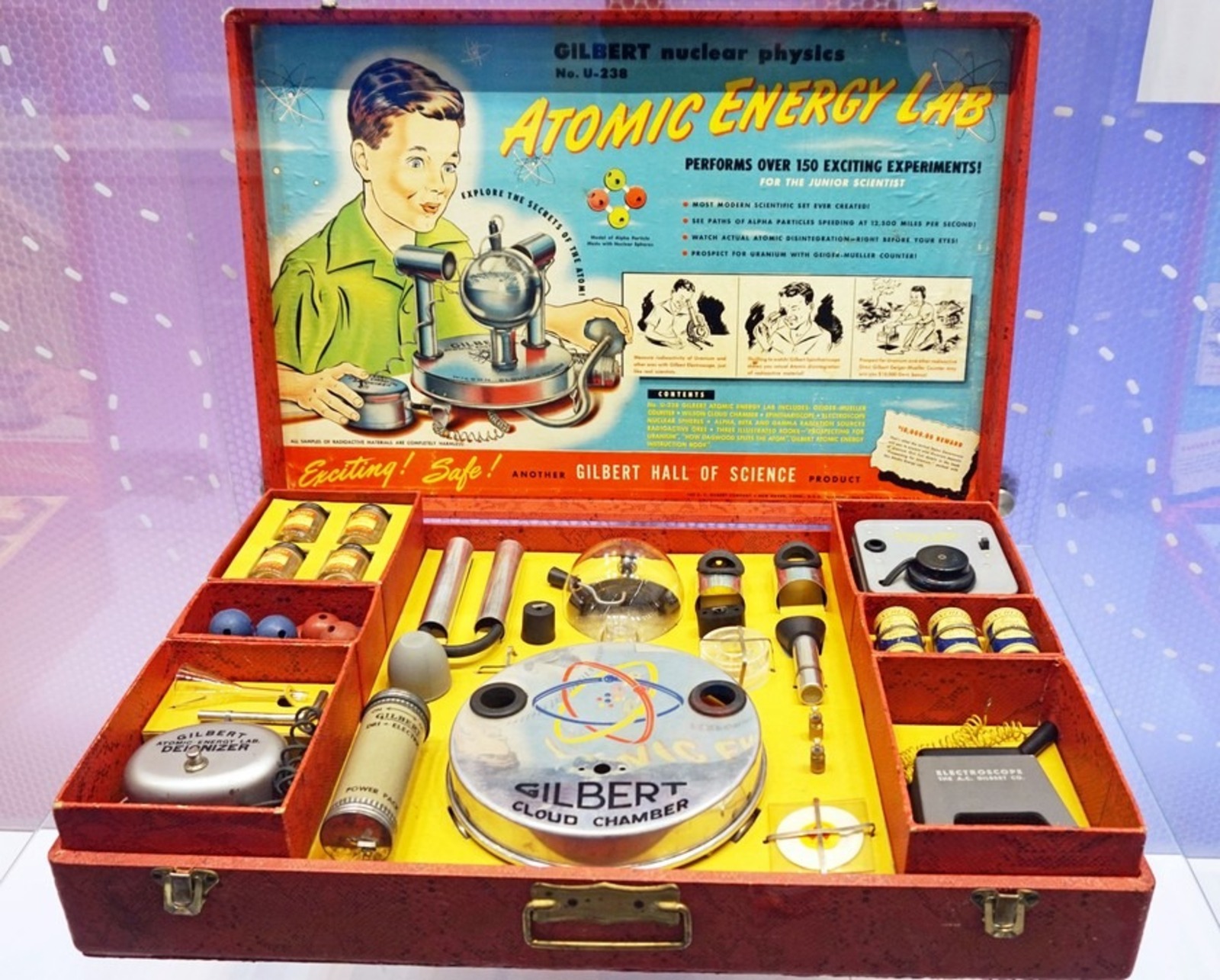
Atomic Toy of the 1950s Included Real Radioactive Minerals, Sold Less Than 5 Thousand Units and Today is Worth Thousands at Auctions
In the 1950s, during the golden age of nuclear energy, an American toy factory launched a product that today seems unthinkable: an atomic laboratory for children, equipped with small samples of radioactive minerals.
Named “Gilbert U-238 Atomic Energy Lab”, it became one of the most talked-about toys of the time, precisely because of the risk it posed, and reemerged last year after being auctioned as a rarity in the United States.
A Daring and Expensive Toy for the Time
The laboratory was created by the A. C. Gilbert Company, which ranked among the largest toy manufacturers in the world.
-
Friends have been building a small “town” for 30 years to grow old together, with compact houses, a common area, nature surrounding it, and a collective life project designed for friendship, coexistence, and simplicity.

-
This small town in Germany created its own currency 24 years ago, today it circulates millions per year, is accepted in over 300 stores, and the German government allowed all of this to happen under one condition.

-
Curitiba is shrinking and is expected to lose 97,000 residents by 2050, while inland cities in Paraná such as Sarandi, Araucária, and Toledo are experiencing accelerated growth that is changing the entire state’s map.

-
Tourists were poisoned on Everest in a million-dollar fraud scheme involving helicopters that diverted over $19 million and shocked international authorities.


Marketed between 1950 and 1951, it promised to give children the chance to play scientist with a realistic kit.
The price, however, was not affordable. It cost US$ 49.50, roughly equivalent to US$ 600 in today’s values.
For this reason, it sold less than 5 thousand units. Even so, it entered history as one of the most expensive and risky toys ever created.
This detail made the item even more valuable. Last year, a copy was put up for sale in Boston by the auction house RR Action, with bidding expectations starting at US$ 4,400, equivalent to about R$ 26,600.
A Truly Radioactive Kit
The name “U-238” was not chosen lightly. It referred to uranium 238, a radioactive isotope that made up part of the material included in the kit.
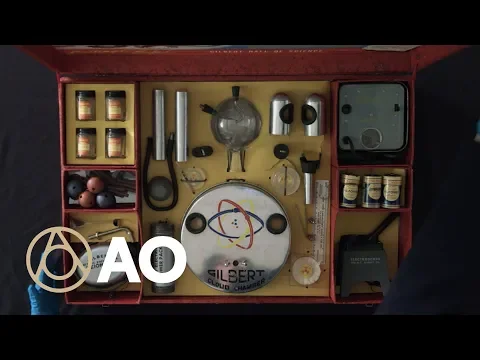
The case included four glass vials containing minerals like autunite, torbernite, uraninite, and carnotite.
Additionally, it came with instruments such as an electroscope, used to identify electric charges, and a Geiger counter, intended to measure radiation.
Therefore, although it did not allow for actual nuclear experiments, the items emitted real radiation.
The protection of the containers, according to experts, minimized greater risks, but safety depended on whether the child did not violate the glass vial.
The Level of Radiation Exposure
The magazine IEEE Spectrum highlighted that playing with the laboratory would be equivalent, in terms of radiation dose, to spending a day under the ultraviolet rays of the sun.
In other words, the risk was considered low, as long as the material remained sealed.
However, this was an important condition. If someone tried to break the vials, the effects could be potentially more serious.
How the Game Worked
The toy’s manual taught curious activities. One of the suggestions was to hide a radioactive source and then use the Geiger counter to locate it, like a game of atomic treasure hunt.
This experiment aimed to spark scientific interest in children, playfully demonstrating how particle detection worked.

Additional Curiosities in the Kit
The laboratory also included small samples of other minimally radioactive ores, such as lead, ruthenium, and zinc.
To top it off, it contained a comic book starring Dagwood, the character from the classic comic strip “Blondie.”
The comic, titled “Learn How Dagwood Splits the Atom,” was written with special participation from General Leslie Groves, known for leading the Manhattan Project — the same project that developed the first atomic bomb alongside Robert Oppenheimer.
Thus, a toy that seemed educational ended up becoming one of the greatest curiosities in the toy industry.
Instead of occupying children’s shelves, the atomic laboratory occupies space in collections and auctions, symbolizing an era when science, market, and daring mixed in unusual ways.
With information from Galileu Magazine.









-

Uma pessoa reagiu a isso.