





 Portuguese
  English
  Spanish
 7 min of reading
  14 comments


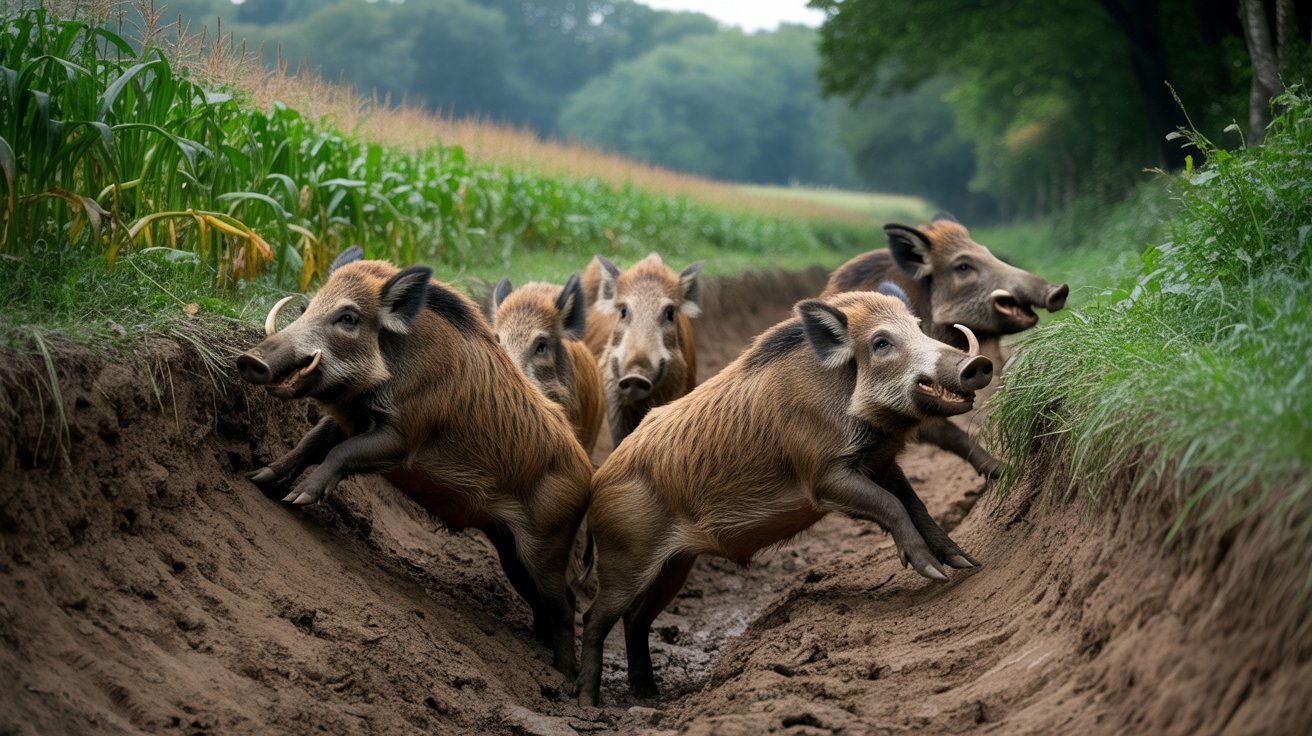


New Law in Minas Gerais Tries to Transform Wild Boar from Explosive Threat to Controlled Species with Strict Rules, State Registries, Closer Supervision of Farmers, and a Legal Battle That Is Already Starting to Gain Strength Among Environmentalists, Government Agencies, and Animal Rights Activists
The wild boar (Sus scrofa) has long ceased to be just an exotic animal viewed with curiosity in farms. Today, it is treated as a environmental and economic villain in several regions of Brazil, especially in Minas Gerais, where its uncontrolled expansion has come to represent severe losses for small and medium rural producers.
Now, this scenario has opened a new chapter. The Legislative Assembly of Minas Gerais (ALMG) has definitively approved the Bill 1.858/23, which authorizes population control, sustainable management, and hunting of wild boars and their hybrids (javaporco) throughout the state. The information was released by the website that published the original report on the subject, detailing that the vote took place on November 12 and met a long-standing demand from the agricultural sector and environmental agencies.
With the sanction, Minas Gerais now has a specific policy to curb the advance of wild boars, considered one of the most harmful invasive species in the world. The stated goal is to mitigate environmental impacts, reduce losses in the field, and at the same time, establish clear rules so that management does not turn into predatory hunting.
-
China rejected an entire shipment of beef from Argentina after detecting an antibiotic so dangerous that it has been banned for human consumption for over 30 years, and now the export sector is facing a crisis of international trust.
-
With nearly 500 thousand tons per year, barley production is growing in Brazil, while a decline in beer consumption among Generation Z raises alarms in the sector.

-
With tractors out of reach for small producers, a tricycle created by Embrapa Algodão becomes a cheap and efficient solution and gains national prominence.
-
From 130 producers in the year 2000 to just 15 today: the dramatic decline of passion fruit in Araguari shows how the lack of labor in the Brazilian countryside is killing a decades-old agricultural tradition, even with Brazil being the largest producer in the world.

Why the Wild Boar is Considered a Pest in Minas Gerais

To understand why Bill 1.858/23 gained so much strength in the ALMG, it is necessary to go back a few decades. The European wild boar was introduced to Brazil in the 1960s, initially in farms in the South of the country. From there, due to its high reproductive power, great adaptability, and absence of natural predators, the animal spread rapidly, crossing state borders and arriving strongly in Minas Gerais.
Currently, the wild boar is listed by the International Union for Conservation of Nature (IUCN) as one of the 100 Worst Invasive Alien Species on the Planet. This is not without reason. In Minas Gerais, it is already officially recognized as a “pest”, which paves the way for the creation of stricter and more integrated public policies.
According to the bill itself, the damages attributed to wild boars include:
- Destruction of crops and pastures, directly affecting the income of small farmers.
- Damage to native fauna and flora, through digging, competition for food, and predation.
- Risks to public health, as the animal can transmit diseases such as brucellosis and leptospirosis.
- Attacks on domestic animals and livestock, increasing the costs of protecting rural properties.
Moreover, rural producers report sleepless nights, destroyed fences, entire plantations lost, and increased costs for stronger fencing and protection measures. In this context, the wild boar has ceased to be just an environmental problem and has become one of the biggest economic concerns in the rural sector of Minas Gerais.
How the Law was Approved and Who Advocated for Bill 1.858/23
The approval of Bill 1.858/23 took place in the Chamber of the Legislative Assembly of Minas Gerais, through the voting of the substitute no. 2 from the Committee on Agriculture and Agroindustry. The final text was presented by Deputy Marli Ribeiro (PL) and Deputies Dr. Maurício (Novo) and Raul Belém (Cidadania), who embraced the agenda of population control of wild boars in the state.
According to the bill, the central justification lies in the need to provide legal security to rural producers, organize management, and allow the state to have governance tools to deal with a species that has already become a matter of health, environment, and economy. Therefore, the new law not only authorizes hunting but also creates rules, registries, and conditions for this activity.
At the same time, the proposal seeks to align with federal legislation and existing norms in the country. Therefore, the text references actions by Ibama, existing regulations on invasive fauna, and limits imposed by national environmental policies.
How Control and Hunting of Wild Boars in Minas Gerais Will Work
The new law is not a “free-for-all.” On the contrary, it tries to balance the pressure from the field for hunting wild boars in Minas Gerais with the necessity of preserving the environment and preventing management from being confused with illegal hunting.
Authorization, Rules, and Areas of Operation
First of all, the bill emphasizes that the management and hunting of wild boars must follow state and federal regulations, including the rules defined by Ibama. This means that, although Minas Gerais has authorized the activity, it remains part of a broader control system.
On private properties, control must be authorized by the Secretariat of Agriculture, Livestock and Food Supply (Seapa), which plays a central role in granting permits and overseeing operations. On public lands or conservation units, specific permission from the state environmental agency will be required, responsible for preventing additional harm to native fauna.
Thus, the law aims to prevent the fight against wild boars from becoming a loophole for predatory hunting of other species or for actions without any technical criteria.
Use of Dogs, Equipment, and Ethical Limits
Another sensitive point of the legislation concerns the use of dogs in wild boar hunting. The practice is allowed, but with an important caveat: there can be no mistreatment. The intention is to create a middle ground between effective pest control and animal protection, delineating what is authorized management and what crosses the ethical line.
Additionally, the text makes it clear that the activity must not have trophy purposes, distancing the idea of indiscriminate sport hunting and the sensationalism of slaughter. Thus, the law reinforces that the focus is on population control, not on promoting a “sport” based on the killing of animals.
Registries, Governance, and Traceability
To provide more transparency to the entire process, the law creates two essential instruments:
- RECJ/MG – State Network for Wild Boar Control
- CECFI – State Registry of Invasive Fauna Controllers
These mechanisms will allow the Minas government to organize management actions, know who is hunting, where, and under what conditions, as well as generate data for future public policy decisions. By recording operations, teams, and results, the state gains a clearer view of the impact of wild boar control in the territory.
Sport Hunting, Sanitary Slaughter, and Exemption from Authorization
Although the law is based on population control, it also opens space for sport hunting, as long as well-defined legal and environmental parameters are respected. The idea is that leisure does not outweigh public interest but can occur within established limits.
Another relevant point is the authorization for the sale of wild boar meat, which can only be sold if it is the result of legally authorized sanitary slaughter. The rule restricts this possibility only to females, a strategy to avoid encouraging the breeding and increase of the wild boar population in captivity without control.
Additionally, the law establishes a specific rule for rural producers. Those who carry out control and hunting by their own means are exempt from prior authorization, provided that:
- they follow all current environmental regulations;
- they digitally record the actions taken, ensuring some degree of traceability.
Thus, the government attempts to ease the burden on those on the front lines of the losses while still maintaining a minimum of institutional control.
STF, Ibama, Environmentalists, and the Next Chapter of the Dispute
Although the law represents a significant advance from the perspective of the agricultural sector, the subject is far from consensus. Ibama has been re-discussing points of federal regulation on invasive species, while animal defense entities and environmental organizations question the model for controlling wild boars and the use of hunting as the main tool.
This conflict has already reached the Supreme Federal Court (STF), where there are questions about how the country deals with wild boars and other invasive alien species. There is even anticipation that the Minas bill could also be analyzed by the Court, as it addresses sensitive issues such as wildlife, environmental protection, and the release of hunting.
According to the original article that covered the topic in detail, the Minas legislation may become a reference or target for challenges, depending on how it is applied in practice and what concrete results will emerge in the field and environment.
While legal discussions advance, producers, environmental agencies, and state authorities begin preparing to implement the new model of management and hunting of wild boars in Minas Gerais, seen as urgent by those living in the countryside and dealing with increasing losses. At the same time, the challenge of ensuring that this authorization does not become a gateway to abuses, mistreatment, or mismanagement in other areas of fauna grows.
Between Urgency in the Field and Environmental Caution: The Challenge is Just Beginning
The release of controlled management and hunting of wild boars throughout Minas Gerais is seen by many as a necessary response to a real problem affecting crops, pastures, livestock, and even public health. The new law offers legal security, creates governance tools, and officially recognizes the severity of the species’ invasion in the state.
On the other hand, the measure also rekindles deep debates about the type of relationship Brazil establishes with invasive fauna, the role of hunting in controlling animal populations, and the ethical limits of management. Between the economic interest of the countryside, environmental conservation, and animal welfare, there is a gray area that will still be tested in practice.
It is, therefore, a public policy that emerges with strong support from the rural sector but will need to face technical, political, and legal challenges over the coming years. The final outcome, whether success or failure, will depend on the combination of oversight, responsibility of controllers, and the state’s ability to adjust the course as new data on the wild boar population in Minas Gerais emerges.








sim sou a favor da caça .ja que é uma espécie invasora .
uma dúvida o que e feito com os cadáveres
Pode ser consumido como porco, capivara e outros animais.
Esse bicho procria como rato e não tem predador capaz de combater
Não entendi a parte do “não permitir que o manejo se transforme em caça predatória”, o manejo de uma espécie invasora é a eliminação completa dele na região, de que forma se deve refrear o manejo de uma espécie que mesmo sem burocracia já não se dá conta de eliminar e acabar com os prejuízos? É só mais um cerceamento governamental para o desarmamento da população para que fiquem a mercê da “benevolência” dos nossos ilustres governantes.