





 Portuguese
  English
  Spanish
  4 min of reading
  0 comments


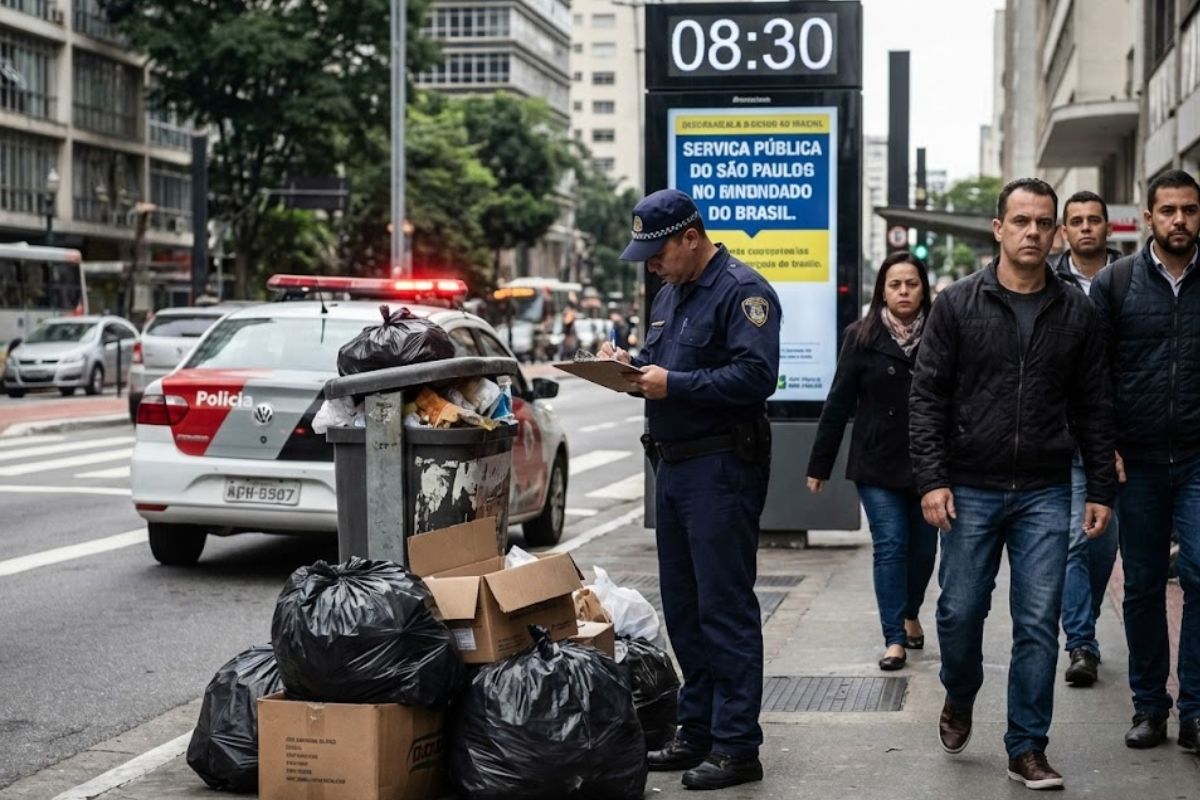
In Large Cities, Leaving a Trash Bag on the Street Outside of Hours, in Quantities Above the Permitted or Without Protection Results in Heavy Fines, Legal Action for Environmental Crime, and Even Imprisonment; Curitiba and São Paulo Are Already Applying Thousands of Fines and Charging Extra Fees from Large Recidivist Generators Throughout the Year.
Between January 2021 and May this year, the city of São Paulo registered 4,406 fines for irregular waste disposal, averaging 108 fines per month, according to the Municipal Secretary of Subprefectures. In different Brazilian cities, leaving trash on the sidewalk outside of collection hours, without proper packaging or in quantities above the permitted can result in a fine that can reach R$ 100 thousand, especially for large recidivist generators.
In addition to the fine, those who insist on improper disposal fall under the rules of environmental crime. In Curitiba, where a specific law has been in effect since 2004, 153 fines were issued between 2013 and 2015, totaling R$ 268 thousand, primarily against companies and condos that ignored schedules, volume limits, and city hall guidelines.
Fines for Trash on the Street Hit the Wallet and Can Become Environmental Crime
Putting trash on the sidewalk before the time hits the wallet. Although each municipality has its own legislation, leaving waste on the street outside of collection hours, without adequate protection or above the permitted volume is an environmental violation in several Brazilian cities.
-
The Senate approves a bill that criminalizes misogyny, hatred, or aversion towards women, and includes the crime in the Racism Law with a penalty of up to 5 years.

-
Chamber Approves Bill That Allows Pepper Spray for Women Over 16 and Imposes Strict Rules for Purchase, Possession, and Use as Self-Defense

-
Chamber Approves Law to Combat Leucaena, Fast-Growing Plant That Dominates Land and Threatens Native Species in Various Regions of the Country

-
Asset Division: Know What Cannot Be Divided in Case of Divorce


Fines can start at symbolic values and reach R$ 100 thousand, especially when there are recidivist offenses and the generator is of large size.
Part of these penalties is linked to the volume generated. Above 600 liters per week of waste, the generator must pay an extra fee or hire a private service, a rule that applies to houses, residential buildings, and commercial establishments.
Those who ignore this limit and continue to fill the sidewalk with trash bags greatly increase the risk of receiving a fine and being categorized as a bad generator.
In Curitiba, Fines Start at R$ 100.06 and Have Been in Effect Since 2004
In Curitiba, a law in effect since 2004 provides for penalties for improper waste disposal. Fines start at R$ 100.06 and increase based on the discarded volume or recidivism, which makes negligence regarding the sidewalk an expensive problem.
The city’s guidance is straightforward: residents should place their waste on the street about an hour before the garbage truck passes.
Between 2013 and 2015, the city recorded 153 fines for irregular disposal, totaling R$ 268 thousand in penalties.
The majority of fines were imposed on companies and condos that insisted on exceeding volume limits, accumulating trash on the sidewalk, or disobeying indicated schedules, resulting in fines and wear with public authorities.
In São Paulo, More Than 4 Thousand Fines and Risk of Imprisonment
In the capital of São Paulo, illegal disposal has already become routine in the statistics. Between January 2021 and May this year, 4,406 fines were registered, averaging 108 fines per month, according to the Municipal Secretary of Subprefectures.
Violations range from leaving trash bags on sidewalks to dumping debris in preservation areas.
Penalties in São Paulo start at R$ 1,500 for small disposals and can reach R$ 25 thousand in the most severe cases, such as dumping large volumes of waste, hospital trash, or heavy debris.
The municipal legislation classifies this type of conduct as environmental crime, which opens the door to criminal prosecution and even imprisonment, in addition to the administrative fine that impacts the budgets of residents, condos, and businesses.
Ecopoints Help Avoid Fines and Provide a Correct Destination for Debris
To facilitate proper disposal and reduce the risk of fines, the city of São Paulo offers 120 ecopoints distributed throughout the neighborhoods. In these locations, it is allowed to bring lightweight debris, pruning waste, old furniture, and recyclable materials.
The limit of 1 cubic meter per person was defined to prevent companies from using the free service as if it were a private deposit.
By using ecopoints for debris and bulky objects, residents reduce the number of bags left on the sidewalk and decrease the chance of fines for excess trash on the street.
Moreover, disposal is concentrated in locations prepared to receive this material, which helps keep the neighborhood cleaner and decreases the amount of waste scattered throughout the area.
How Not to Lose Money on Fines for Trash on the Sidewalk
In practice, those who want to avoid fines need to follow three basic steps. First, respect the collection schedule: placing trash on the sidewalk close to the truck’s passage reduces the time the bag is exposed to tears, animals, and bad odors.
Second, control the weekly volume so as not to exceed the 600-liter limit without paying the extra fee or hiring a private service.
Finally, it is essential to use the correct channels for large volumes. Debris, construction waste, and old furniture should not be treated like regular trash on the sidewalk.
Whenever the volume is greater than everyday household or building waste, the solution is to seek out the available ecopoints or hire a specialized service, avoiding high fines, legal action for environmental crime, and, in extreme cases, even imprisonment.
In your street, do residents respect the collection schedule or do you think only the threat of heavy fines makes trash leave the sidewalk on time?










-

-

8 pessoas reagiram a isso.