





 Portuguese
  English
  Spanish
  4 min of reading
  0 comments



After Years of Impasse, Federal Government Resumes Billion-Dollar Army Land in Brasília and Enables a Package of Railway Projects with a Concession Model That Unites Transport and Urban Development
After more than a decade of impasse, the federal government and the Army reached an agreement on the area valued at R$ 40 billion, located nine kilometers from the National Congress. The land, known as Brasília Railway Yard, will be resumed by the Union and linked to new railway projects, paving the way for concession auctions and public-private partnerships.
The understanding was sealed in a meeting at the Palácio do Planalto, with the presence of ministers Rui Costa (Chief of Staff), José Múcio (Defense), Renan Filho (Transport), and Esther Dweck (Management and Innovation), in addition to the Army commander, General Tomás Paiva. The agreement ends a dispute that began during the Bolsonaro administration and unlocks the creation of a national model of integration between railway infrastructure and real estate development.
Army Retains R$ 3 Billion and Government Resumes Total Area
By the agreement, the Army will retain about R$ 3 billion, which will be directed to the construction of the new Sergeant School in Recife and the Military Hospital of Brasília.
-
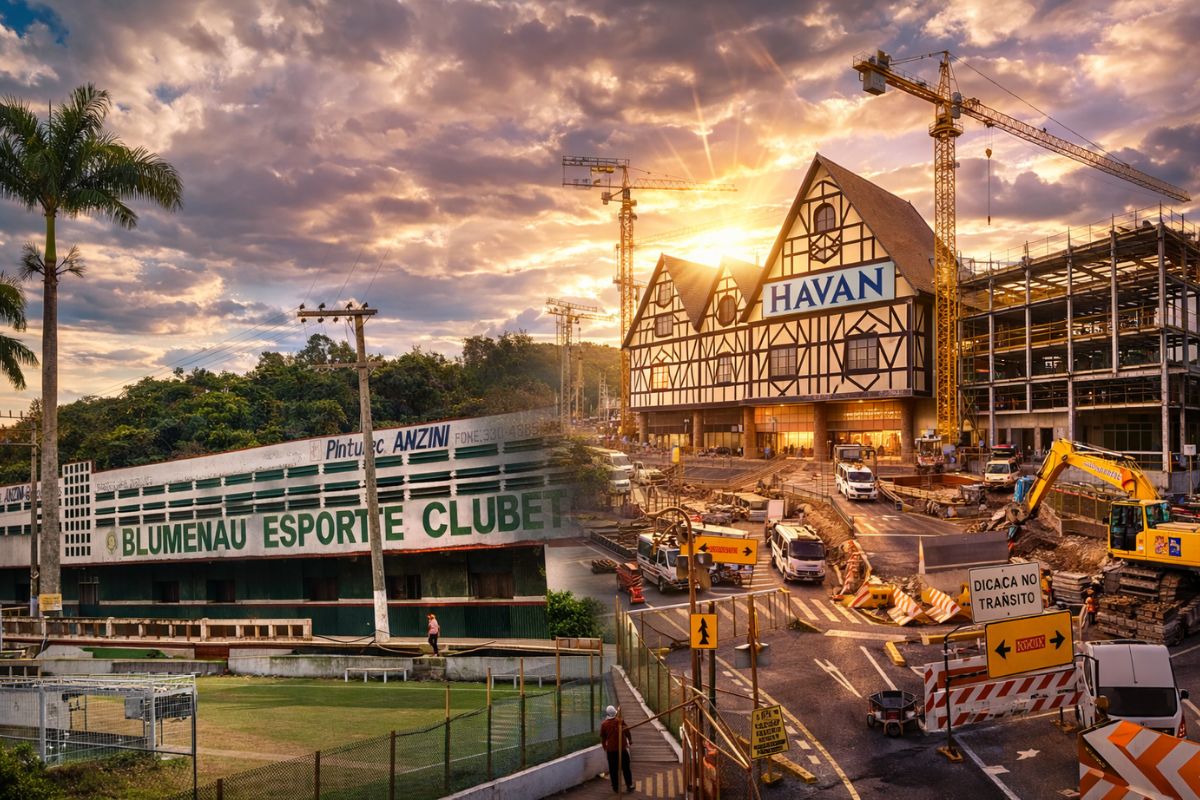
Havan buys historic football land in Blumenau for a million-dollar amount protected by a confidentiality clause and is already planning to change even the layout of streets to build a megastore in half-timbered style costing 80 million reais.
-
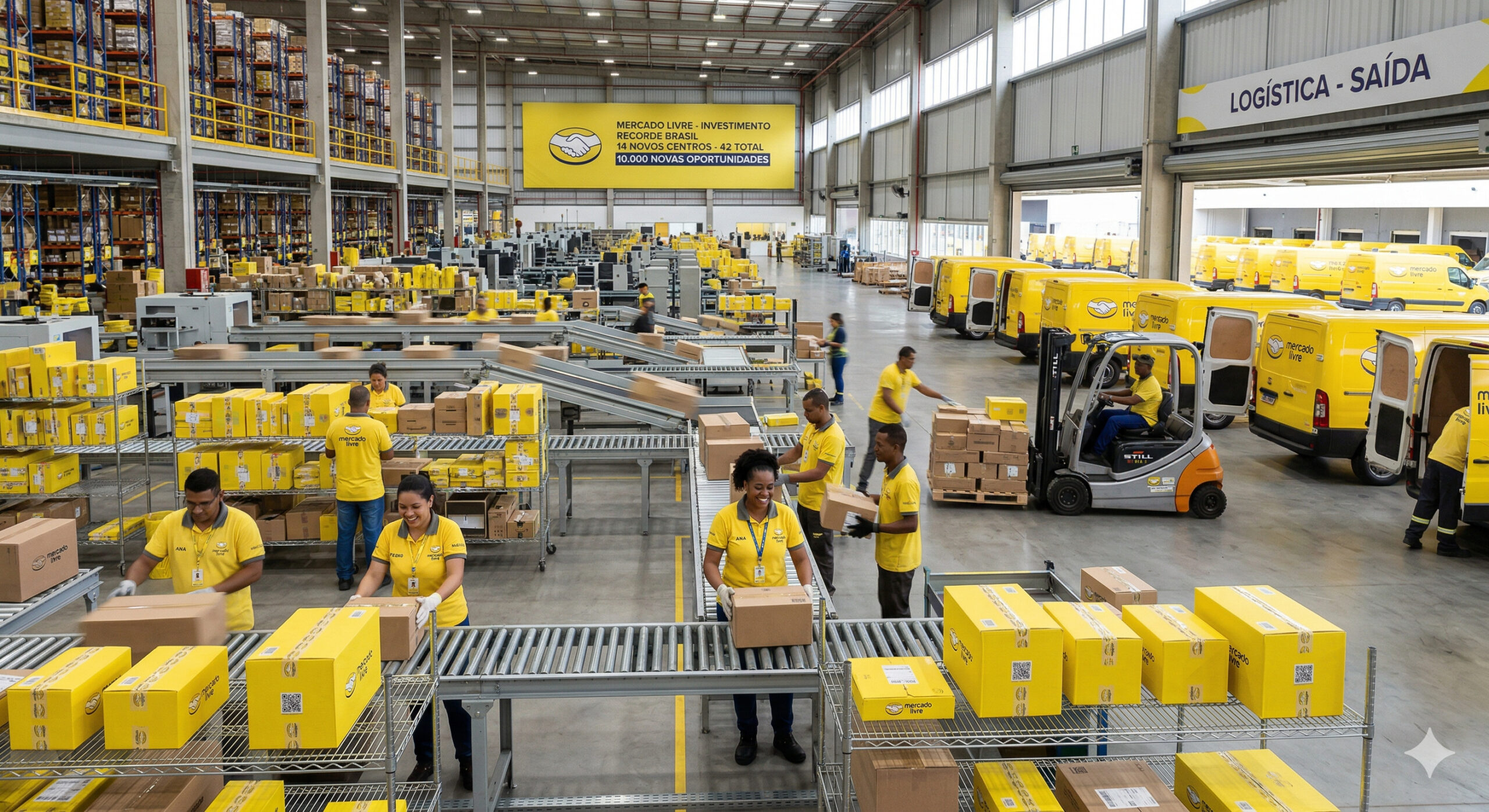
Mercado Livre “opens the vault” and announces a record investment of R$ 57 billion in Brazil in 2026, a value 50% higher than the previous year, with an expansion plan that includes 14 new logistics centers, totaling 42 units in the country and hiring an additional 10,000 employees.
-
How investment in technology can revolutionize the national economy and enhance industrial gains, according to a study that highlights the direct impact on productivity, innovation, and wealth retention within Brazil.

-
The largest food company on the planet, JBS, has just opened a 4,000 square meter laboratory in Florianópolis to develop customized proteins that modulate muscle mass gain, immune response, and metabolic performance.


In return, the 4.2 million square meter area will fully return to the Union’s assets, under the management of the Ministry of Management and Innovation.
The reconciliation ends an impasse that blocked the strategic use of one of the most valued lands in the federal capital.
The negotiation avoids the subdivision of the area for contractors, a project that was in the planning phase with the Government of the Federal District, and returns control to the central government, which intends to use the space as a source of cross-financing for railway projects.
How The Agreement Unlocks Railway Projects
The Ministry of Transport will use the land as collateral for concessions within a model known as “rail real estate”, widely adopted in cities like Seoul, Hong Kong, and Tokyo.
The proposal combines railway infrastructure construction with planned real estate development around the stations, in order to generate revenue to sustain public investments.
The initial plan foresees the Brasília–Luziânia VLT, a line of 62 km in length, as the anchor project.
The route will connect the Federal District to the Southern Surrounding Area of Goiás and is on the list of strategic priorities of the PAC.
The exploitation of the billion-dollar area will allow financing part of the works without direct impact on the budget, according to government interlocutors.
Additionally, the auction structure will include five new passenger routes: Londrina–Maringá (PR), Rio Grande–Pelotas (RS), Fortaleza–Sobral (CE), São Luís–Itapecuru Mirim (MA), and Salvador–Camaçari–Feira de Santana (BA).
The forecast is that the bids will be published in 2026, with participation from BNDES and Caixa in technical and financial modeling.
The History of The Land and The Dispute with The Military
The area of the Brasília Railway Yard was transferred to the Army in 2006, with the responsibility for maintenance and surveillance, but without authorization for real estate exploitation.
Years later, the military command began negotiations with the Government of the Federal District to develop a new residential and commercial neighborhood, a project that planned the construction of about 20,000 properties.
The original contract, however, did not allow civil constructions and the Attorney General’s Office positioned itself in favor of the resumption of possession by the Union.
The technical opinion highlighted that the land should be allocated to public transport services and planned exploitation, as a way to generate revenue and boost strategic railway projects.
With the opinion in hand and the approval of the president, the government decided to end the impasse through direct negotiation with the military leadership, preserving the investments of the Armed Forces and freeing the space for logistical and urban purposes.
Economic Impact and Urban Planning
The reconfiguration of the Railway Yard represents one of the largest public real estate operations ever carried out in Brasília.
The potential value of R$ 40 billion will be diluted in phases of concessions, taking advantage of commercial and residential areas near the future VLT stations and the railway terminal.
Urban and environmental impact studies will be conducted by BNDES and Caixa Econômica Federal to define the timeline and format of the auctions.
The expectation of the Ministry of Transport is that the first bids will occur between 2026 and 2027, allowing for private funding for railway and urban projects.
The model aims to reuse idle infrastructures and attract private capital for an integrated mobility plan that combines regional trains, VLTs, and urban densification hubs.
The measure also reinforces the role of railways as an axis of economic integration, in line with the green logistics policy and reduction of road transport emissions.
The agreement between the federal government and the Army ends a historical conflict and repositions Brasília at the center of the national agenda for railway projects.
The return of the billion-dollar area paves the way for auctions that combine infrastructure, housing, and mobility, reinforcing the potential for cross-financing and urban innovation.
Do you believe that the real estate concession model can be an efficient solution to finance the new railway projects in the country, or should the government seek traditional public investment alternatives?








-

Uma pessoa reagiu a isso.