





 Portuguese
  English
  Spanish
  4 min of reading
  0 comments


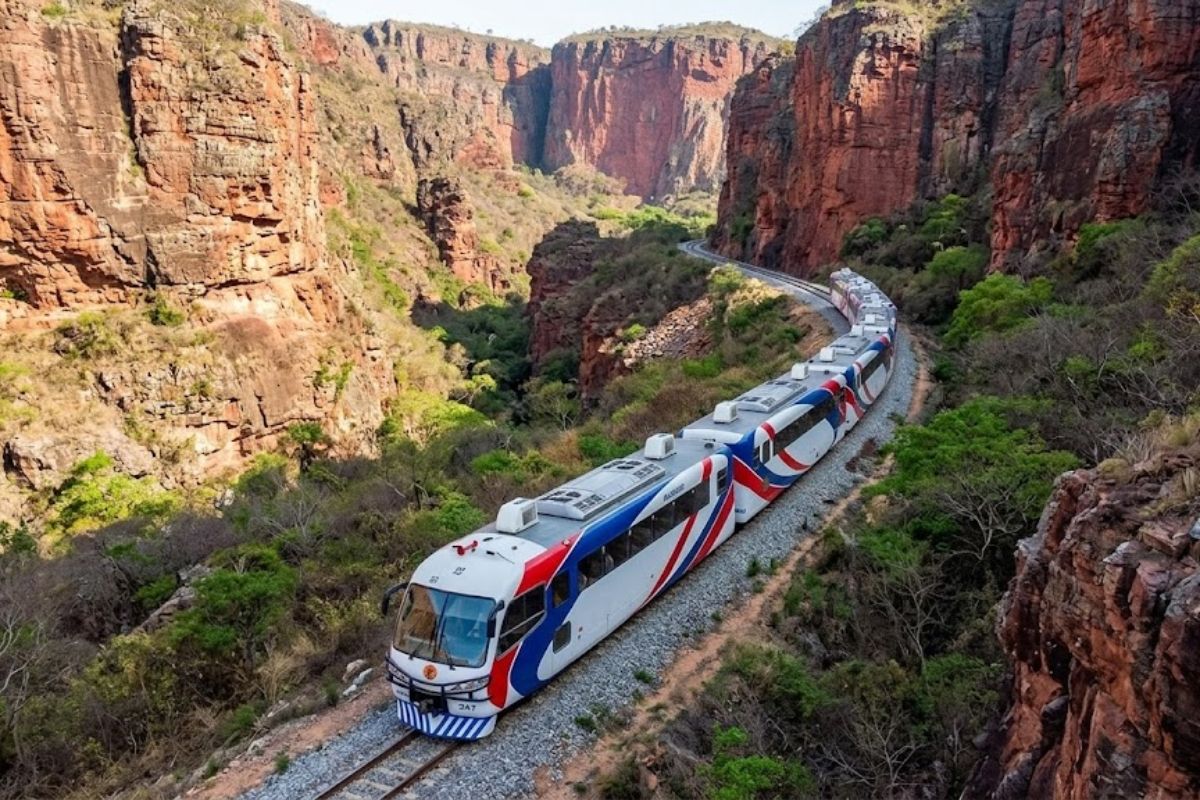
The Resumption of the Death Train in Bolivia Reopens a Historic Railway in South America on the Border with Brazil, Reconnecting the Region from Puerto Quijarro to Santa Cruz de la Sierra After About Six Years Without Regular Passenger Transport
The legendary Death Train has resumed passenger service after about six years of suspension, reactivating one of the most well-known and curious railway routes in South America. The line connects the border region between Brazil and Bolivia to the Bolivian interior.
The resumption of the Death Train, as reported by Via Trobelus, rekindles interest in a railway that traverses remote landscapes and carries decades of stories marked by difficulties, long journeys, and a name that still sparks curiosity among travelers and locals.
The Resumption of the Death Train After Years of Suspension
The railway service known as the Death Train officially resumed operations on February 27, according to information released by operators of the Bolivian railway system.
-
Spain surprises the world by erecting 62 artificial dunes, mixing sand with natural remains of posidonia, and causing the structure to lose only 1.4% of its volume in 1 year.

-
With 16 Bulava missiles, improvements in acoustic stealth, and a design focused on silent patrols, Russia’s nuclear submarine was born to ensure Moscow’s invisible retaliation and has become one of the pillars of its maritime strength.

-
‘Populous’ city in Rio among the worst in Brazil in national ranking and exposes silent development crisis.
-
Couple buys house in the South Zone of São Paulo, opens a hidden door in the garage, and finds a secret wine cellar with dozens of old wines forgotten since the 1970s.

The route connects Puerto Quijarro, a Bolivian city located on the border with Corumbá, in Mato Grosso do Sul, to Santa Cruz de la Sierra, one of Bolivia’s main economic centers.
Although the train does not officially enter Brazilian territory, it only takes crossing a few meters of the border to board the railway.
For decades, the Death Train served as one of the main forms of transportation for those wishing to travel from Brazil to Eastern Bolivia.
The suspension occurred about six years ago, temporarily interrupting this historic connection.
A Railway Route of Nearly 600 Kilometers
The route of the Death Train covers approximately 600 kilometers, traversing various natural regions in Bolivian territory.
During the journey, passengers travel through areas of forests, plains, and sparsely urbanized rural zones.
The railway passes through regions associated with Chiquitania, an area known for its natural landscapes and environmental reserves.
This route has always attracted the interest of travelers seeking different experiences.
The journey combines travel, tourism, and contact with less-explored regions of the country.
In addition, the railway plays an important role in regional integration.
It connects local communities and facilitates access to larger urban centers.
Why the Death Train Got Its Name
Despite its dramatic appearance, the name Death Train did not originate due to railway accidents.
The origin of the nickname dates back to the 1950s, when sanitary and travel conditions in the region were extremely precarious.
At that time, passengers faced long journeys in simple carriages, often lacking adequate hygiene conditions.
Moreover, tropical diseases such as malaria and yellow fever were common in certain areas crossed by the railway.
These factors led travelers to refer to the service as the Death Train.
Over time, the nickname persisted, even with improvements in travel conditions.
Today, the name has become part of the railway’s historical identity.
The Role of the Death Train for Tourism and Regional Economy
Bolivian authorities believe that the resumption of the Death Train could boost regional tourism.
The railway facilitates access for visitors interested in exploring Eastern Bolivia, especially natural areas and historical cities.
In addition, the reactivation of the line also helps stimulate local economies.
Small businesses, accommodations, and tourism services tend to benefit from the flow of passengers.
Another factor that attracts travelers is the relatively affordable cost of the journey.
Weekly tickets for the Death Train typically cost between 220 and 230 bolivianos, equivalent to approximately R$ 164 to R$ 170, depending on the exchange rate.
This price makes the railway an economical alternative for those wishing to cross the region.
The Historical Curiosity That Keeps the Route Famous
Even after decades of operation, the Death Train remains one of the most well-known railway routes in South America.
Part of this fame comes from the contrast between the dramatic name and the travel experience.
Today, reports indicate that the service has undergone improvements compared to previous decades.
More organized carriages and better facilities help make the journey more comfortable.
Still, the historical nickname remains a symbol of an era when traveling through the region required endurance and courage.
This blend of history, curiosity, and adventure keeps the Death Train in the imagination of many travelers.
The return of the Death Train marks the resumption of a historic railway link between the border of Brazil and the interior of Bolivia.
More than a simple means of transportation, the railway represents a living piece of the history of mobility in South America.
The reactivation of the route also rekindles interest in railway travel in less-explored regions of the continent.
Now an inevitable curiosity arises.
If you had the opportunity to board the Death Train and travel almost 600 kilometers across landscapes between the border and the interior of Bolivia, would you take this journey?








-

Uma pessoa reagiu a isso.