





 English
  Francês
  Alemão
  Italiano
  Japonês
  Norueguês
  Portuguese
  Spanish
  3 min of reading


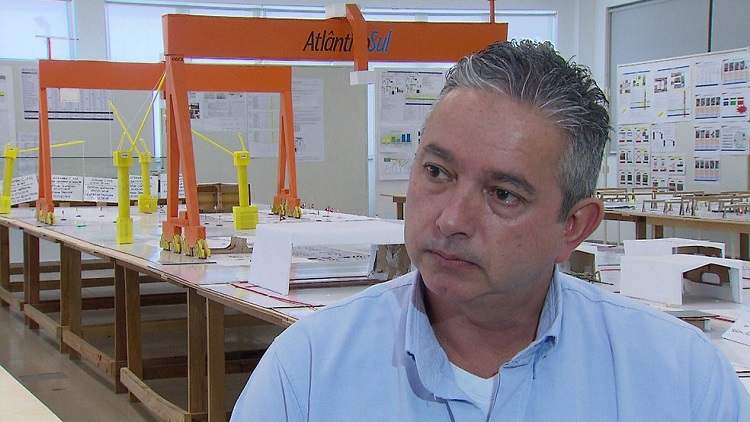
Newly Launched Government Program Lacks Approval from Shipyards and According to the President of Atlântico Sul in Recife, Affected Negotiations with Shipowners
The Sad News of the Closure of Atlântico Sul Shipyard in Suape, a municipality in Recife, continues to be a topic of discussion in the beleaguered shipbuilding market.
The former president of the shipyard, Harro Burmann, spoke with the “Economic Movement” program of CBN Recife, about the factors that hindered negotiations with shipowners and mentioned the “BR do Mar,” warning that it delivers a fatal blow to shipbuilding in the country.
The Atlântico Sul Shipyard in Recife decided to suspend operations indefinitely in early August, and the former president, who was negotiating with Aliança and Mercosul Lines for the construction of two ships (for each), saw those negotiations return to square one after the government encouraged shipowners’ cabotage orders to be placed outside Brazil, with the launch of the program nicknamed “BR do Mar.”
-
Government unlocks R$ 554 million for a highway that has been requested for decades and accelerates the duplication of BR.
-
Without bricks, without cement, and without endless construction: the cardboard house that is assembled in modules and can be moved.

-
Billions of barrels on the equatorial margin could lead Amapá to double its oil production in Brazil — the state aims to enter the route of companies in the Campos Basin, attract investments, and boost jobs and businesses in the oil and gas sector.

-
Without bricks, without cement, and without endless construction: the cardboard house that is assembled in modules and can be moved.

According to Harro Burmann, the orders would be around US$ 300 million and would ensure the shipyard remained operational until the Oil and Gas market experienced the long-awaited recovery.
The ships would be financed with resources from the Merchant Marine Fund (FMM), and according to him, the two shipping companies being targeted by EAS found it more advantageous to take advantage of the government program’s incentives for ship imports than to place the orders in Brazil.
EAS Immediately Affected
The government program affects all shipyards in the short term, but it immediately impacted Atlântico Sul, as they were in the midst of negotiations and the company had the strategy of building ships rather than relying on maintenance services as the “BR do Mar” advocates.
“A repair costing R$ 500,000 does not sustain a shipyard. Neither EAS nor other large shipyards. It is true that Brazil has a shortage of repairs, but it is a market that does not support an entire shipbuilding industry. Petrobras as a whole, with a fleet of 200 ships, spends R$ 60 million a year on repairs. Does that sustain a shipyard? No. Much less the entire sector,” declared the former president.
“The intent of the “BR do Mar” is to stimulate the renewal and expansion of the cabotage companies’ fleet through ship imports, and this makes no sense in a country that has shipbuilding,” he added.
The government program is undergoing a series of debates by sector representatives, but there is still hope to reverse this situation through the mobilization of workers’ unions, the industry, and all of society that longs for the recovery of their jobs.
Read Also! Petrobras Signs Contract with Spanish Ghenova for Its Support Vessels!









Seja o primeiro a reagir!