





 Portuguese
  English
  Spanish
  5 min of reading
  0 comments


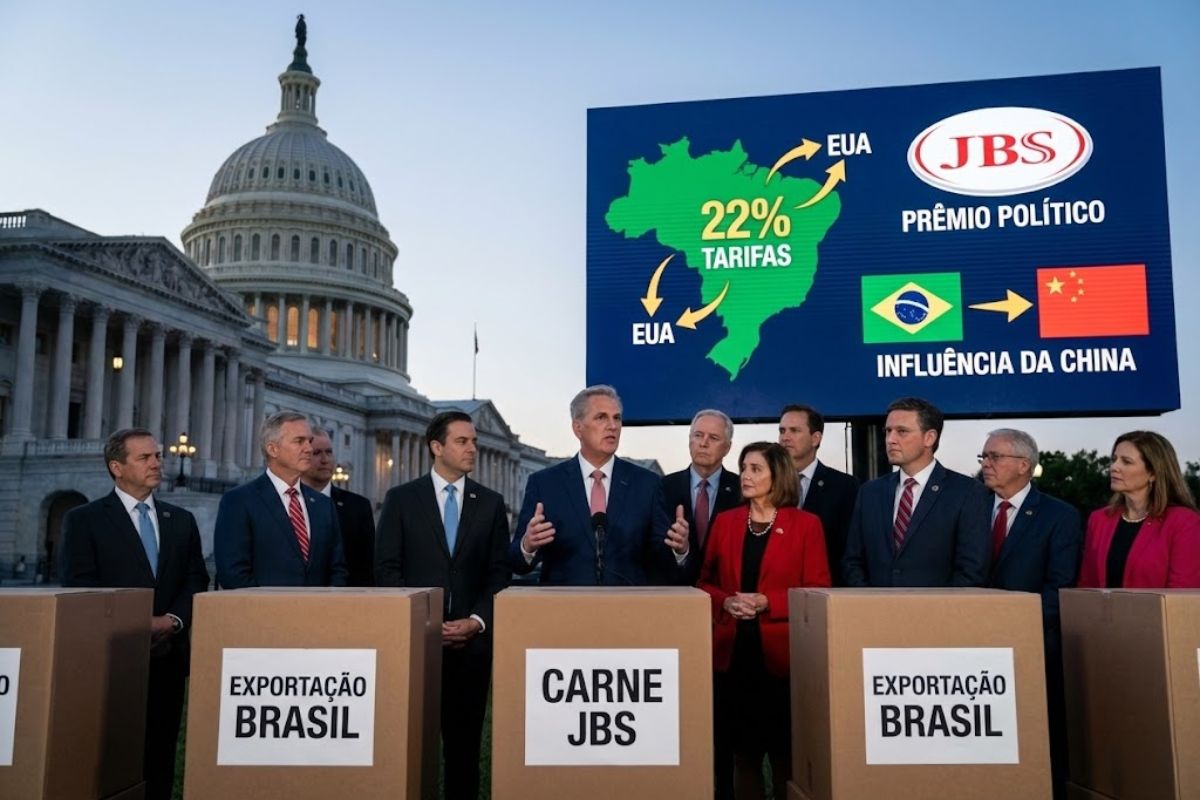
Under Pressure from 50 U.S. Congress Members, Trump Is Being Asked to Revoke Extra Tariffs That Still Affect 22% of Brazilian Exports, Accused of Favoring JBS and Pushing Brazil Toward Agreements with China While Ignoring Impacts on Industry, Jobs, and Trust in the U.S. in Economy and Diplomacy.
The U.S. Congress members increased pressure on Donald Trump this Thursday (18), in a letter asking for the revocation of remaining tariffs on Brazilian products and accusing the Republican of using the exclusion of the surcharge on meat as “political payback” to JBS. Since the end of July, when the U.S. government imposed a 40% surcharge combined with global reciprocal tariffs of 10%, part of the measures was revised on November 14 and November 20, but still leaves 22% of Brazil’s exports subject to the tariff.
Throughout the document, the lawmakers detailed that Trump’s trade policy with Brazil became combined, in July, with a Section 301 investigation, which could result in new sanctions against Brazilian products and services. For the signatories, this tariff and regulatory escalation pushes Brazil into the arms of China, by stimulating agreements with Mexico, Vietnam, and other partners and opening space for Beijing to present itself as a defender of the Global South.
Letter from 50 U.S. Congress Members Targets Trump’s Tariff
The movement is led by Democratic Representatives Linda Sánchez and Adriano Espaillat, who organized the letter sent to Trump on behalf of 50 U.S. Congress members.
-
Elderly individuals aged 65 or older who have never contributed to the INSS can receive R$ 1,621 per month in 2026 without having paid any contributions in their lifetime: learn how the benefit works that already supports nearly 7 million Brazilians.

-
The gaucho city reduced the number of Bolsa Família beneficiaries by almost 40% in just a year and a half with active outreach that connects each registered person directly to job vacancies in Bento Gonçalves in Rio Grande do Sul.
-
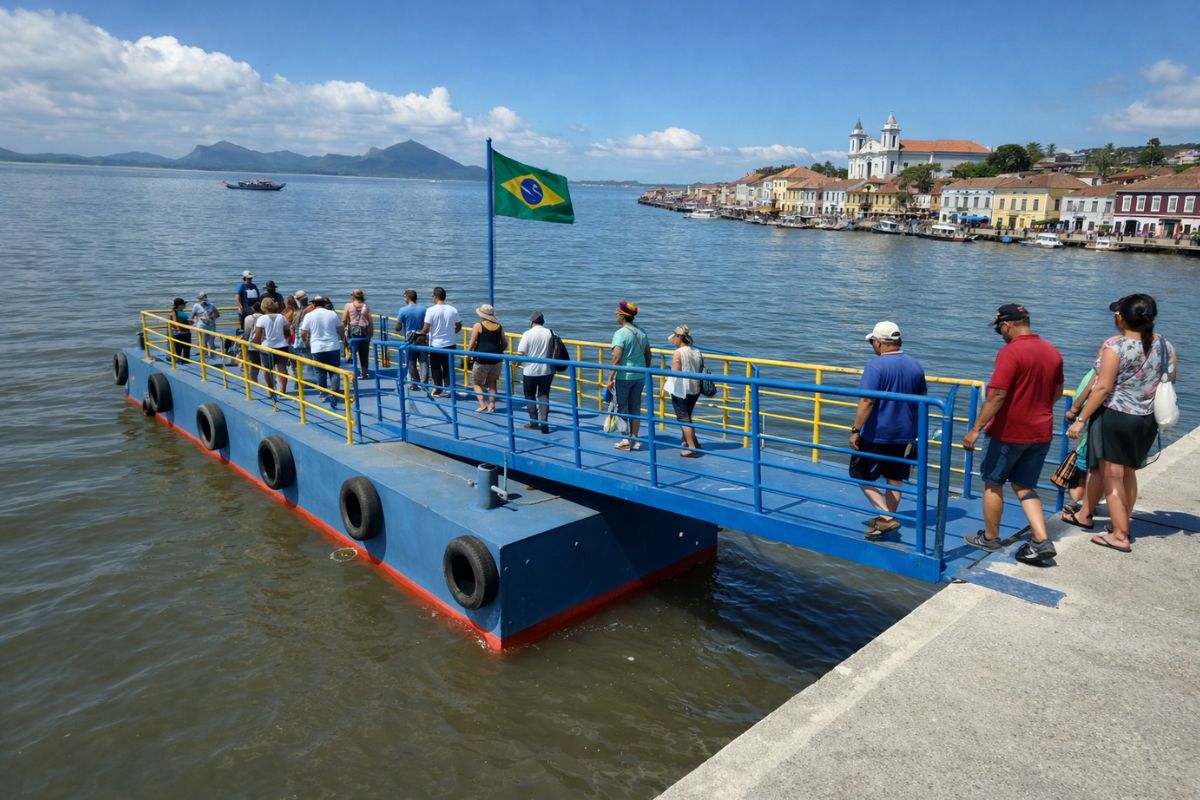
The bluest city in Brazil has just gained a new floating bridge for the free crossing between the island and the mainland, connecting residents and visitors to the historic center of São Francisco do Sul every day of the week.
-
In a silent race, Shopee signs a mega contract in Guarulhos and accelerates the e-commerce war with faster deliveries, pressured shipping, and a new threat to rivals in Brazil.


In the text, they explicitly request that the president revoke the remaining tariffs on Brazilian products.
According to the lawmakers, the Trump administration has not provided any concrete evidence so far that the tariffs imposed on Brazil could create jobs for Americans or revive U.S. industries.
Instead, they argue that the policy is isolating the country and opening space for global competitors.
22% of Brazilian Exports to the U.S. Continue with Surcharge
According to Vice President Geraldo Alckmin, 22% of Brazilian exports to the United States are still subject to surcharges, even after the latest revisions of the measures announced by Trump.
The industrial sector is identified as the most affected by the remaining tariffs.
At the end of July, the U.S. government applied a 40% surcharge on products from Brazil, adding this percentage to the globally applicable reciprocal tariffs of 10%.
On November 14, Washington removed the 10% tariff on some commodities, including meat and coffee, which are key Brazilian exports. On November 20, the 40% surcharge was lifted for 238 products from Brazil, such as coffee, beef, bananas, tomatoes, and açaí.
Even so, the letter reminds that a significant portion of Brazilian sales remains penalized, which, in the view of the Democrats, is not sustainable from either an economic or strategic perspective for the U.S.
Accusation of Political Favoritism for JBS
One of the most pointed aspects of the text is the accusation that Trump is using American economic power to protect allies.
According to the Congress members, the exclusion of meat from the surcharge served as a political favor for JBS, the Brazilian meatpacking giant.
The letter recalls that the company made the largest individual donation to Trump’s inauguration committee, amounting to US$ 5 million.
For the signatories, this raises “serious suspicions” that the tariff exclusions were granted as “political payback.”
In the Democrats’ view, this interpretation reinforces the perception that the government uses U.S. trade policy punitively, ineffectively, and self-destructively.
Brazil Moves Away from the U.S. and Closer to China
The U.S. Congress members state that, in response to the tariffs, Brazil has accelerated efforts to reduce reliance on Washington, advancing trade agreements with Mexico, Vietnam, and other countries.
In this vacuum, the letter asserts, China has seized the opportunity to strengthen its ties with Brazil, presenting itself as a defender of the Global South in light of sanctions and expanding cooperation within BRICS.
The text states that Beijing has been turning to Brazil for the supply of essential commodities, in a move that displaces some of American influence in the region.
For the lawmakers, Trump’s policy with Brazil ends up being a self-defeating move. Instead of protecting U.S. industry, it opens space for China to gain prominence in strategic markets, including agribusiness and higher value-added industrial segments.
Pressure Against Big Tech Regulation Comes Into Focus
The letter also dedicates a section to the pressure exerted by the White House against Brazil’s attempts to regulate big techs.
The Democrats criticize the Section 301 investigation opened in July by the White House’s Office of Trade, which could result in new sanctions against Brazilian products and services.
The document notes that this investigation directly cites issues such as regulation of digital platforms, operation of Pix, access to the ethanol market, intellectual property protection, and tariff preference agreements with other countries.
For the Congress members, the manner in which Section 301 has been used in the Brazilian case indicates a diversion of purpose.
They assert that while Section 301 investigations are a legitimate tool to address unfair trade practices, the tariff threat against Brazil has been used to achieve political objectives rather than to correct actual trade imbalances.
Freedom of Expression and Disinformation at the Center of the Dispute
Another point of contention is Brazil’s attempt to regulate digital platforms that spread hate speech and antidemocratic disinformation.
The letter recalls that Trump justified part of the tariffs as a supposed defense of “freedom of expression” in Brazil in light of these initiatives.
The Democrats contest this narrative. For them, the argument for freedom of expression has been misused, while digital platforms continue to be accused of favoring hate content and disinformation.
The group argues that the U.S. government should support responsible regulatory efforts instead of punishing Brazil with trade tariffs.
Who Is Behind the Offensive in the American Congress
In addition to Linda Sánchez and Adriano Espaillat, notable names from the Democratic Party sign the letter, such as Alexandria Ocasio-Cortez, Debbie Wasserman Schultz, Rashida Tlaib, and Joaquin Castro.
The list indicates that discomfort with Trump’s policy regarding Brazil extends across different Democratic factions, from the more progressive wing to more traditional profiles.
By gathering 50 signatures, the group aims to show that this is not an isolated gesture, but a coordinated pressure within the U.S. House of Representatives.
In light of this scenario, the question for you is: Can the criticisms from U.S. Congress members to Trump really change the course of tariffs against Brazil or is the country already too far along on the path of greater rapprochement with China?





-

Uma pessoa reagiu a isso.