





 Portuguese
  English
  Spanish
  3 min of reading
  3 comments


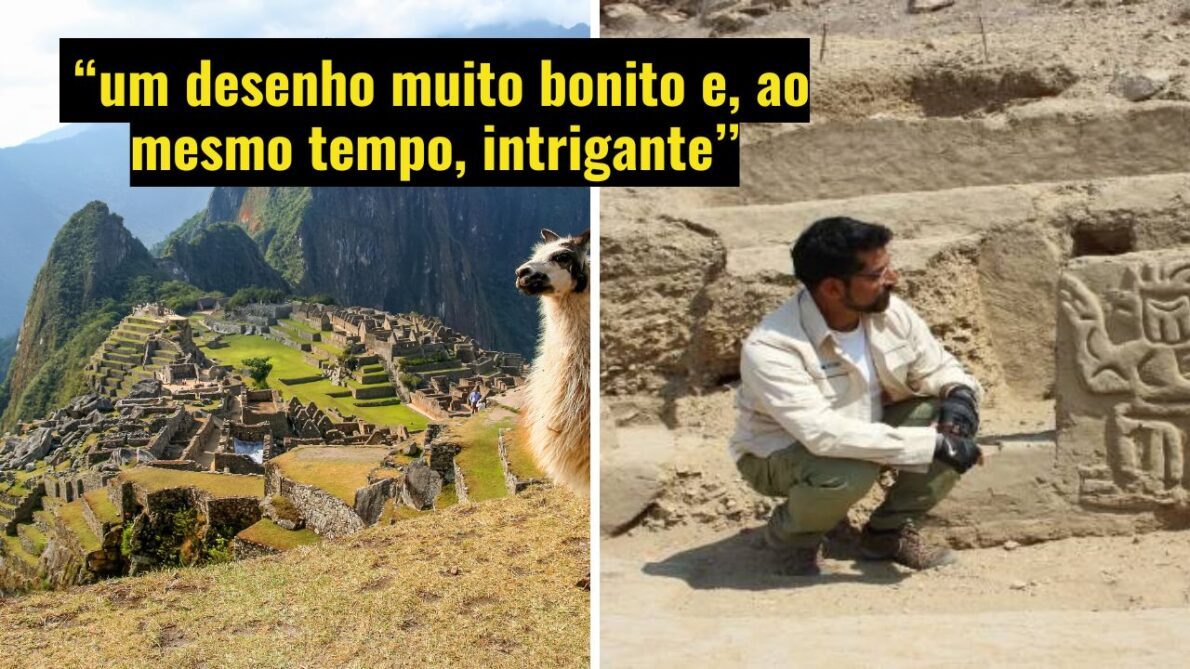

Archeologists Uncover 4,000-Year-Old Temple And Theater In Peru, Changing The Understanding Of The Religious And Cultural History Of The Country.
Machu Picchu, with its 600 years of history, has always been regarded as the great archaeological treasure of Peru. However, a recent discovery of a 3,500-year-old temple in the Zaña Valley is challenging that view. Archeologists have unearthed a complex that includes a temple and a theater, shedding new light on the civilizations that inhabited Peru long before the Incas.
An Impressive Discovery In Peru
A group of archeologists, led by Dr. Luis Muro Ynoñán from the Field Museum of Natural History in Chicago, made an extraordinary discovery that reveals an unexplored chapter of Peru’s history. Excavations carried out in the Zaña Valley, at the Los Paredones de La Otra Banda – Cerro Las Animas complex, resulted in the identification of a temple and a theater dating back approximately 4,000 years. These finds are 3,500 years older than the famous Machu Picchu, a city founded by the Incas in the 15th century.
Impact On The Understanding Of Peru’s Religious History
The discovery is not only a victory for archaeology, but also for understanding the religious and cultural origins of Peru. According to Dr. Muro Ynoñán, “we still know very little about how complex belief systems emerged in the Andes.” This newly discovered temple offers valuable evidence about the early religious spaces created by ancient cultures, such as the Moche and Nazca, predecessors of the Incas.
-
Volcanic lava transforms into threads as fine as human hair that travel over 30 kilometers by wind and fall like cutting rain on roofs and backyards in Hawaii and Iceland.
-
NASA issues a warning for the feared Godzilla El Niño that could change the planet’s climate in 2026 with extreme warming of the Pacific capable of causing devastating droughts in some regions and historic floods in others simultaneously.

-
Archaeologists discover a 100-meter ship graveyard in a submerged Greek city, and what has appeared on the seabed of Libya could change what was known about this ancient port.

-
You buy the refrigerator and still have to see ads: Samsung starts displaying advertising on appliances and generates negative reactions among consumers.


Excavations Reveal Ritual Temples And Theater
The team of archeologists in Peru excavated a 10×10 meter area, where, just six meters deep, they found signs of clay and adobe walls. The structures indicate that the site served as a temple, and in a subsequent stage, a small theater was discovered. This theater, with stairs leading to a stage-like platform, was possibly used for rituals in front of a select audience, as detailed by Muro Ynoñán.
Mysticism And Art: The Enigmatic Anthropomorphic Bird
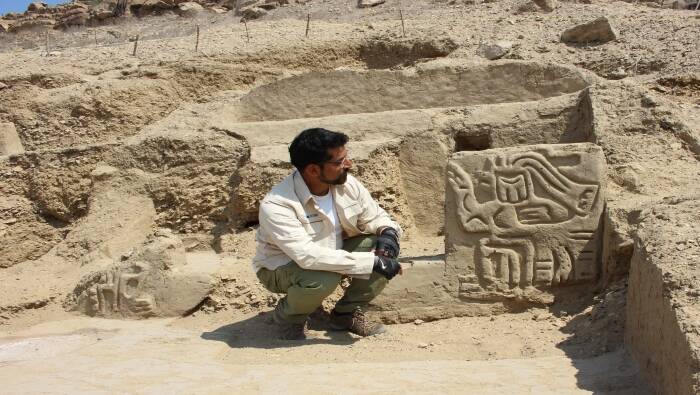
During the excavations, the archeologists also found clay panels decorated with intricate designs of a bird-like creature but with reptilian features. Described by Muro Ynoñán as “a very beautiful and intriguing drawing,” this creature provides clues about the age of the temple and its relationship with other ancient constructions in the Andes. Similar to figures from the Chavín region, which emerged 500 years later, the anthropomorphic bird may help unravel the origins of religion at that time.
Other Finds And Future Implications
In addition to the temple and theater, the researchers discovered painted murals and human remains, including the skeletons of three adults and one child. The chemical analysis of the pigments from the murals may reveal more about the trade relations between ancient cultures in Peru.
The discovery of the temple in Peru is a key piece in understanding the evolution of Andean civilizations. Funded by the Pontificia Universidad Católica del Perú and the University of California, Los Angeles (UCLA), the Archaeological Project Cultural Landscapes of Úcupe – Zaña Valley promises to continue uncovering buried secrets that may redefine the history of the region.
The discovery of this ancient temple not only enriches the history of Peru but also challenges our perceptions of the development of pre-Inca civilizations. As excavations continue, new revelations may emerge, bringing to light an even older and more complex past than we imagined.
We Would Love To Hear Your Thoughts On How This Discovery May Change Our Understanding Of The Civilizations That Inhabited South America Long Before The Incas.







Tem uma arqueóloga brasileira neste grupo.
Renata Verdan da Silva Carmo, que estudou na UFRJ.
Adorei ,o trabalho desenvolvido. Com certeza estará está civilização no mesmo nível do Egito.
Sempre que importante e nova informaçao sobre o passado nos chega, é para comemorar muito.
Parabéns,aos arqueólogos que estão nesse belo projeto.