





 Portuguese
  English
  Spanish
  4 min of reading
  0 comments


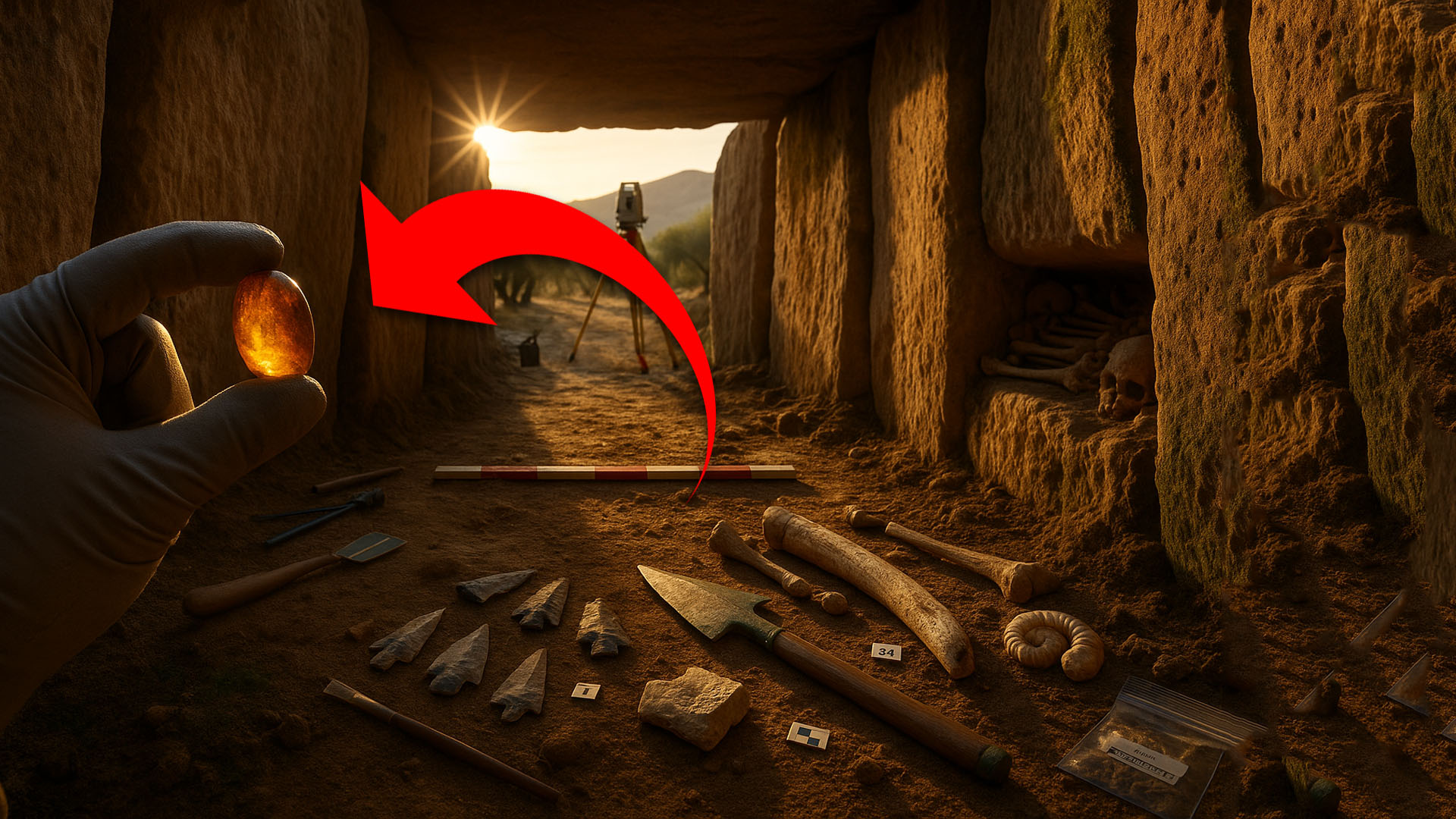
Archeologists Announced in Teba (Málaga) the Discovery of a Monumental Dolmen with 13 Meters and 2 M Walls. The Finding Brings Ossuaries and Prestige Objects Indicating Long-Distance Trade Networks.
The discovery of a stone tomb dating back approximately 5,000 years at the necropolis of La Lentejuela, a rural area in Teba (province of Málaga, Andalusia), has been confirmed by researchers from the University of Cádiz. The monument measures 13 meters in length, features orthostats about 2 meters high, and was used as a collective burial, according to the team.
Considered “one of the most monumental and well-preserved” in the region, the dolmen contains several ossuaries and a set of grave goods including arrowheads, blades, a halberd, and pieces made of ivory and amber, along with seashells. The presence of coastal items in an inland area suggests long-distance trade and the symbolic prestige of the sea for prehistoric communities.
The structure was excavated over four campaigns and is part of a project supported by the Ayuntamiento de Teba, Junta de Andalucía, and Fundación Palarq. The findings are still under analysis, with new dates and studies to be released.
-
From sertanejo star to international investor: Ana Castela invests millions in a mansion in the USA, creates a themed accommodation in Orlando, and shows that the “boiadeira” also wants to grow away from the stage.

-
The 10 most stunning motorhomes in the world: a $3 million trailer with a rooftop nightclub and garage for a Ferrari, “palaces on wheels” with Italian marble, private cinema, and five-star hotel luxury for billionaires.

-
Trump wanted to spend $400 million on the White House, but the courts prohibited the million-dollar construction.

-
How the Egyptians erected giant structures like pyramids, temples, and obelisks without modern technology, cranes, or engines still amazes the world and reveals the power of engineering based on ramps, levers, ropes, and colossal organization.


Where the Stone Tomb Was Discovered: Teba Enters the Map of Iberian Megalithism
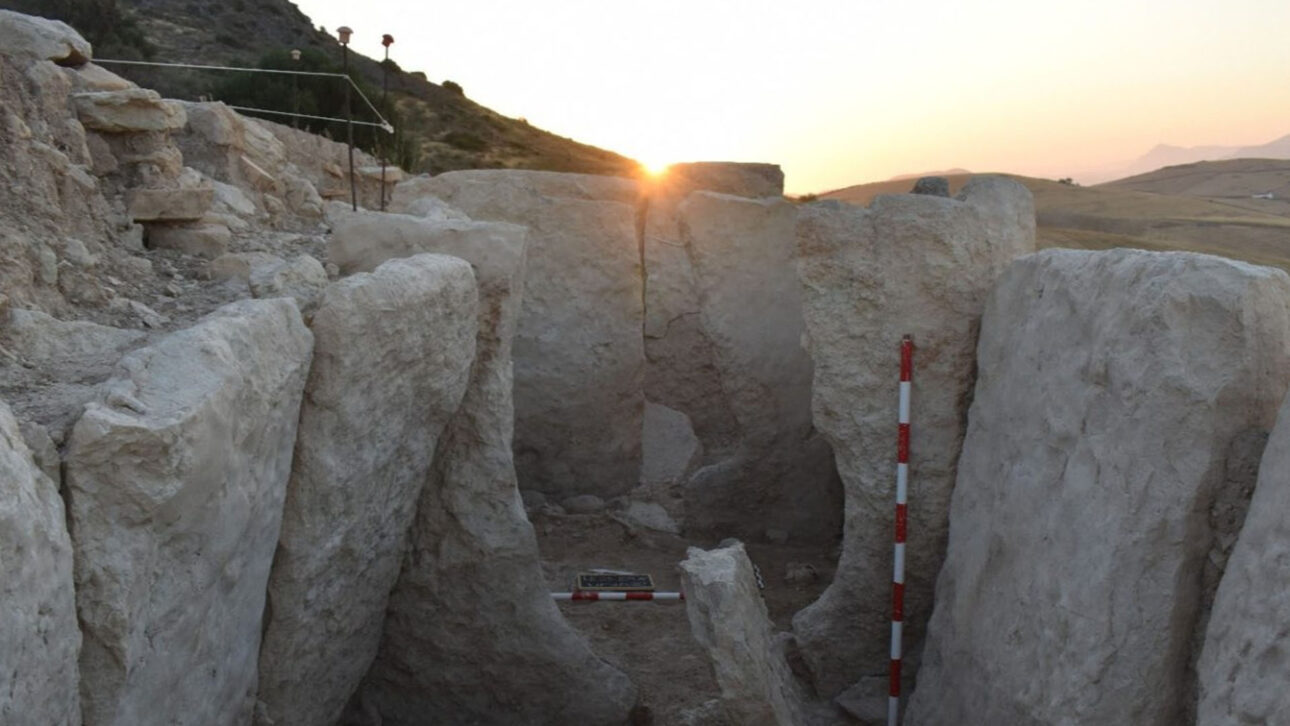
Teba is located inland from Málaga, in southern Spain, and houses the megalithic necropolis of La Lentejuela. The new dolmen, identified as Dolmen I, expands knowledge about megalithism in the extreme southern peninsula and reinforces the scientific value of the site for understanding funerary practices from the 3rd millennium BC.
For the Brazilian audience, the case resonates with other notable Iberian megaliths and helps compare funerary architectures across Europe. The size and state of preservation of the Andalusian monument allow for the observation of rare construction details in tombs from this period.
In addition to Teba, Spain preserves emblematic megalyths, such as the Dolmen de Guadalperal (on the banks of the Tagus), often referenced for understanding the regional context.
What the Archeologists Found: Ossuaries, Weapons, and Exotic Raw Materials
Inside the corridor and its internal compartments, the team recorded multiple ossuaries and prestige objects made from non-local raw materials, such as African ivory and Sicilian amber, along with shells. Among the weapons, a halberd — a spear with a blade at the tip — stands out as it is associated with elites and rituals in European Prehistory.
According to a statement from the University of Cádiz, the association of seashells with an inland territory indicates long-distance trade and the symbolic value of the sea; the lithic set includes arrowheads and large-format blades. These data support hypotheses about economic networks and social status in southern Iberia five thousand years ago.
Independent reports in specialized outlets confirm the measures, funerary function, and characteristics of the grave goods described by the team, reinforcing the reliability of the information for the archaeological community.
How the Excavation Was: Four Campaigns and Ongoing Research
The dolmen was investigated over four seasons by a team led by Eduardo Vijande and Serafín Becerra, from the Thalassa (UCA) group. The project “Monumentality, Time, and Society” integrates efforts for fieldwork, student training, and archaeometric analyses. The goal is to detail chronology, use, and material circulation at the site.
Both Cadena SER and Europa Press reported the discovery and institutional support, highlighting the 13 meters in length and the exceptional state of conservation of the monument, as well as the presence of ossuaries and exotic grave goods.
The research will continue with dating, isotopic studies, and regional comparisons, which may redefine aspects of trade and ideology in Andalusian megalithism. Additional results are expected as laboratory analysis progresses.
What the Dolmens Were For: Tomb, Territorial Marker, and Possible Solar Alignment
Dolmens are multifunctional megalithic structures in European Prehistory. They primarily served as collective burials, but studies also suggest territorial markers of land ownership in agricultural societies and possible alignments with solar events, such as solstices.
In the case of Teba, the funerary function is evidenced by the ossuaries and grave goods. Future investigations will assess orientation, internal architecture, and interactions with the landscape to test ritual and astronomical hypotheses. Careful preservation and interdisciplinary studies will be crucial.
We want to hear from you. Should the dolmen be opened for visitation after studies, or kept closed to preserve context and reduce impact? Please leave your opinion in the comments and state whether solar alignments should guide the site’s future as much as scientific analysis.








-

-

-

5 pessoas reagiram a isso.