





 Portuguese
  English
  Spanish
  4 min of reading
  25 comments


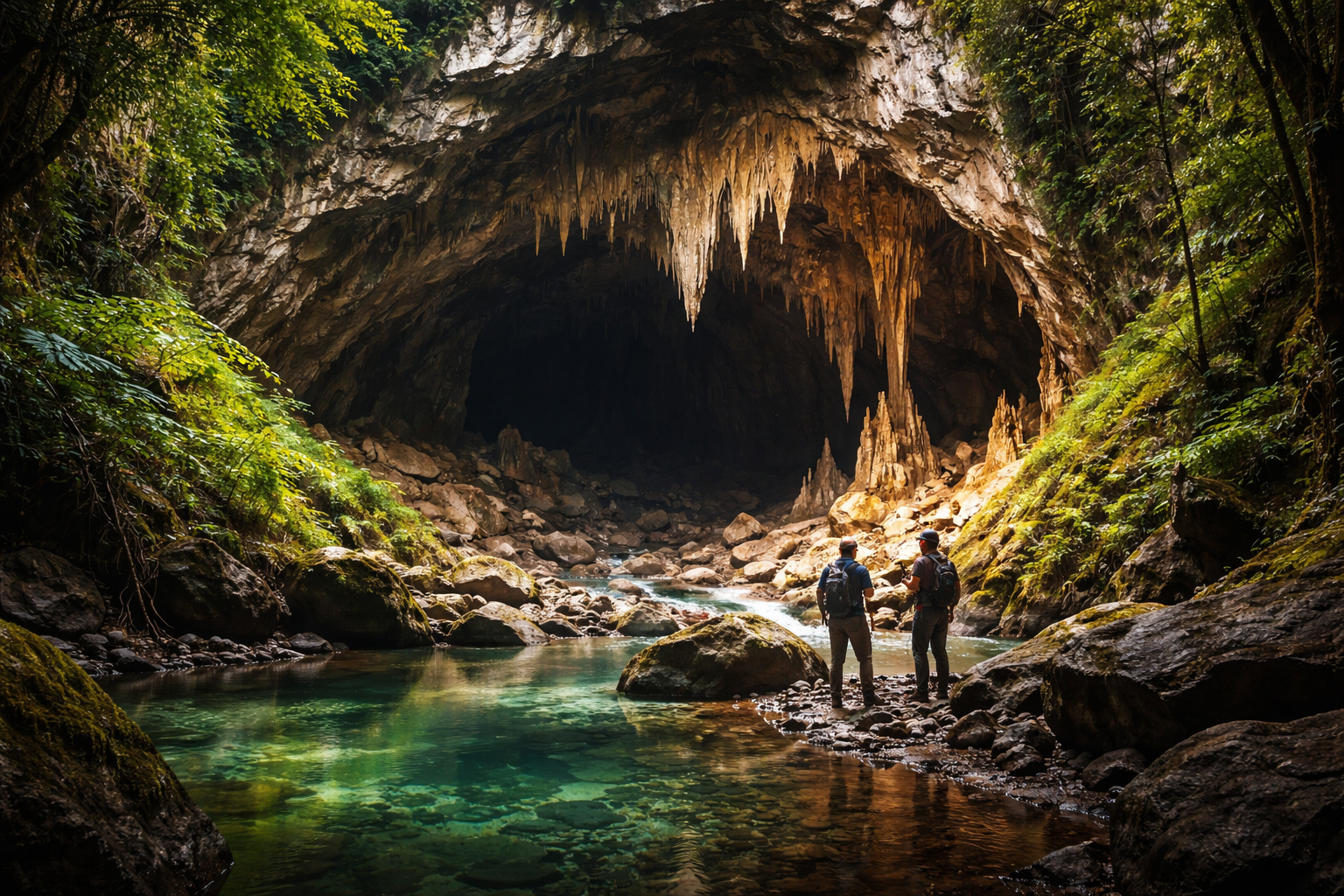


Research Conducted by USP in Serra dos Cocais Reveals Rare Rock Formations Over 600 Million Years Old, Endemic Subterranean Species, and Fossilized Pollen That May Rewrite the Climatic History of the Paulista Interior
Seven caves emerged where almost no one expected. In the midst of Serra dos Cocais, in the interior of São Paulo, researchers located cavities formed in granite, a type of rock where this phenomenon is uncommon. The discovery, made by students and researchers from USP in partnership with the Instituto Serra dos Cocais, changes the understanding of the region’s geology and raises a strategic alert about water resources.
It’s not just holes in the rock. What is there can impact science, environmental preservation, and climate studies.
The Geological Challenge That Transforms Serra dos Cocais Into a Rare Natural Laboratory in Brazil
Caves typically appear in limestone, where water dissolves the rock over time.
-
Friends have been building a small “town” for 30 years to grow old together, with compact houses, a common area, nature surrounding it, and a collective life project designed for friendship, coexistence, and simplicity.

-
This small town in Germany created its own currency 24 years ago, today it circulates millions per year, is accepted in over 300 stores, and the German government allowed all of this to happen under one condition.

-
Curitiba is shrinking and is expected to lose 97,000 residents by 2050, while inland cities in Paraná such as Sarandi, Araucária, and Toledo are experiencing accelerated growth that is changing the entire state’s map.

-
Tourists were poisoned on Everest in a million-dollar fraud scheme involving helicopters that diverted over $19 million and shocked international authorities.


In the case of Serra dos Cocais, the scenario is different. The seven cavities were identified in granite, a rock much more resistant to chemical action.
This alters the known pattern of underground formation.
Granite fragments through fractures and physical wear. It is a slow process that can take thousands of years to open internal spaces.
According to specialists from USP, environments like this are rarely recorded in the country, which highlights the area for geoscience research.
And there’s a little-discussed strategic factor.
The mountain reaches up to 1,200 meters in altitude and divides important watersheds like Piracicaba, Doce, and Santo Antônio, which are responsible for regional supply.
The caves act as natural reservoirs. Water seeps through the cracks and helps keep the soil moist, creating microclimates essential for the local Atlantic Forest.
The Subterranean Secret That Revealed a Fish Adapted to Darkness in Considered Improbable Rock
During the mapping, USP researchers found a catfish of the genus Ituglanis living in the cavities.
Species of this group are adapted to subterranean environments, but records in granite caves are rare.
The detail attracted even more attention.
Young individuals were in areas with no light incidence, while adults occupied partially lit sections.
The species was classified as endemic and restricted to the region.
This elevates the environmental value of the discovery and reinforces the importance of protecting the area, which has been under preservation since 2002.
Uncommon Mineral Structures in Granite Reveal a Little-Documented Phenomenon in Geological Engineering
Another point that surprised the team was the presence of speleothems.
These mineral formations, such as stalactites and stalagmites, are common in limestone caves. In granite, they are uncommon.
In one of the cavities, known as the Cave of Corals, structures emerged that resemble marine corals.
These formations are sensitive to environmental changes and can serve as indicators of changes in the ecosystem over time.
For those following studies in geological engineering, this is a relevant technical record.
The Natural Pool at the Top of the Mountain That Holds Pollen Thousands of Years Old and May Reveal Ancient Climatic Changes
At the top of a hill in Serra dos Cocais, researchers found a natural pool embedded in granite.
In the sediments accumulated there, fossilized pollen grains thousands of years old were identified.
This material will be analyzed through palynology studies, an area that investigates pollen preserved in rocks.
According to specialists, these layers function as a climate archive. Each deposit holds clues about periods of drought, temperature variations, and changes in the vegetation of the region.
There is no official number released regarding the extent of these analyses, but estimates suggest that the material may enhance understanding of the environmental history of the Paulista interior.
Why This Discovery from USP May Influence Environmental Research and Water Resource Management in the Coming Years
Serra dos Cocais was already recognized as an ecological corridor with remnants of Atlantic Forest.
With the identification of the caves, the area gains new scientific weight.
New expeditions are planned for material collection and further analysis.
The impact is not limited to academia.
When a region that supplies strategic watersheds reveals subterranean structures capable of naturally storing water, the debate on preservation gains another dimension.
Seven caves were enough to put Serra dos Cocais at the center of discussions about geology, climate, and water security in the interior of São Paulo.
Do you believe that areas like this should receive more investment in research and environmental protection? Share your opinion in the comments.










Claro que sim. É indispensável aplicar mais recursos para que a epesquisa avance , trazendo resultados positivos para a comunidade científica.
Essa Serra dos Cocais é a que fica na região de Vinhedo e Itatiba?
Sim, áreas como essa deveriam receber mais investimentos em pesquisa e proteção ambiental.