





 Portuguese
  English
  Spanish
  3 min of reading
  0 comments



Researchers Uncover How Volcanic Magma, Rich in Rare Elements, Creates Precious Blue Sapphires, Revealing Hidden Secrets from the Depths of the Earth for Over 700 Thousand Years.
Have you ever wondered how those dazzling blue sapphires get their mesmerizing color? Recently, scientists from Heidelberg University made an impressive discovery linking volcanoes to the formation of these gemstones. Yes, the origin of the deep blue glow of sapphires is literally rooted in volcanic activity.
This revelation not only solves an ancient geological mystery but also opens new doors to understanding how nature’s extreme forces create true jewels on our planet.
What Are Blue Sapphires?
Blue sapphires are a variety of the mineral corundum, composed of aluminum oxide in its crystalline form. But what gives these gems their unique blue color? The answer lies in the impurities: iron and titanium. When these elements replace some aluminum atoms in the crystal, the result is a captivating blue hue that enchants anyone.
-
Submarine cables installed to transmit the internet now also help scientists detect earthquakes.

-
After so many blackouts, a family transforms an electric truck into a power source for their home and shows how a 100 kWh battery can keep everything running for days.

-
Ukraine is already testing, and China has already shown the world, and now the Brazilian Army is developing its own swarm of autonomous drones with artificial intelligence that share data in real time and operate without centralized control, uniting military and universities.

-
Few people know, but the most nutritious part of wheat has been discarded for decades to produce white flour, and the “polyamine” spermidine activates cellular cleaning, reduces mortality, and may slow down memory loss.


This transformation is like a painter mixing pigments on a canvas, but in this case, the canvas is the Earth’s crust and the painter is nature itself.
The Impact of Magma on Sapphire Formation
Volcanoes play a fundamental role in this process. The magma, rich in sodium and potassium but with little silicon dioxide, creates the perfect environment for sapphires to crystallize. Imagine a boiling cauldron deep within the Earth, where the right ingredients are being mixed to create a masterpiece.
It is in this cauldron that corundum transforms into sapphire, incorporating the necessary impurities to acquire its unmistakable blue tone.
Revealing Studies in the Eifel Mountains
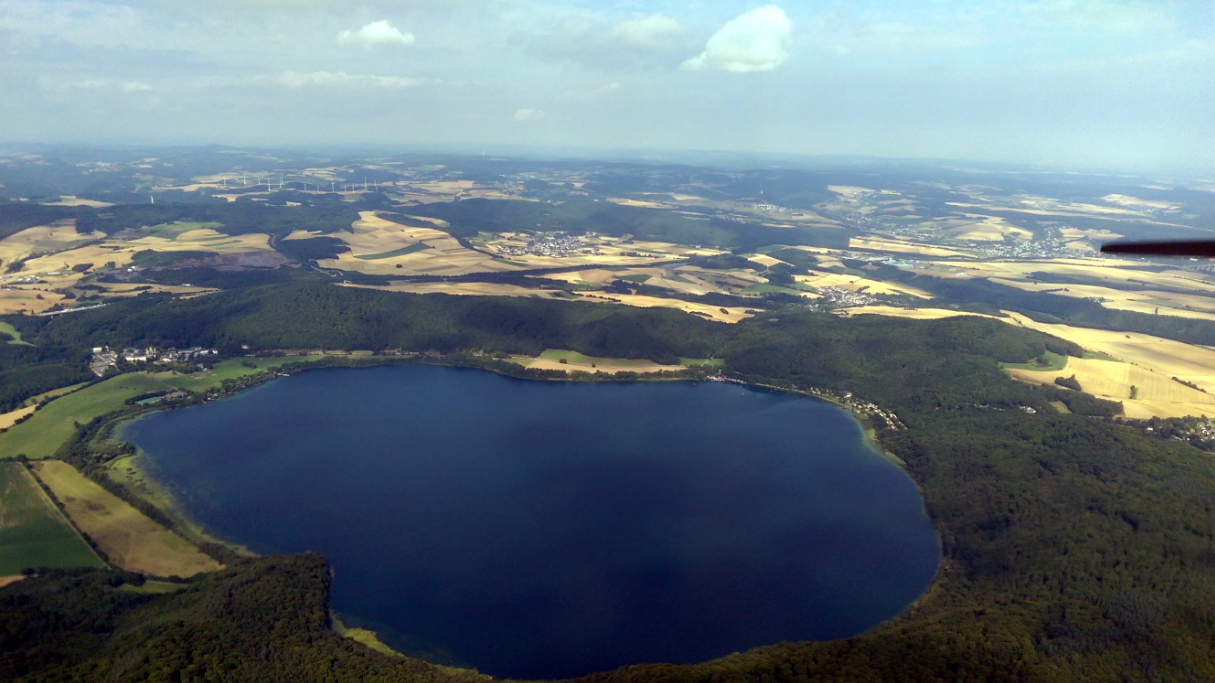
One of the most fascinating areas to understand sapphire formation is the Eifel Mountains in Germany. This volcanic area has been the stage for intense interaction between mantle magma and the crust for about 700 thousand years. Scientists analyzed 223 sapphires from the region, revealing that they were shaped by processes that challenge previous theories.
Previously, it was believed that sapphires were formed exclusively in the mantle or lower crust. However, the research showed that these gems can emerge at shallower depths, between 5 and 7 kilometers, where magma meets crustal rocks and creates the ideal conditions for crystallization.
If sapphires are so delicate in appearance, why do they survive so well against weathering and erosion? The answer lies in the mineral’s natural resilience. Just like gold, sapphires bravely face the forces of nature, maintaining their beauty even in river sediments or volcanic deposits.
This resilience is what makes them even more valuable, as they can tell their story over millions of years.
The Role of Magmatic and Metamorphic Processes
The study also revealed that magmatic and metamorphic processes are equally important. When magma comes into contact with heated rocks, the mixture creates the perfect conditions for sapphire formation. It’s like a dance between temperature, pressure, and chemistry, resulting in breathtaking crystals.
The isotopic signature of these gems indicates that they carry memories of the Earth’s mantle and crustal rocks.
Understanding how blue sapphires form is not just a matter of scientific curiosity. These discoveries can aid in the exploration of new gemstone deposits in volcanic regions around the world. Who knows how many other beauties are waiting to be found in the depths of the Earth?
There are still many mysteries hidden beneath our feet, and studies like this bring us closer to unraveling them.
Blue sapphires are true miracles of nature, shaped by the extreme forces of volcanoes. Science, by uncovering their secrets, not only allows us to appreciate these gems even more, but also invites us to reflect on the complexity and beauty of our planet.





-

-

-

6 pessoas reagiram a isso.