





 Portuguese
  English
  Spanish
  5 min of reading
  1 comment


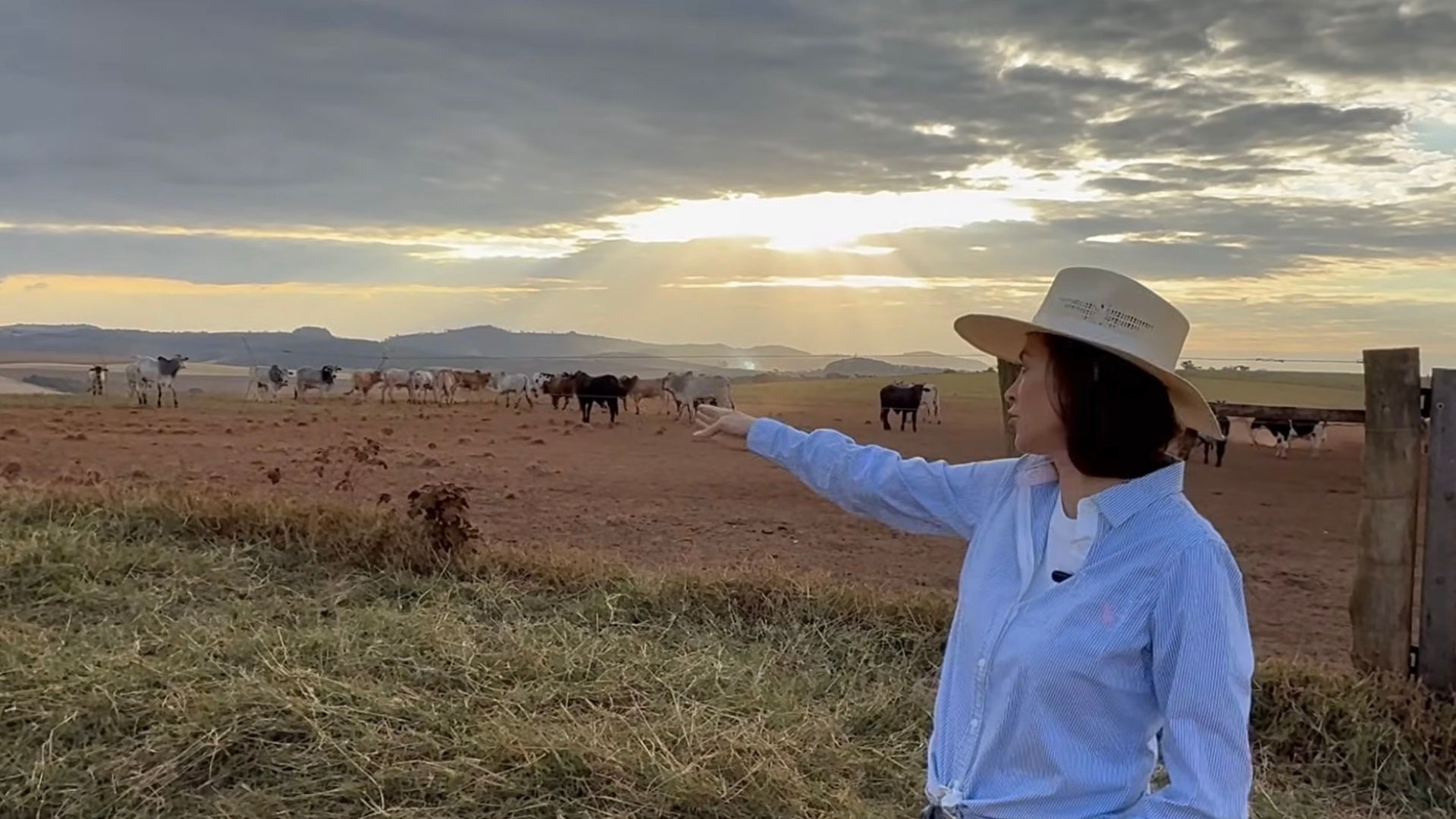


Property in Minas Gerais Transitioned from Coffee, Structured Confinement for 1,800 Animals, Increased Phosphorus from 2 to 40, and Achieved National Profitability Title
Do you know that question every cattle rancher asks? How to turn an ordinary farm into a profit-generating machine? The answer is not in magic, miracle products, or secret formulas. On the contrary. Brazil’s most profitable farm achieved its results through rigorous management, indicator control, risk strategy, and well-executed technical decisions over the years.
Located in Campestre, in the South of Minas Gerais, Fazenda Cigana was not always a national reference. Until 15 years ago, the property was exclusively focused on coffee. However, the family decided to completely transform the production model and shift to livestock. Step by step, they structured confinement, intensive rearing, TIP (intensive pasture finishing), integrated farming, and grain storage.
As a result of this constant evolution, the property won the title of champion in profitability for the 22/23 harvest, and continued to receive recognition in the 23/24 harvest. This information was released by a national benchmark of the agribusiness sector, which assessed productive and financial indicators of participating properties.
-
While Russia dominates the global wheat market, Brazil emerges as an unexpected competitor in the Cerrado, offering grain available in July and August when stocks in the Northern Hemisphere are at their lowest point of the year.

-
China returned almost 20 Brazilian ships with soybeans, but now everything could change: the country that buys 80% of the grain is considering relaxing regulations after impurities held up shipments of thousands of tons and caused million-dollar losses.
-
The drought of the cerrado was considered an enemy of wheat, but Brazilian scientists turned the lack of rain into a competitive advantage by creating a grain with quality that is already attracting the attention of international mills around the world.
-
THE OWNER of Brazil: a farmer who came from laundries, created an ’empire’ and today runs a company valued at R$ 42 billion after tripling its value in less than a year and receiving a billion-dollar investment from the USA.


But after all, what are the numbers behind this achievement?
Strategic Confinement: 1,800 Animals, Turnover of 90 to 100 Days, and Daily Gain of 1.5 kg
Confinement is the main finishing tool of the farm. The static capacity reaches 1,800 animals, with a short turnover of 90 to 100 days. This strategy reduces capital immobilization and improves cash flow.
Moreover, the performance is impressive. The daily gain (GMD) reaches 1.5 kg per animal, while carcass gain approaches 1 kg per day, considering the genetics worked on the property.
The diet follows a classic model, but with strategic adjustments for cost reduction. The base includes:
- Corn silage produced on the farm
- Peanut meal (instead of soybean, taking advantage of regional availability)
- Wet grains
- Mineral core
- Urea
However, the secret does not lie solely in the diet. Financial management determines profit. According to the farm’s management, three pillars sustain profitability:
- Efficient purchase of animals
- Strict control of the cost of produced weights
- Strategic sales with market protection
Additionally, technology aids in decision-making. The property has been utilizing electronic ear tags for about a year and a half, allowing for tracking each animal in the pen, measuring individual performance, and accurately controlling production data.
Another important technical detail involves the water troughs. They are tiled, shallow, and have high flow rates, facilitating cleaning and reducing sanitary issues. It may seem simple. However, these adjustments preserve performance and prevent waste.
TIP and Intensive Rearing Increase Revenue Without Increasing Silage


To avoid relying exclusively on confinement in winter, Fazenda Cigana structured the TIP (intensive pasture finishing). In this system, animals enter heavier, between 420 and 450 kg, and go directly to the refrigerator when finished.
In this way, the farm generates additional revenue in the summer without needing to increase silage production. The feed stays in the trough while the pasture complements the diet. In winter, stocking density is reduced due to the lower quality of the grass.
Still, the system requires daily monitoring of consumption, trough reading, and constant monitoring.
In addition to TIP, intensive rearing prepares animals to enter confinement at the planned weight. Therefore, planning begins long before finishing.
However, the property also recognizes areas for improvement. Currently, some fences have a spacing of almost 10 meters only with a balance beam, which allows mixing between lots. Additionally, water still depends on natural troughs in some sectors. The management is already developing a project to install new central water points.
This continuous improvement mindset sets common properties apart from highly profitable ones.
Fertile Soil is Money in your Pocket: Composting Increased Phosphorus from 2 to 40
If there is one sector considered the “darling” of the farm, it is composting.
The yard has 11 piles and approximately 1,200 tons of organic compost. The material combines confinement manure with coffee husk, sugarcane bagasse, sawdust, and capiaçu. Additionally, it receives an addition of rock powder, dolomite, and gypsum.
The impact on the soil has been significant. Five years ago, phosphorus levels in some pastures measured 2. Today, areas reach levels between 30 and 40. In other regions, values have increased from 5-8 to much higher levels.
Consequently, plants have become healthier, animals have improved performance, and the farm has reduced spending on chemical fertilizers. Fertility generates productivity. Productivity generates margin.
Alongside composting, the property invests in solar panels and its own eucalyptus, reinforcing a sustainability strategy and cost reduction.
Management and Numbers: The True Differentia
Although confinement impresses and the soil improves, none of it would work without management.
The farm holds monthly meetings with the entire team, always featuring breakfast. Additionally, it promotes strategic meetings before planting, the start of confinement, and critical stages.
Weekly, objectives are sent via WhatsApp group by department. Constant communication keeps everyone aligned.
The annual planning sets clear goals: for example, 2,000 heads for slaughter per year or 750 calves sold. Without numbers, there is no direction. Without direction, there is no profitability.
The property monitors:
- DGD
- Stocking density
- Expenditure per head/month
- Cost of produced weight
- Volume of silage
- Margin per lot
According to management, the farm needs to know how much it can spend to maintain profit. Otherwise, it only works to break even.
Therefore, risk management becomes as important as people management.
Conclusion: There is No Magic Powder, There is Consistency
Fazenda Cigana did not succeed by accident. It transitioned from a coffee area and, over 15 years, structured systems, adjusted indicators, corrected flaws, and made data-driven decisions.
The result? National profitability title in the 22/23 harvest and recognition in the 23/24 as well.
However, the main lesson is not to copy the model. It is to understand your reality, set clear goals, control numbers, and continuously improve.
If you could change just one thing on your farm today to increase your margin, what would it be?
Source: Léo Lima. Patuá









Tenho uma fazenda? não.
Mas adorei a matéria. Inteligência de gestão, pensada em cada setor, transforma trabalho em resultado positivo.