





 Português
  Inglês
  Espanhol
  5 min de leitura
  0 comentários


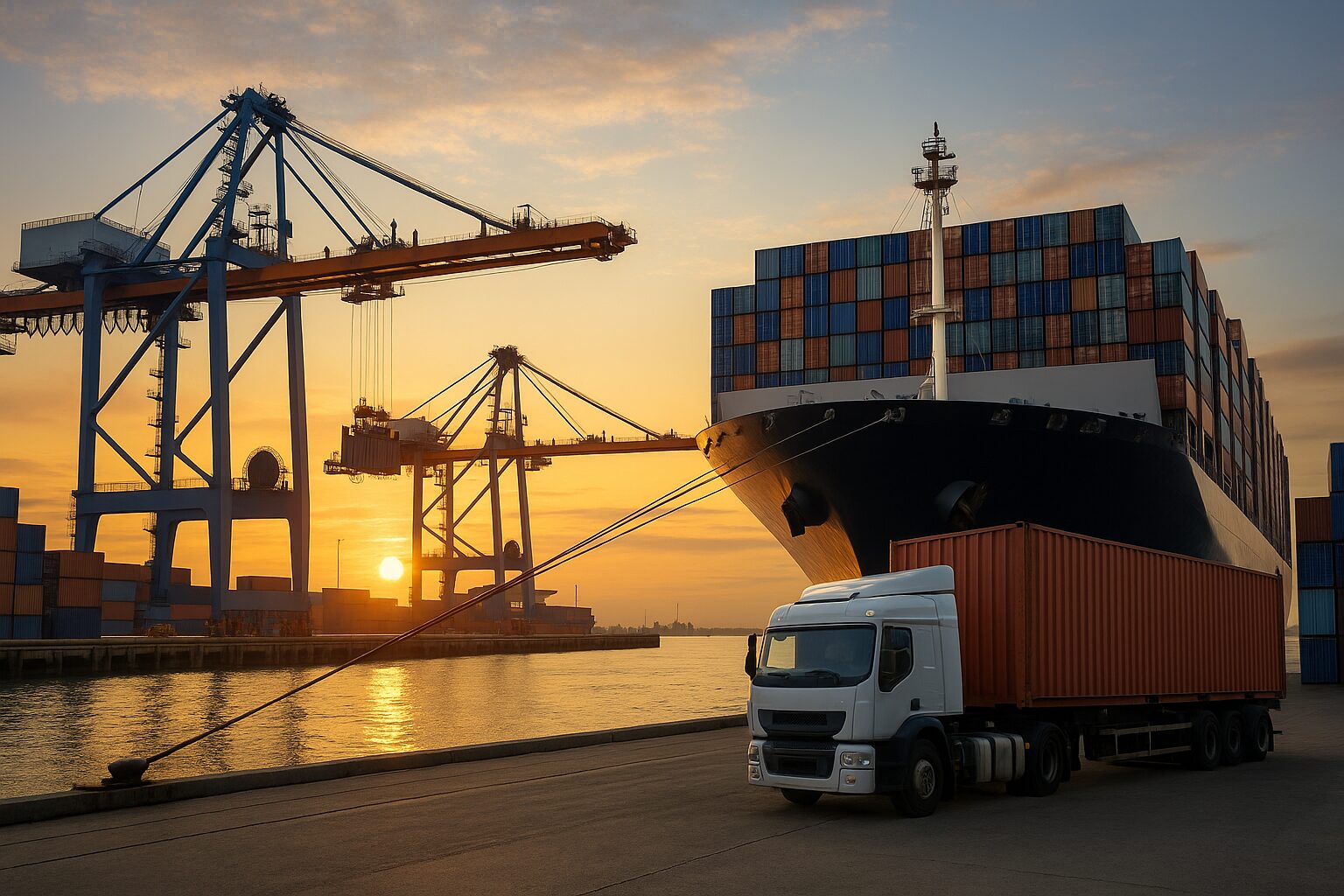
Understand How Shipbuilding Industry Strategies Shape the Global Economy Through Innovation, Logistics, and Sustainability in Maritime Transport.
Since ancient times, navigation has played a fundamental role in the development of civilizations.
For example, peoples such as the Phoenicians, Egyptians, and Romans used vessels to explore territories, engage in trade, and expand their economic power.
According to the Food and Agriculture Organization of the United Nations (FAO), archaeological records indicate that around 3000 B.C., vessels were already crossing rivers and seas for trade, demonstrating the strategic importance of maritime transport since antiquity.
-
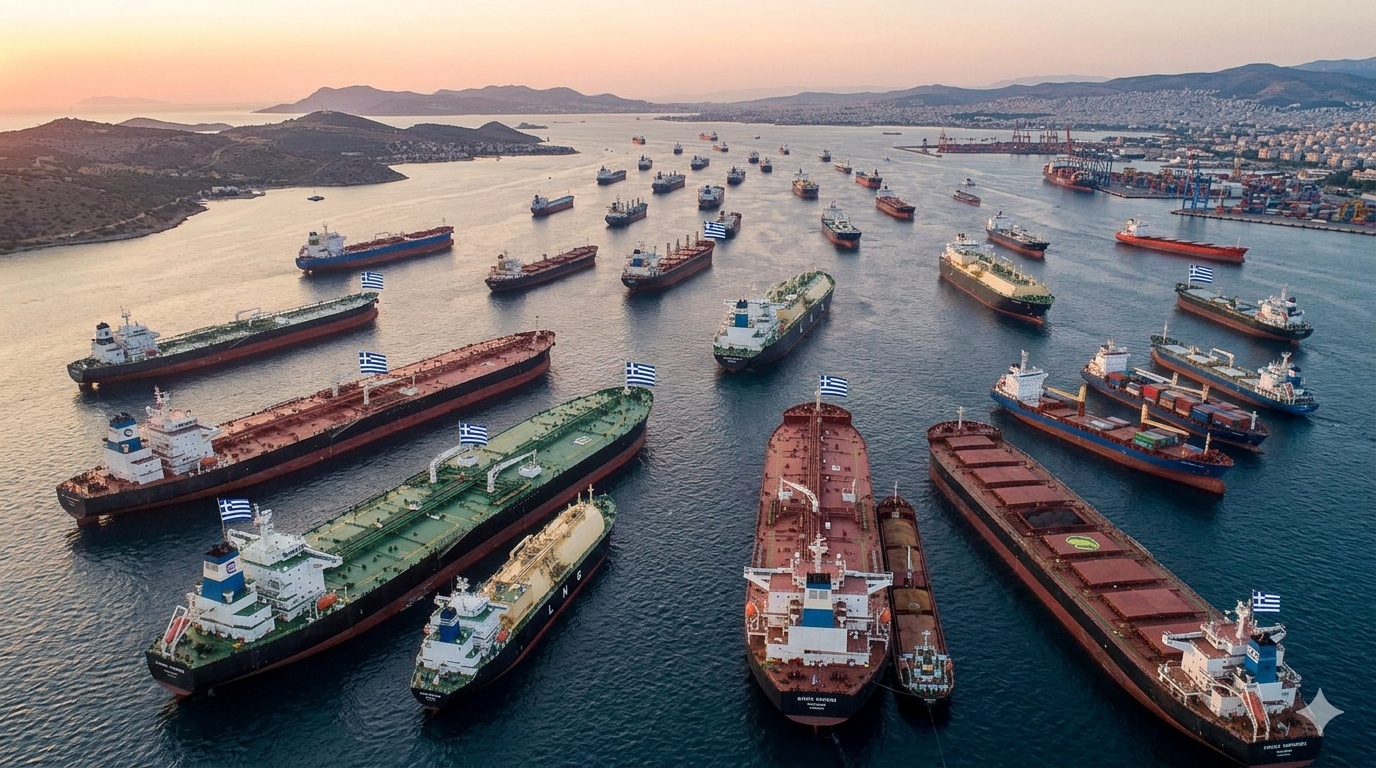
Neither the USA nor China: a small European nation has become one of the largest maritime powers on the planet, controlling one of the largest merchant fleets in the world with thousands of ships and dominating the global transportation of oil and strategic cargo.
-
Scotland and the United Kingdom have created a new anchoring system that floats in the water without touching the seabed, after discovering that the current from a conventional anchor destroys up to 50 m² of seagrass meadow per event and that ship-damaged reefs showed no signs of recovery even ten years later.

-
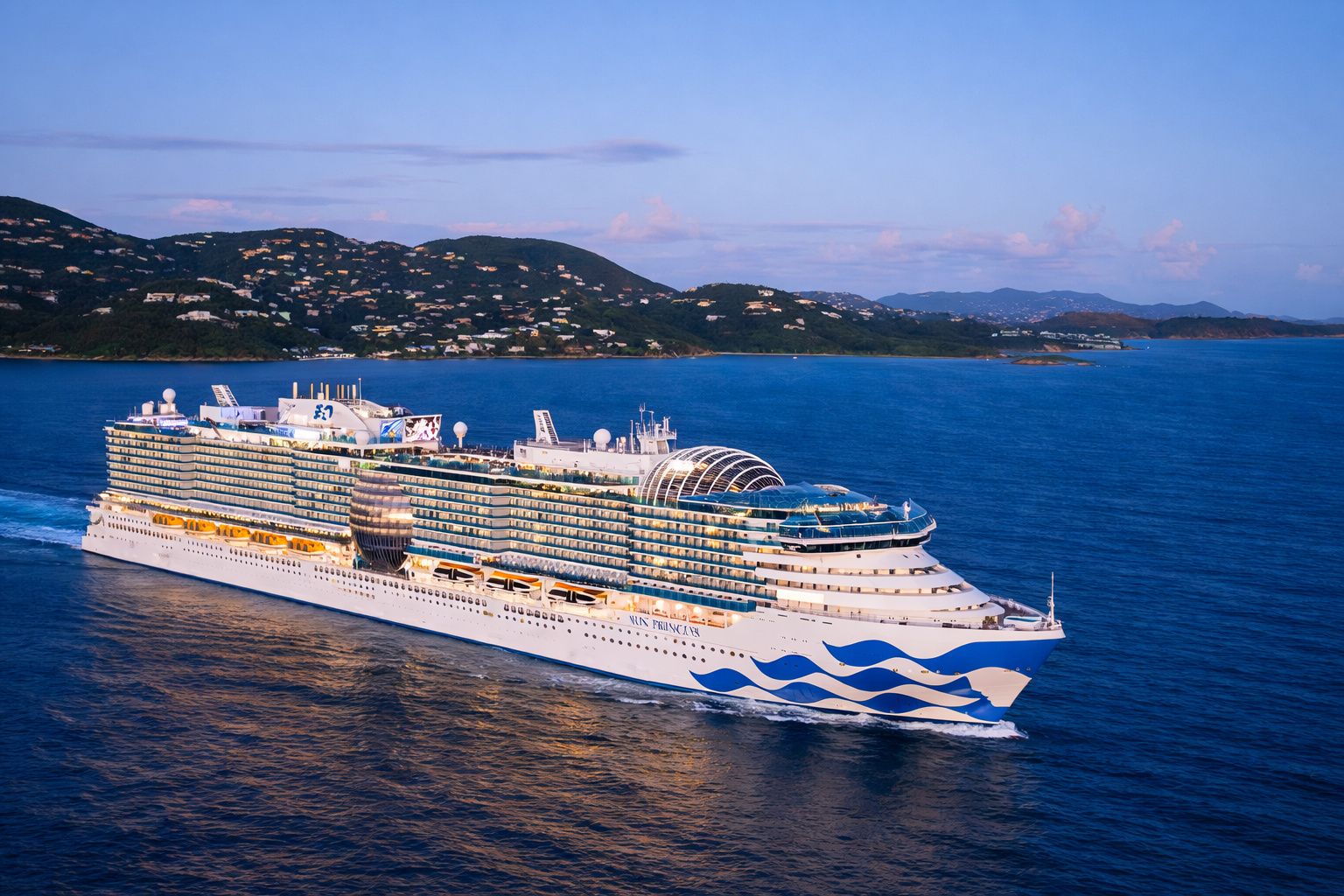
Weighing 175,500 Tons, Measuring 345 Meters Long, and With Capacity for Over 4,300 Passengers, the Sun Princess Becomes the Largest Ship Ever Built by Princess Cruises and Attracts Global Attention for Its Huge Glass Dome Inspired by Santorini’s Architecture Installed on Top of the Vessel
-
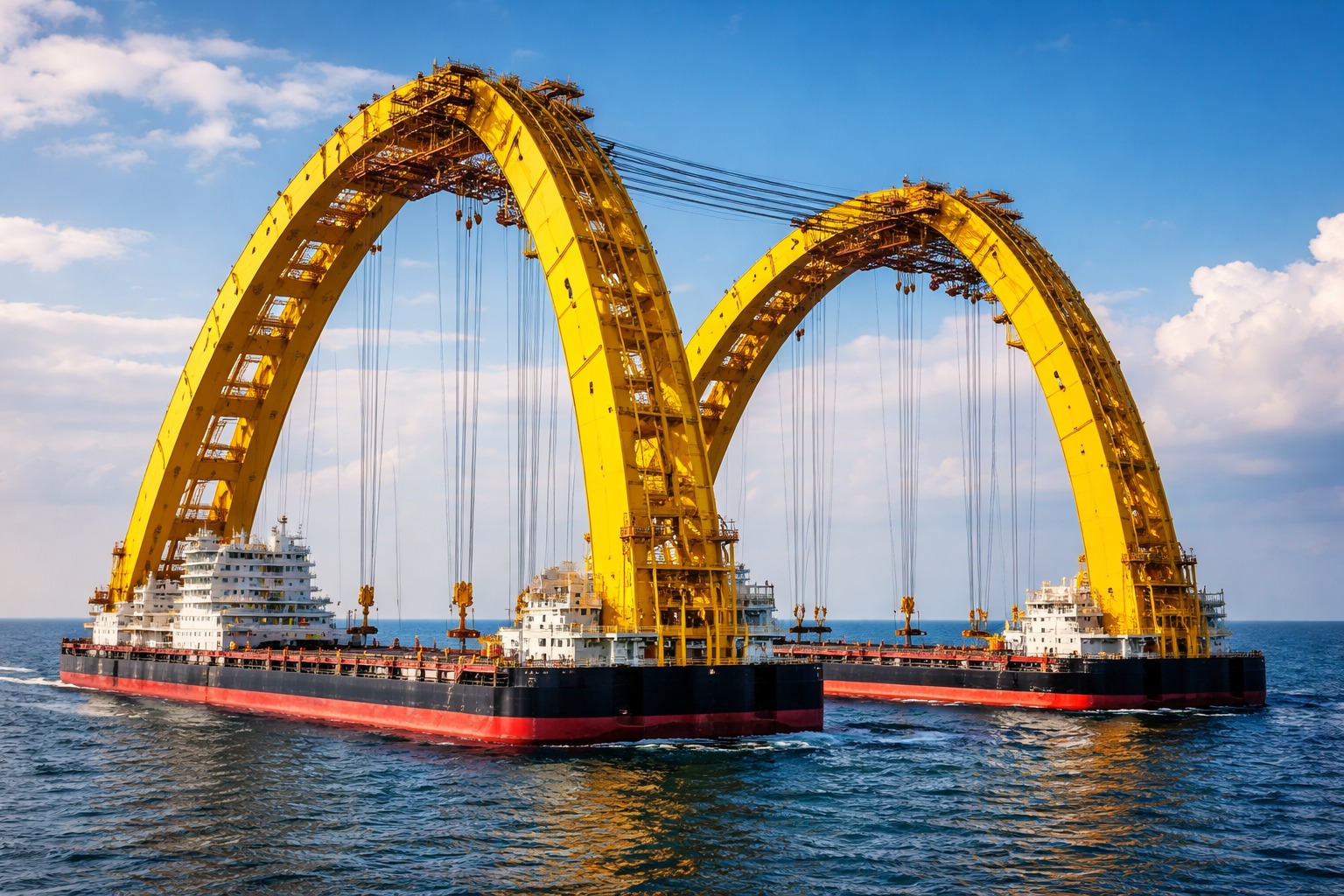
TX-10, The Colossus of The Sea: Largest Lifter Ship in The U.S., With Two Giant Barges, 73-Meter Tall Structure, and Strength to Raise 7,500 Tons of Sunken Oil Rigs

Over the centuries, the shipbuilding industry has evolved, modernized, and directly influenced the global economy.
Therefore, today, shipbuilding industry strategies continue to impact the functioning of the global market, especially in logistics, international trade, and maritime security.
Moreover, with globalization and technological advancements, maritime transport has become the backbone of global trade.
In fact, according to the United Nations Conference on Trade and Development (UNCTAD) report of 2023, about 90% of everything we consume reaches us through maritime transport.
This means that any decision made within the shipbuilding sector—be it about infrastructure, ship construction, trade routes, or sustainability—directly affects various other sectors of the economy.
Thus, understanding how shipbuilding industry strategies work helps to comprehend the dynamics of the global market.
Furthermore, the shipbuilding industry is closely tied to national and international economic policies. On one hand, countries with extensive territorial waters and robust naval fleets exert more influence in maritime trade, negotiating advantageous trade agreements.
On the other hand, the presence of military ships and cooperation among countries ensure the security of maritime routes, which is part of the strategies to maintain stability in cargo transport.
The Historical Evolution of the Modern Shipbuilding Industry
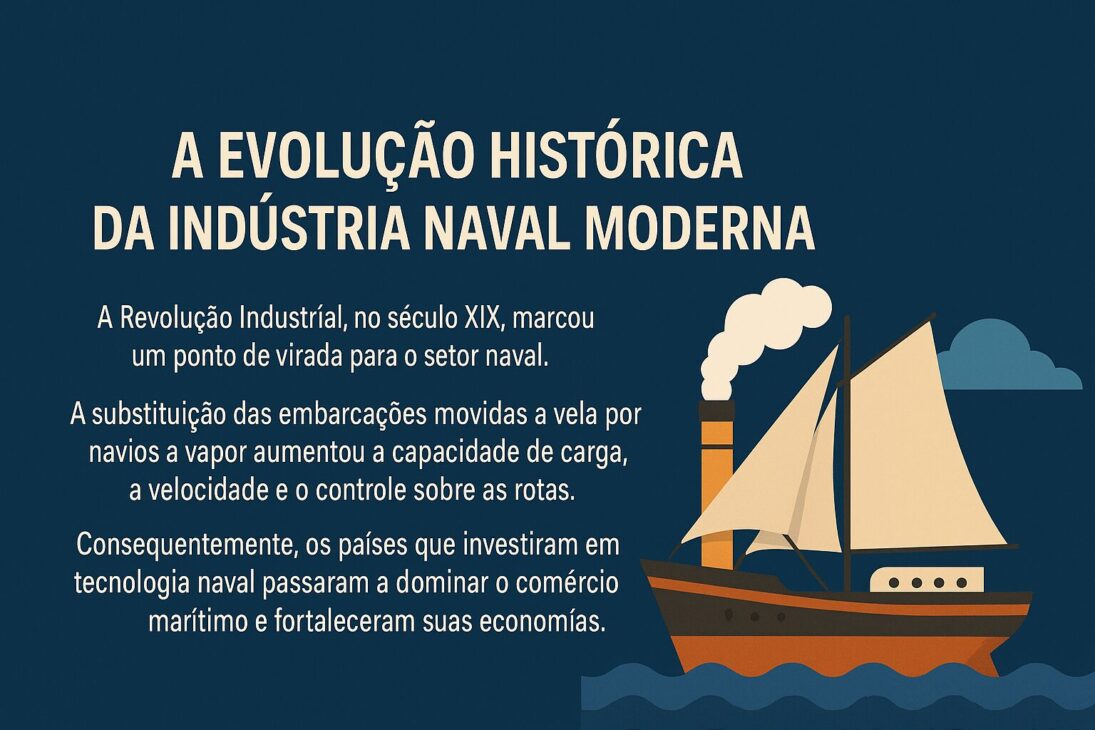
The Industrial Revolution in the 19th century marked a turning point for the shipbuilding sector. Primarily, the replacement of sailing vessels by steamships increased cargo capacity, speed, and control over routes.
As described by the National Maritime Museum of the United Kingdom, the introduction of steamships between 1820 and 1850 revolutionized maritime transport, bringing about a new era of naval power and trade.
Consequently, countries that invested in naval technology began to dominate maritime trade and strengthen their economies.
Thus, naval development shifted from being merely a transport issue to becoming a strategy for political and economic power.
During the 20th century, the two world wars reinforced the role of the shipbuilding industry in ensuring supply and protecting territories.
The United States Naval History Institute emphasizes that, particularly during World War II (1939-1945), technological advancements in military vessels accelerated civil naval development in the following decades.
After the conflicts, investments refocused on trade and logistics, making the shipbuilding industry one of the pillars of the international economy.
Besides the wars, the post-war period saw an increase in large-scale transport of commodities such as oil, minerals, and agricultural products.
Thus, the demand for specialized ships rose, and companies diversified their fleets to meet these different markets.
For example, the construction of giant oil tankers reflected the importance of oil to the global economy, while container ships revolutionized the way goods are transported, making the process faster and more organized.
According to the International Maritime Transport Association (IMPA), in 1956, the introduction of the container ship revolutionized maritime transport, increasing logistical efficiency and transforming global supply chains.
Integrated Logistics and the Role of Ports in International Trade
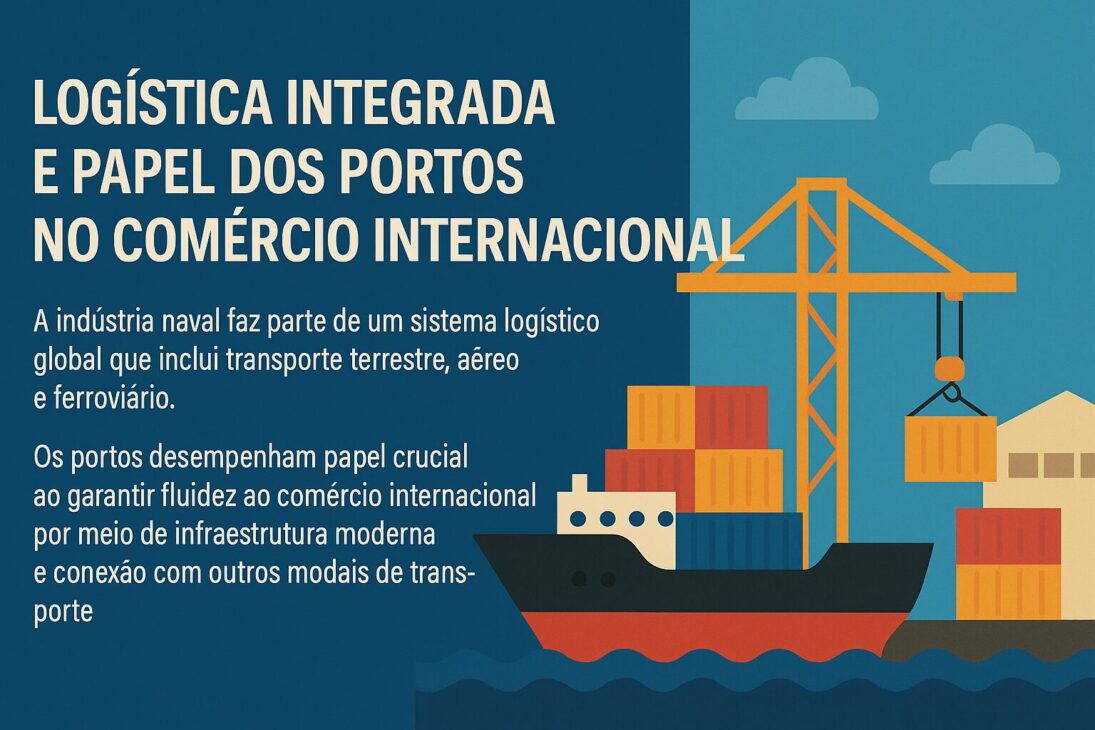
The shipbuilding industry does not operate in isolation. It is part of a global logistics system that includes land, air, and rail transport.
Therefore, an efficient strategy takes into account loading and unloading times, customs procedures, storage costs, and delivery deadlines.
In this sense, ports play a crucial role. Well-structured ports, equipped with modern facilities and good connections to other transport modes, ensure fluidity in trade.
Thus, countries that invest in their ports can attract more commercial operations and become strategic points in the international market.
Port cities like Rotterdam, Shanghai, Singapore, and Santos demonstrate how port infrastructure is directly connected to economic activity.
Port efficiency results from a series of strategies, such as automation of processes, adoption of smart cargo management systems, and workforce training.
Moreover, integration with land transport systems speeds up the flow of goods, reducing costs and delivery times.
In recent years, the digital connectivity of ports has gained momentum.
Thus, digital platforms connecting vessels, port operators, and logistics agents facilitate more transparent and agile management of operations, increasing the competitiveness of maritime trade.
According to a report by the International Association of Ports and Harbors (IAPH), since 2015, digitization has been a priority focus for global port modernization.
Sustainability and the Future of the Shipbuilding Industry
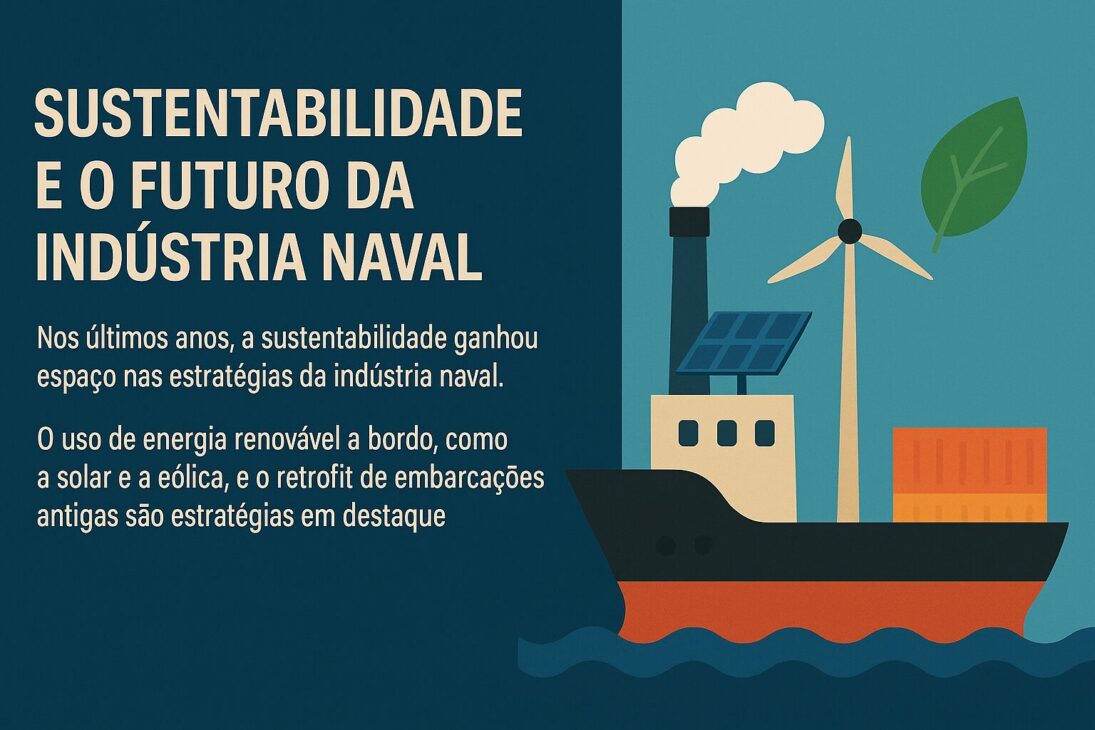
In recent years, sustainability has gained prominence in the strategies of the shipbuilding industry.
In response to the pressure for more eco-friendly practices, companies have invested in cleaner technologies, both in shipbuilding and port operations.
Thus, the International Maritime Organization (IMO) established goals in 2018 to reduce greenhouse gas emissions from maritime transport by at least 50% by 2050.
One of the strategies involves the use of renewable energy on board, such as solar and wind energy.
Another trend is the retrofitting of old ships, modernizing their structures to make them more efficient.
Additionally, digitizing processes helps reduce waste and improve control over each stage of maritime transport.
The concept of an “autonomous ship” is also being discussed as a strategy for the future.
The idea is to develop vessels that operate with minimal human intervention, using sensors and artificial intelligence to navigate safely.
Although still in the testing phase, this type of innovation shows how the shipbuilding industry is in constant transformation.
In addition to technological innovations, sustainability also involves the social responsibility of companies in the sector.
They ensure decent working conditions for crew members, invest in maritime safety, and support port communities.
Thus, adopting ethical and sustainable practices strengthens the companies’ image and contributes to a fairer and more balanced market.
Direct Impacts of Strategies on the Market
Shipbuilding industry strategies influence not only large navigation companies.
On the contrary, they affect product prices, delivery speeds, the availability of goods, and employment in port regions.
When a ship is delayed or a route is interrupted, the entire production chain feels the impact.
Similarly, investments in cleaner technologies may raise initial costs, but result in savings and environmental benefits in the long run.
Therefore, governments and companies seek a balance between economic efficiency, technological innovation, and sustainability.
By understanding the role of the shipbuilding industry, investors, logistics professionals, and consumers can make more informed and strategic decisions.










Seja o primeiro a reagir!