





 Portuguese
  English
  Spanish
  5 min of reading
  0 comments


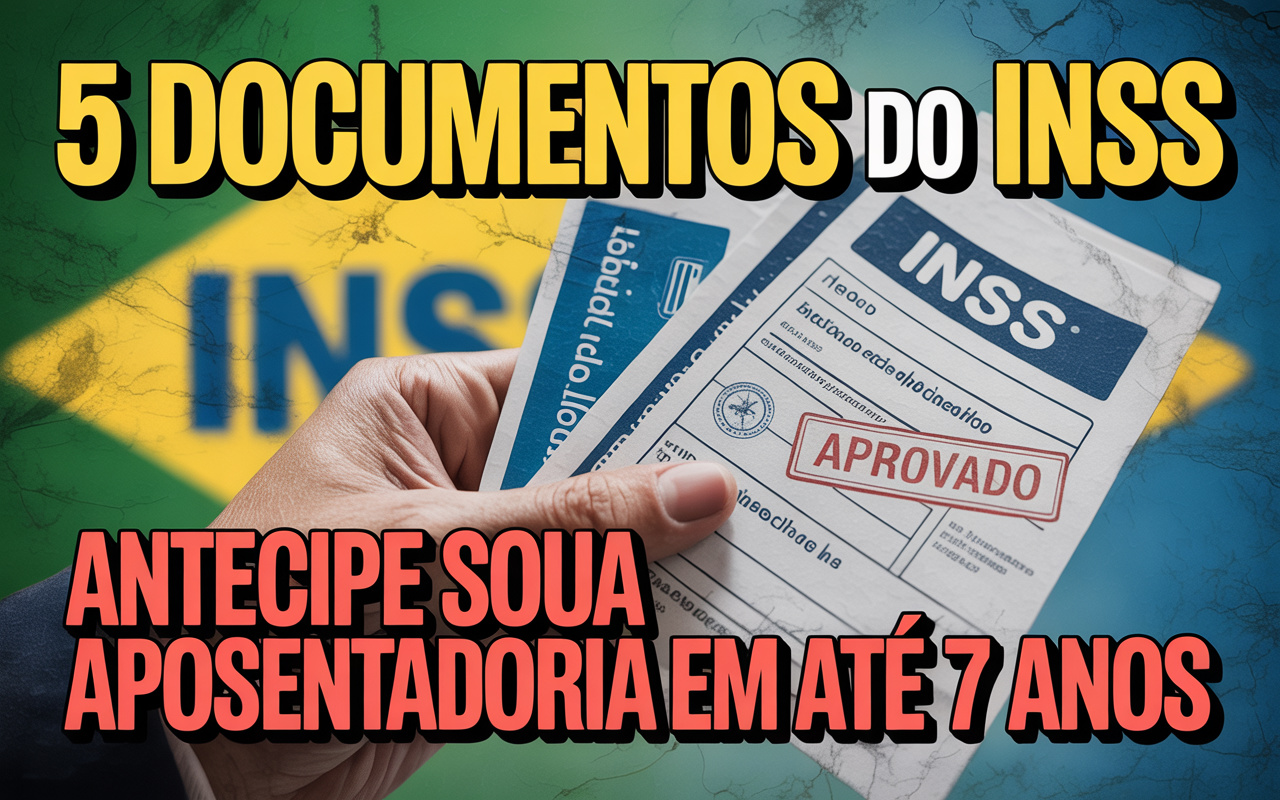
Old Documents Like Baptism Certificates, School Histories, and Rural Contracts Can Advance Retirement by 7 to 10 Years and Increase Benefits.
Few people know, but retirement from INSS does not depend only on the work card or the contribution statement. Brazilian social security legislation allows for the use of alternative documents to prove work time, rural activity, or even periods of life where there was no formal registration. In practice, this can advance retirement by 7 and even 10 years for many workers, shortening the wait and, in some cases, even increasing the monthly benefit amount.
These documents are accepted because INSS recognizes that, in the past, millions of Brazilians worked in informal conditions, without entries in work cards, especially in rural areas and in domestic or family economy activities. Therefore, the Justice System and the social security itself have allowed evidence that demonstrates actual labor activity before official registration.
Baptism Certificate: An Overlooked Record That Counts as Life Time
The baptism certificate is one of the oldest documents that still has legal value. In times when not all births were registered in registries immediately, baptism served as proof of a person’s existence.
-
The noise law will no longer be in effect at 10 PM starting in June with a new rule valid during the 2026 World Cup.

-
The Chamber opens a debate on driver’s licenses at 16 years old as part of a reform that includes around 270 proposals to change the Brazilian Traffic Code and may redesign rules for licensing, enforcement, and circulation in the country.

-
The new Civil Code could revolutionize marriages in Brazil with “express divorce” and changes that could exclude spouses from inheritance.
-
Banco do Brasil sues famous influencer for million-dollar debt and intensifies debate on delinquency, risks of seizure, and direct impact on Gkay’s credibility.


For INSS, this document can reinforce the proof of age and time of life in rural regions, where many children began to help support the family early.
When combined with other papers, such as records of rural work, the baptism certificate helps form a strong evidential set that can be accepted in administrative and judicial processes.
School History: When Studying Also Meant Working
Another document that can make a difference is the school history. In agricultural, technical, or industrial schools, it was common for students to perform productive functions while studying.
This record can prove the exercise of activity, especially for those who started as young apprentices in past decades.
The school history also serves to indicate residence in a certain locality, which reinforces ties to rural or urban activity. If well used, it can add important years to the INSS count.
Marriage Certificate: Beyond Union, Proof of Identity and Dependency
Many people don’t imagine, but the marriage certificate plays a fundamental role in retirement processes. It serves to correct name discrepancies — something very common in Brazil, where people change their last names after marriage — and helps locate old contributions linked to different names.
Additionally, in cases of rural work within family economy, the marriage certificate proves the existence of the family unit that worked together in the field, allowing the work time of all to be recognized, even without formal registration.
Rural Contracts: Leasing, Loan, and Buying and Selling
Rural contracts may be the most powerful documents for those who worked in the field without a work card. Papers such as lease contracts, purchase and sale, or loan prove residence and agricultural activity.
INSS accepts these records as evidence that the worker and their family lived off subsistence agriculture.
In these cases, the time of rural activity can be recognized in full, advancing retirement by up to 10 years. This is the most common situation for insured individuals benefiting from these documents.
Birth Certificate: Basic but Essential
The birth certificate, although it may seem obvious, also carries significant weight. It proves age, parentage, and helps fill documentary gaps.
In social security processes, it is used in conjunction with other evidence to confirm the timeline of the insured’s life.
Especially for rural workers, it helps validate family ties to activities in the field, reinforcing the argument of working in family economy before formalization.
The Real Impact: Cases Where Insured People Gained Up to a Decade
In practice, these documents can make the difference between working more years or retiring earlier. There are court decisions recognizing that, based on old papers, insured individuals managed to anticipate retirement by up to 10 years.
This happens because each document adds elements to the set of evidence required by INSS. When well articulated with witnesses and additional records, they can transform the social security process and change the life of the worker.
Why Are These Documents Accepted?
Brazilian social security legislation, especially the Law 8.213/91 (Social Security Benefits Law), provides that material evidence can be used to prove work time, as long as it is complemented by other signs.
The goal is to prevent fraud, but also to ensure that informal or rural workers are not disadvantaged.
Thus, certificates, histories, and rural contracts serve as complementary evidence that help count unregistered periods. It is a form of social justice, recognizing the effort of those who worked hard even without a signed contract.
How to Use These Documents in the Retirement Application
Anyone intending to present these documents should gather as much evidence as possible. Ideally, it should include:
- Declarations from rural unions or worker associations;
- Property and residence records in the rural area;
- Witnesses who can confirm the activity during the period;
- Old documents kept by the family.
With this material in hand, it is possible to submit the application directly on Meu INSS or seek guidance from a social security lawyer.
Forgotten Papers That Can Turn Into Retirement
Many insured individuals keep old documents without realizing their value. But in the social security process, these papers can be worth gold.
The baptism certificate, school history, rural contracts, and marriage or birth certificates can transform the lives of workers, guaranteeing recognition of up to 10 years of contributions and anticipating the long-desired benefit.
Therefore, it is worth revisiting drawers, family files, and even registries in the hometown. What seemed like mere memory could be the key to a more peaceful future and an earlier and fairer retirement.










-

-

-

-

-

16 pessoas reagiram a isso.