





 English
  Francês
  Alemão
  Italiano
  Japonês
  Norueguês
  Portuguese
  Spanish
  5 min of reading


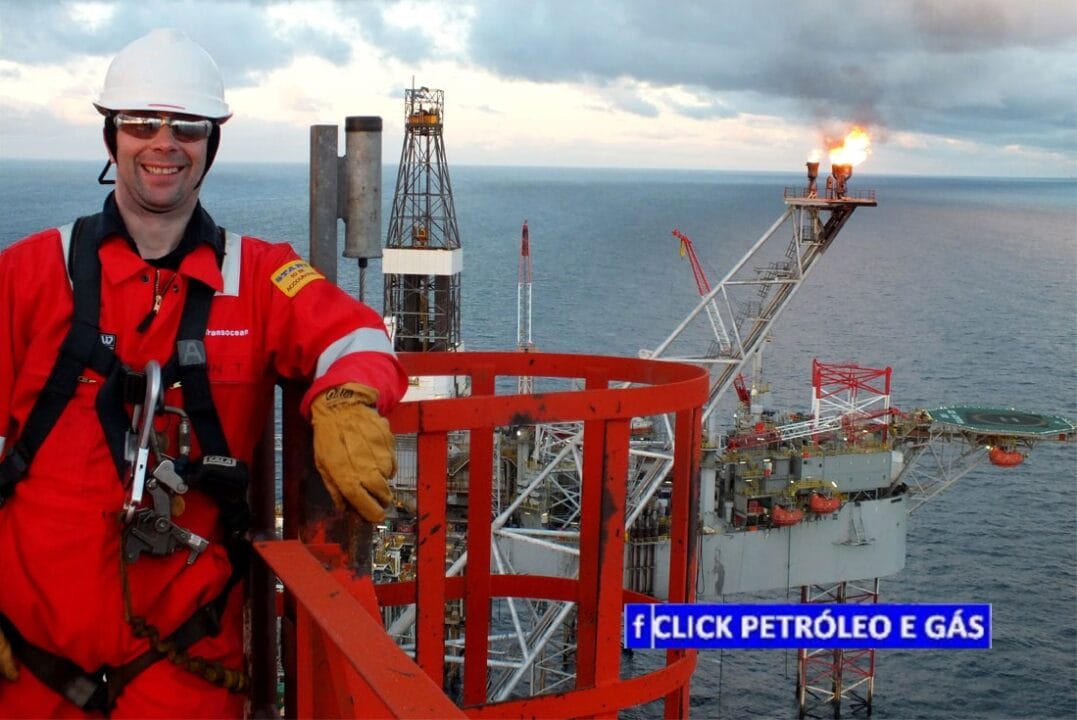
Ultimate Guide on How to Work Offshore in the Oil Industry and Succeed
The offshore work is one of the most sought-after sectors by many Brazilians, especially those living in the coastal states of the country. The reason for this desire is the higher salaries compared to onshore jobs, along with different vacation schedules. However, getting a job in this sector is not easy. It requires a lot of study, qualifications, and knowledge of which area you want to work in. In the next paragraphs, you will learn in a clear and well-explained way how to proceed to enter this industry.
But What is Offshore Work?
Offshore work is a term used for industrial or commercial activities at sea, but since this guide relates to the oil and gas sector, we will restrict ourselves to this topic.
In 1953, Petrobras was created, along with the need to obtain new technologies and professions for hydrocarbon exploration activities in shallow, deep, and ultra-deep waters.
-
Government unlocks R$ 554 million for a highway that has been requested for decades and accelerates the duplication of BR.
-
Without bricks, without cement, and without endless construction: the cardboard house that is assembled in modules and can be moved.

-
Billions of barrels on the equatorial margin could lead Amapá to double its oil production in Brazil — the state aims to enter the route of companies in the Campos Basin, attract investments, and boost jobs and businesses in the oil and gas sector.

-
Without bricks, without cement, and without endless construction: the cardboard house that is assembled in modules and can be moved.

What Professionals Work in This Sector?
Professionals in engineering, technical, and vocational fields in the industrial sector are the most requested. This is because the offshore oil sector is a very restricted and specific market segment. Some professions we perform on land can also be developed offshore. Here are a few examples:
- Electricians
- Mechanics
- Electronics Technicians
- Engineers
- Hospitality
- Others
Other professions, besides those mentioned above, exist only in the oil and gas sector, such as:
- Surveyor
- Petroleum and Gas Technician or Engineer
- Deck Pusher
- Tool Pusher
- Driller
- Platform Workers
What Qualifications and Training Should I Have?
You should seek institutions regulated by the MEC to professionalize, as companies, especially under Petrobras’ requirement, only hire capable and qualified people to perform activities in both offshore and onshore units. Examples of institutions include federal Senai and CEFET schools.
It is also necessary to have a license to practice the profession. This is issued by CREA (Regional Council of Engineering and Agriculture), unless the professional only takes the vocational course.
There are also training courses according to the type of work environment where you will perform your activities offshore. They are called NR’s (Regulatory Norms). The most commonly required by oil and gas companies are:
- NR-10: Safety in Electrical Installations
- NR-33: Work in Confined Spaces
- NR-35: Work at Heights
Occasionally, some companies may request other NR’s, but with the exception of those mentioned above, the others are very rare in terms of requirement.
The CBSP and HUET are mandatory safety courses for anyone wanting to work offshore; without them, you won’t be able to board an offshore unit. The CBSP aims to provide training in case of the need to abandon the platform for safety reasons, incidents, or accidents of any nature. The HUET, on the other hand, is another training aimed at enabling you to exit an aircraft, which is mostly helicopters, if it crashes into the water for any reason.
The Irata and Abendi certifications are also in high demand today. Due to the need to perform maintenance work in hard-to-reach or tall places, these courses qualify professionals to work suspended by ropes. These qualifications are a significant differentiator and can elevate your salary due to the hazard of the role. The difference between Irata and Abendi is that the former is international, meaning you can work in any foreign company in Brazil and abroad. Abendi only serves the Brazilian market, although both serve the same purpose.
The English language has ceased to be just a differentiator and can be decisive in selection processes. This is because most service companies are multinational, and interaction between Brazilians and foreigners occurs in English. The most detailed article on English no longer being a differentiator, but rather a requirement, can be read with more details here.
How Do I Apply for Jobs in This Sector?
Working with oil in the offshore sector is indeed not easy, but it is entirely possible. Despite being restricted and having many variables, I will list some methods below that will facilitate your entry into this world:
- While you are pursuing your technical or higher education, do internships related to your field. This will add value to your resume and knowledge of the field.
- Large offshore companies have their own websites with recruitment channels and updates on open positions. You can check some of them by clicking here.
- Nowadays, many oil companies open selection processes through HR sites like Linkedin and Vagas. It is essential that you have a profile on these two portals, as they are currently the most used by companies for resume screening.
- Another method that generates a lot of controversy is having a so-called “FISH,” which is a term used for someone with a connection working in any offshore company. You can ask this connection to intercede for you or even mediate your entry into the company. The controversy surrounding this method is that it may take the spot from a genuinely qualified professional to favor someone without any knowledge of the field.
- The last method is to keep an eye on the website Click Petroleum and Gas. The portal is always monitoring ongoing selection processes, providing updates for professionals in the naval, industrial, and offshore sectors.
Could You Adapt to This Life?
Flying – Contrary to what many think, the offshore life is not so easy. First, you must overcome the fear of flying; the first experience in a helicopter can be a bit tense at first.
Confinement – Normally, the work schedule for those working in this sector is 15 days offshore with 12-hour shifts and 15 days off. There are people who do not adapt to being confined on an iron island, where there is only the infinite horizon of the sea and far from family. For those working on vessels in the naval sector, these periods can reach up to 28 days at sea or more.
Long article, isn’t it? But surprisingly, this is the most summarized form possible. I hope this article can help you achieve your dream offshore position. It’s not too deep, but it’s a “guide” for those still in doubt. Do you have any more tips you want to share with us? Leave them in the comments below and tag me in the subject by typing “@clickpetroleoegas” and I will gladly respond to everyone.







Seja o primeiro a reagir!