





 Portuguese
  English
  Spanish
  5 min of reading
  0 comments


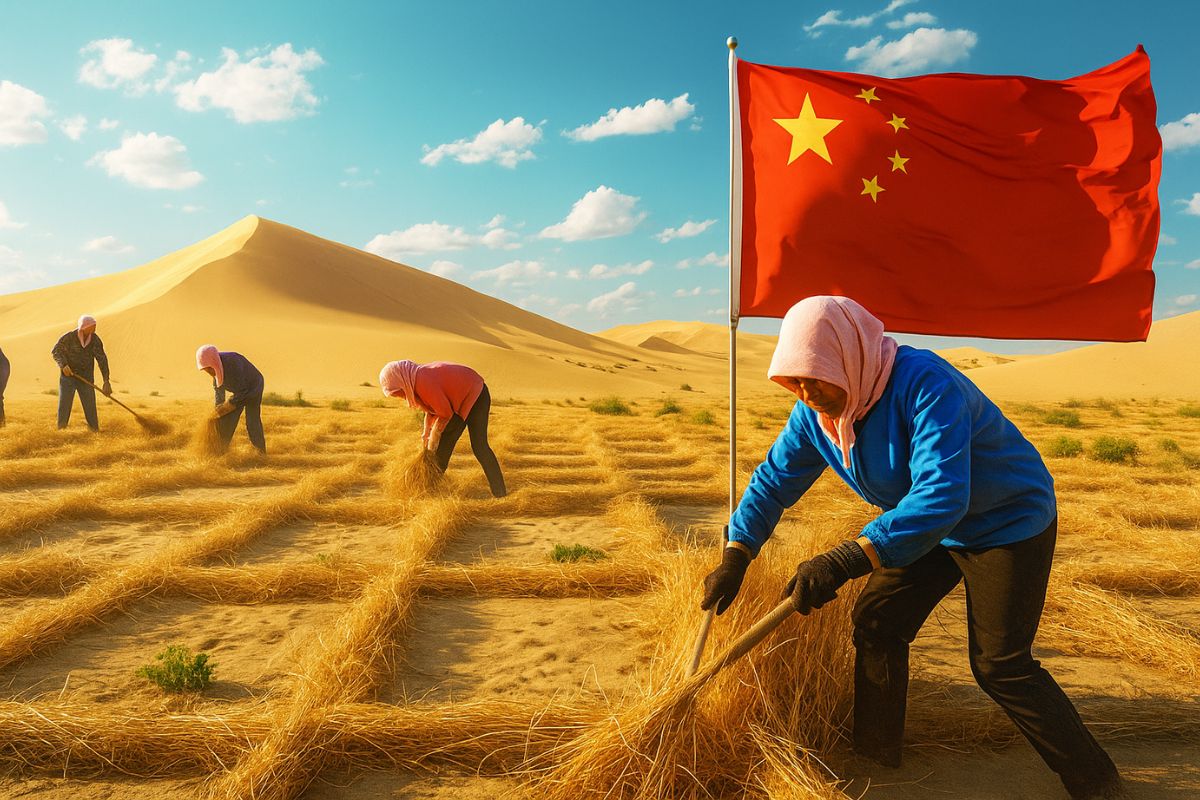
With the Advance of Sand and Storms Affecting Entire Cities, China Set Up a Low-Cost Strategy Using Millions of Straw Ropes to Stabilize Dunes, Reduce Erosion and Open the Way for a New Green Belt in the North of the Country.
The China faces large-scale desertification, with more than a quarter of its territory under the influence of arid and semi-arid climates and dunes advancing tens of meters each year. Rather than relying solely on expensive irrigation or desalination, the country organized a massive plan that transformed agricultural waste into ecological infrastructure: straw meshes installed in the soil to break the wind, hold the sand, and allow for the regeneration of native vegetation.
The result is a package of complementary reforestation solutions with mechanized straw ropes that stabilize desert margins like the Gobi and Taclamacan, protect highways and railways, and create green corridors in areas previously dominated by dust storms. It’s simple engineering, scalable, and anchored in logistics, with a direct impact on safety, the economy, and the daily lives of hundreds of cities.
Desertification: Scale of the Problem and Why Act Now
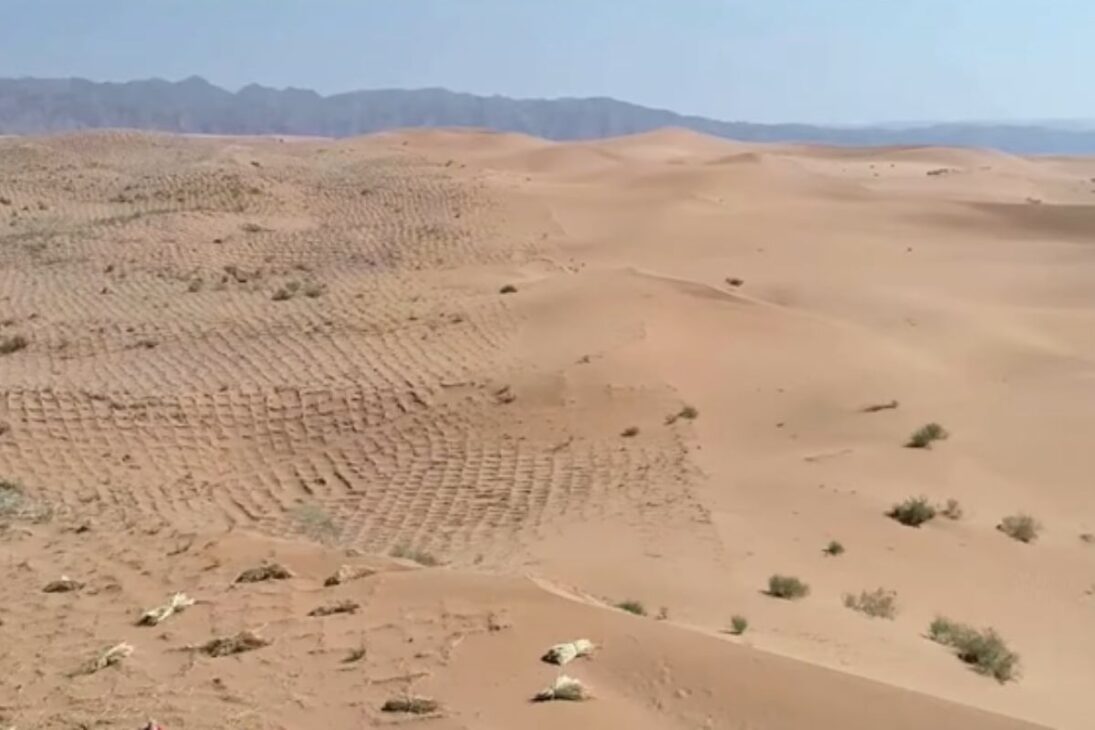
The advance of the dunes in China puts pressure on agricultural zones, transport networks, and water supply, affecting hundreds of municipalities. In border regions, strong winds move sand year after year, burying infrastructure and degrading the soil. Without vegetation, the cycle worsens: dust covers urban areas, reduces productivity, and increases public health costs.
-
Italian researchers have detected what appears to be a second Sphinx buried under the sands of Egypt, and satellite scans reveal a gigantic underground megastructure hidden beneath the Giza Plateau for over 3,000 years.

-
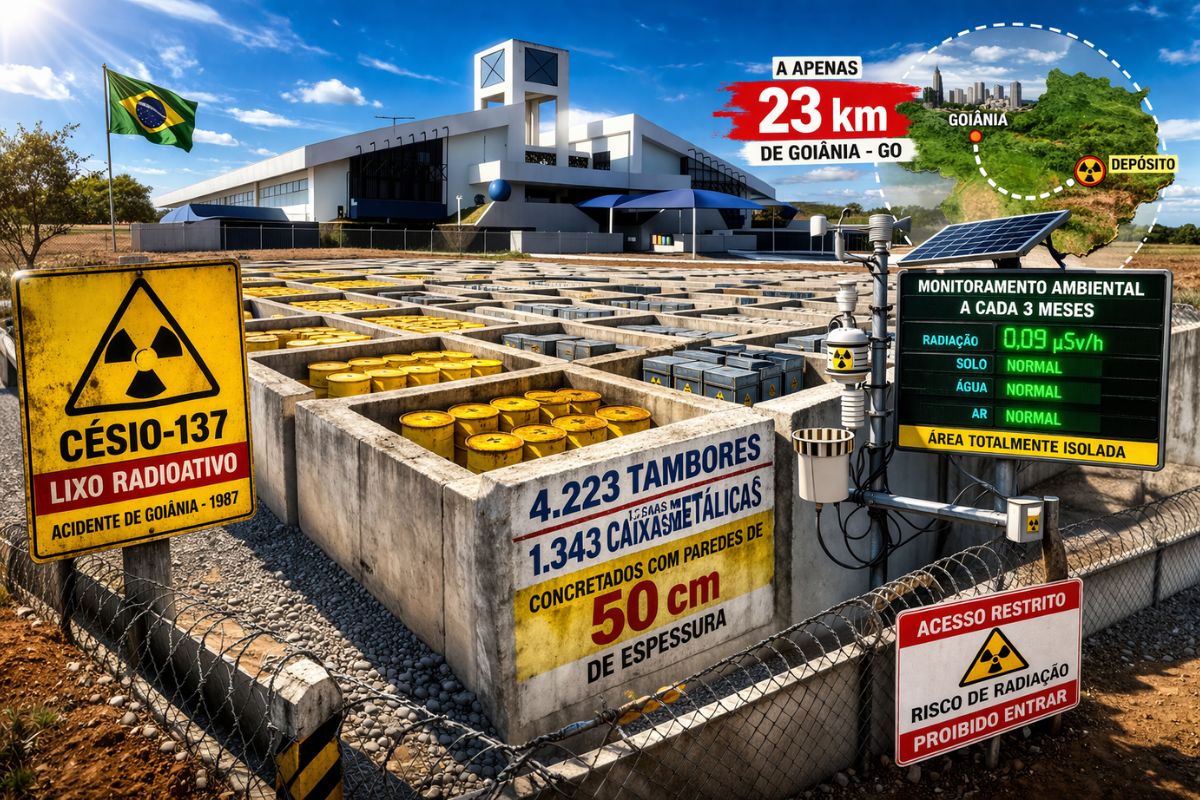
There are 4,223 drums and 1,343 metal boxes concreted with 50-centimeter walls that store the radioactive waste from Cesium-137 in the worst radiological accident in Brazil, just 23 kilometers from Goiânia, with environmental monitoring every three months.
-
Giant Roman treasure found at the bottom of Lake Neuchâtel in Switzerland reveals an advanced trade system, circulation of goods, and armed escort in the Roman Empire about two thousand years ago.

-
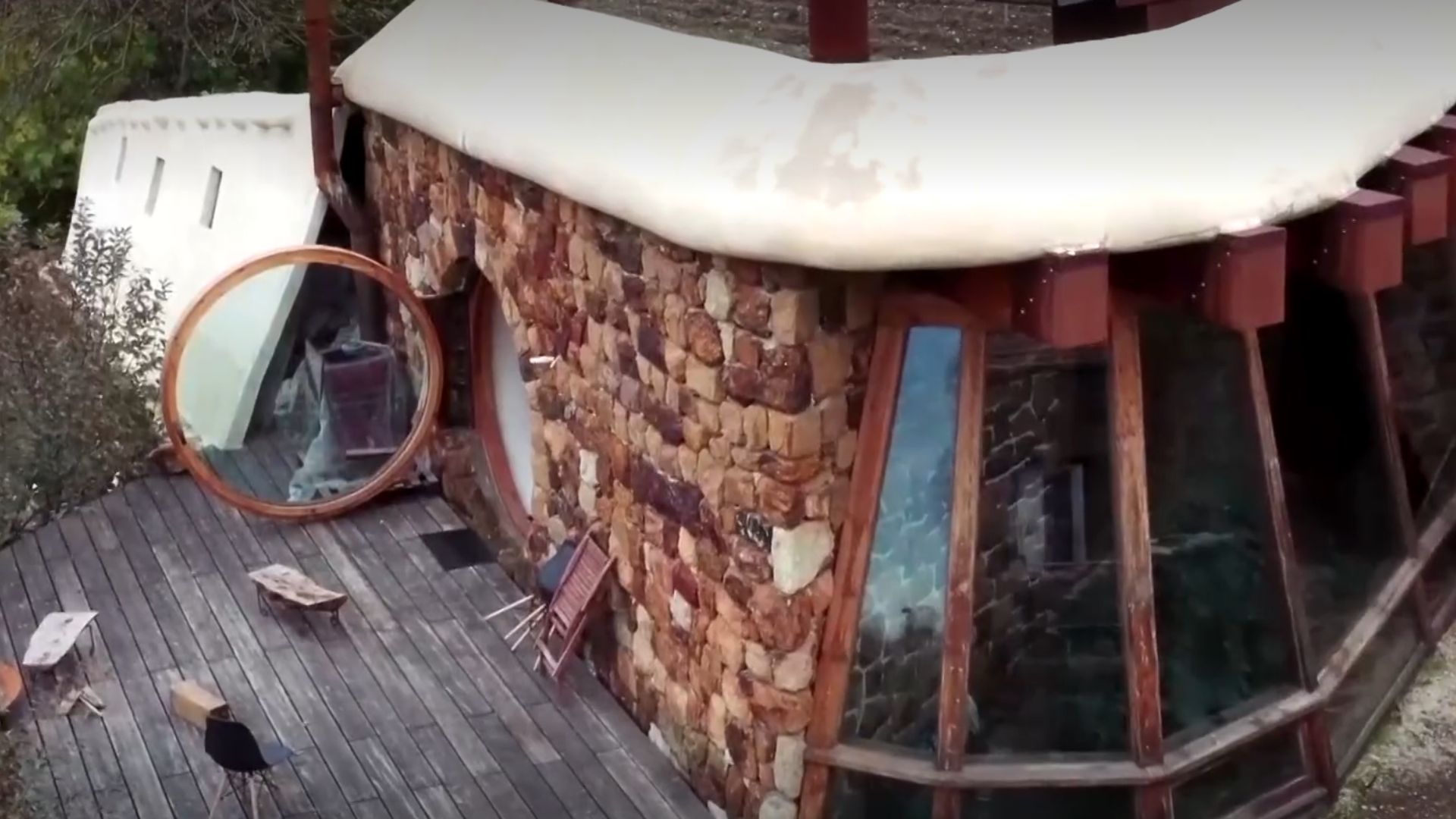
He buried 1,200 old tires in the walls to build his own self-sufficient house in the mountains with glass bottles, rainwater, and an integrated greenhouse.

Acting early is cheaper. Spot and emergency interventions (removing sand from runways, short-term containment walls) consume budgets and do not address the cause. China combined national policies, social mobilization, and appropriate technology to reduce dune mobility and give time for plants to reclaim the territory.
From Mass Planting to the “Great Green Wall”
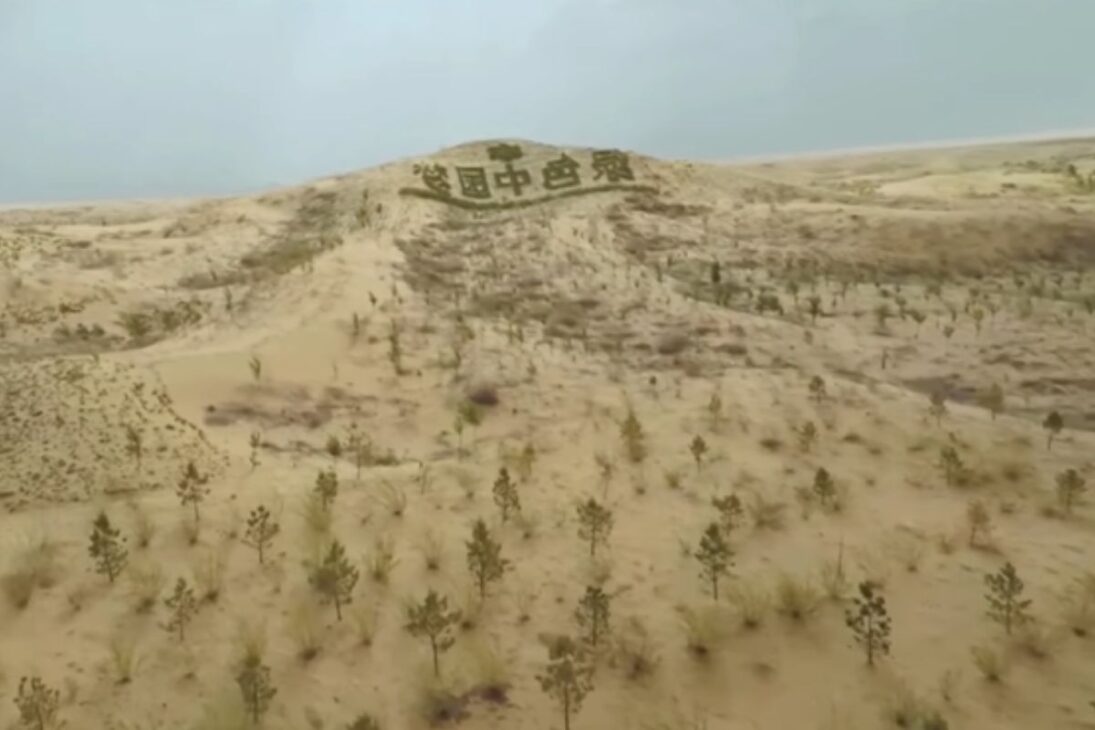
Since the 1980s, China has encouraged tree planting by citizens, schools, and public forces and has structured reforestation programs in a strip known as the “Great Green Wall”.
Millions of seedlings have created windbreak zones and increased water infiltration.
But planting alone is not enough where there is almost no water. In desert edges with mobile dunes, the mortality of young seedlings is high. The lesson was clear: first, immobilize the sand and reduce wind speed; then, introduce resistant species.
Thus, the systematic use of straw as a foundational engineering method was born.
The Technology of Straw Grid
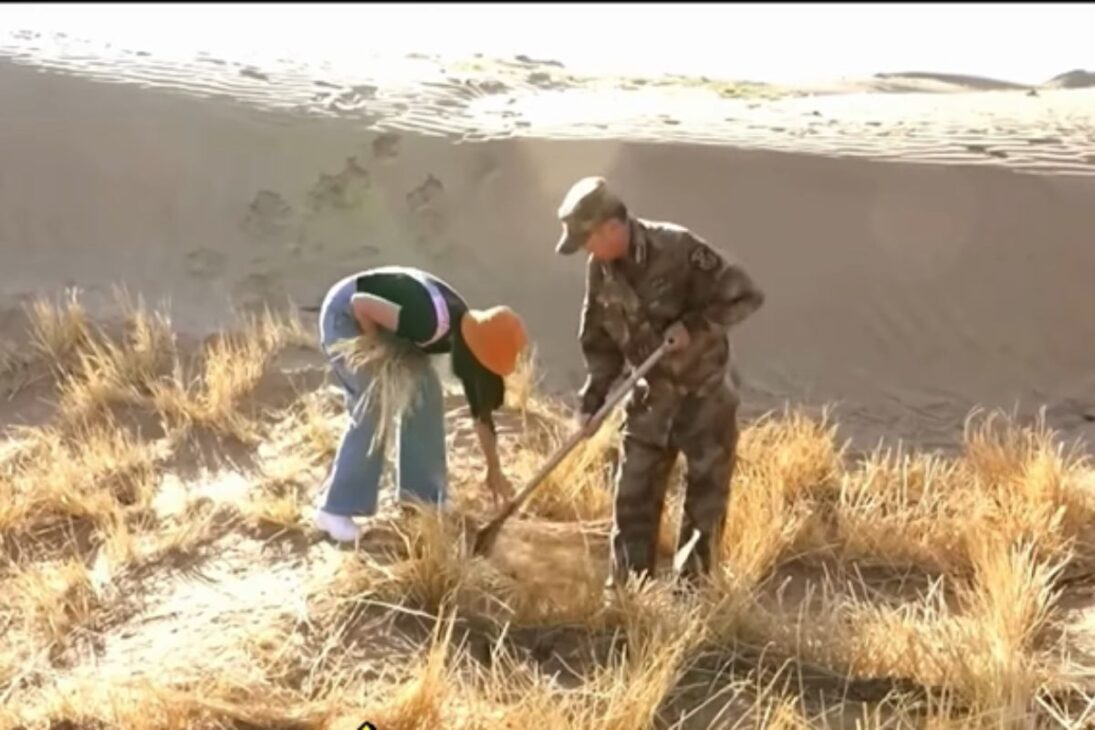
China standardized the installation of grid meshes (approx. 1 m × 1 m) made with rice, wheat, and corn straw. Here’s how it works: shallow trenches are dug, the straw is laid out in a checkerboard pattern, and covered with a thin layer of sand.
The mesh breaks the wind at ground level, reduces erosion, and creates microenvironments where seeds carried by the wind can germinate.
Over time, the straw decomposes and becomes natural fertilizer, enriching the soil and anchoring the first roots. The effect is twofold: dunes lose mobility and vegetative cover returns. In practice, the straw mesh buys ecological time for vegetation to do what it knows how to do.
Logistics and Mechanization: From Bundles to Straw Ropes
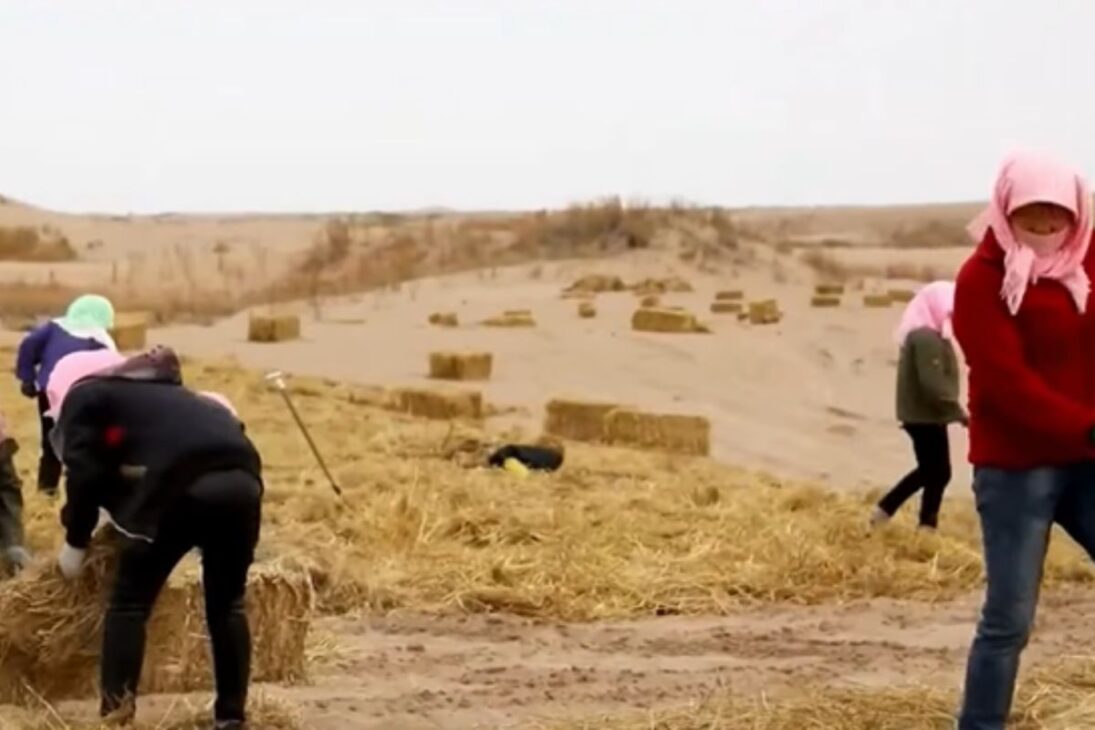
Scaling the solution required collection, processing, and transportation chains. China created centers to transform agricultural waste into continuous straw ropes, more durable than traditional bundles. Adapted tractors began to open grooves, unroll the ropes, and cover them with sand in a single pass, multiplying field productivity.
In areas with difficult terrain, teams do manual placement, and machines finish the compaction, relieving heavy labor and standardizing the installation. Mechanization has extended the lifespan of the meshes and reduced maintenance costs, making it feasible to cover large areas of dunes in short timeframes.
Evidence in Infrastructure: Railway and Highways in the Desert
Strategic projects reveal the power of the method. Sections of railway crossing sandy areas have been stabilized with straw meshes and vegetation belts, ensuring continuous operation where there were previously interruptions.
Highways in severe deserts received the same treatment, combining layers of stone and meshes to contain sand and preserve the roadbed.
From above, a green checkerboard can be seen protecting transport lanes and ecological barriers that retain fine dust, increase organic matter in the soil, and attract wildlife (from insects to birds). Infrastructure and ecology cease to be opposites: the road remains open and the ecosystem begins to breathe again.
Environmental and Social Impact: Why It Works
Stabilizing the sand is key. By reducing wind speed at ground level, China decreases dust storms, improves visibility and safety on roads, and protects urban areas. With less dust in the air, there are public health improvements and lower operating costs for cleaning and maintenance.
In the soil, the organic matter generated by the decomposition of the straw increases moisture and favors native plants adapted to drought. The landscape ceases to be a sea of sand and becomes a mosaic of sparse but functional vegetation, stabilizing dunes and restoring essential ecosystem services.
Limits and Best Practices: What Is Not and What Is Needed
Straw is not a miracle. In hyper-arid conditions, the mesh alone does not create a forest. What works is the sequence: straw mesh to stabilize, resilient species to occupy, monitoring to replace damaged sections, and maintenance to prevent failures in critical edges.
It is also vital governance and logistics: stable contracts with farmers for straw supply, prohibition of burning, quality standards, seasonal stocks, and transport routes that do not compete with harvests. Without this chain engineering, the field cannot manage the desert.
Exportable Lessons: What the World Can Adapt
The experience of China suggests low-cost, high-scale pathways for arid areas of the planet. Regions with straw surplus can replicate mechanized ropes, prioritizing border areas of mobile dunes, wind channels, and logistical corridors.
The secret is adaptation: using local agricultural waste (wheat, rice, corn straw, palm fronds), proper spacing, and native species.
For countries with tight budgets, the straw mesh is a gateway to restoration.
It’s inexpensive, installs quickly, and prepares the ground for complementary solutions (rainwater harvesting, living windbreaks, directed planting). It’s the first brick of a larger ecological project.
Why the Strategy Matters for Cities and People
Cities breathe better when dust decreases. Sectors such as transportation, health, and agriculture reap direct benefits. Fewer storms mean fewer cancellations, fewer accidents, fewer emergency cleanups, and more productivity.
China shows that public policy + simple engineering + logistical scale can change the trajectory of an entire territory.
In summary, stabilizing dunes with straw is social technology: accessible, replicable and capable of protecting lives and economies. When the wind loses strength at ground level, life begins to reclaim the terrain.
In your opinion, which step is the most decisive to combat desertification shown by China: large-scale straw meshes, planting resilient species, or continuous monitoring and maintenance and why?










-

-

9 pessoas reagiram a isso.