





 Portuguese
  English
  Spanish
  6 min of reading
  12 comments


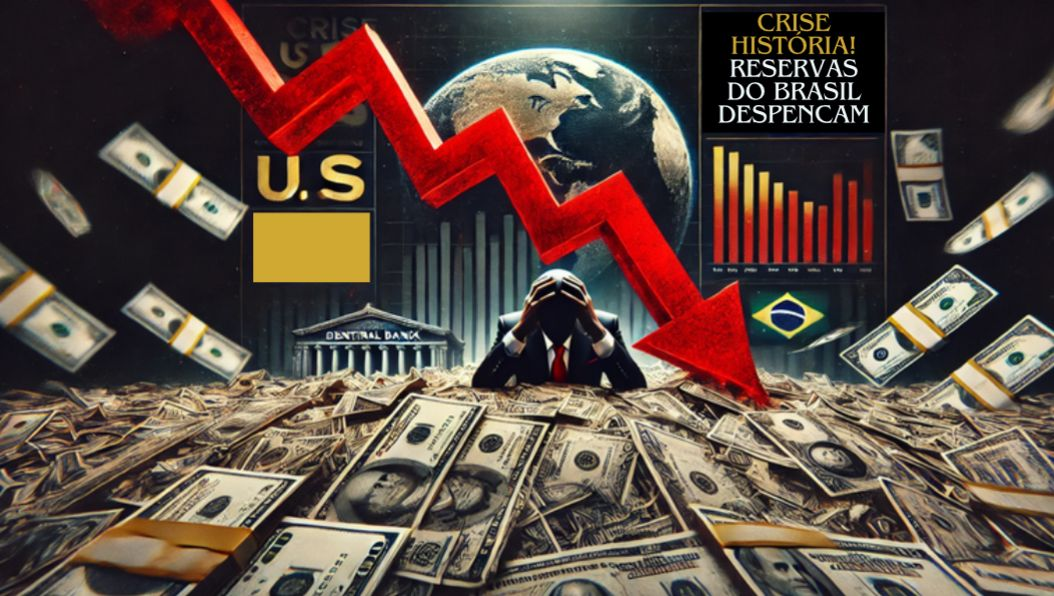


In 2024, Brazil witnessed a record drop in its international reserves, with the Central Bank holding dollar auctions to contain one of the largest negative currency flows in history. A movement that could directly affect the country’s economy and is generating concerns about Brazil’s financial future.
The Brazilian economy is experiencing a time of great tension. With the increase in currency volatility, the devaluation of the real against the dollar, and a series of measures adopted by the Central Bank (BC), the country faced a historic drop in its international reserves in 2024.
This event not only had an immediate impact on the financial market but also sparked discussions about the long-term economic health of the country.
The decrease of 8.46% in international reserves between November and December was the largest monthly drop ever recorded, placing Brazil in a delicate situation.
-
The government requests the Federal Revenue Service for a new system to automate the income tax declaration, reducing errors, time, and bureaucracy for millions of Brazilians.

-
Pix in installments, international Pix, and contactless payment without internet: the Central Bank revealed the new features coming to the tool that is already used by almost every adult in Brazil.

-
Mercado Livre has just started selling medications with delivery in up to three hours to your door, and this move could completely change the way Brazilians buy medicines on a daily basis.

-
In Dubai, rising tensions from the war in the Middle East are causing super-rich individuals to leave the Gulf and direct their fortunes to a new financial refuge in Asia.


The Drop in International Reserves: What Happened?
Brazil’s international reserves experienced a historic reduction of 8.46% between November and December 2024, representing the largest monthly decline since the Central Bank’s historical series began in 2008.
The total reserves dropped from US$ 363.003 billion to US$ 332.306 billion, representing the lowest recorded value since February 2023.
This alarming decrease raised a series of questions about the future of the Brazilian economy, particularly regarding the government’s ability to maintain currency and financial stability.
The main cause of this drop was the series of dollar auctions conducted by the Central Bank in December 2024. These auctions, totaling US$ 21.575 billion, aimed to contain an intense outflow of dollars from Brazil, which could further compromise the country’s reserves.
According to data from the Central Bank, this sale of dollars represented about 6% of Brazil’s total reserves in November.
By carrying out these operations, the BC sought to balance the currency market, trying to avoid an even greater devaluation of the Brazilian currency.
The Impact of Dollar Auctions
The dollar auctions conducted by the Central Bank aim to primarily control exchange rate volatility, especially during times of crisis when there is a large outflow of dollars from the country.
In 2024, Brazil faced a series of internal and external economic challenges that directly affected the currency market.
The sale of billions of dollars in the auctions was an emergency measure to try to stabilize the real’s value and protect international reserves.
It is worth noting that selling international reserves in currency auctions is not an unprecedented practice. The Central Bank has used this tool on other occasions, such as in 2020, during the peak of the COVID-19 pandemic, when the country faced a sharp decline in its reserves due to a massive outflow of dollars.
However, the magnitude of the operation conducted in 2024, with a sale of over US$ 21 billion, draws attention due to its significant impact on the country’s reserves.
The Negative Currency Flow and Its Consequences
In 2024, Brazil’s currency flow recorded a negative balance of US$ 15.918 billion, a figure that places this year as the third with the largest net outflow of dollars in the Central Bank’s historical series.
Only in 2019 and 2020 were negative currency flows higher, with net outflows of US$ 44.768 billion and US$ 27.923 billion, respectively.
The reduction in the influx of dollars to Brazil reflected a combination of internal and external factors that impacted investors’ confidence in the Brazilian economy.
Among these factors are the internal fiscal crisis, political instability, and the deterioration of trust among foreign investors.
The uncertainty generated by tax and fiscal reforms, as well as the delay in implementing economic stability measures, contributed to triggering this capital flight.
The negative currency flow has direct implications for the country’s economy, as a substantial outflow of dollars can affect Brazil’s ability to meet international financial commitments and maintain a stable currency policy.
Moreover, negative currency flow reflects a landscape of declining foreign investments in Brazil, which can directly impact long-term economic growth.
Brazil, which is already facing a series of structural challenges, such as low GDP growth, now needs to deal with the reduction of its capacity to attract external investments, a crucial factor for economic recovery.
The Relationship with Foreign Trade
On the other hand, Brazilian foreign trade showed positive performance in 2024. Despite the outflow of dollars from Brazil, the foreign trade balance was positive at US$ 68.478 billion, with exports totaling US$ 298.456 billion and imports of US$ 229.978 billion.
These numbers indicate that, despite the currency challenges, Brazil managed to maintain a favorable trade balance.
Among the exports, agribusiness products such as soybeans, iron ore, beef, and coffee continue to be the main drivers of the Brazilian economy.
However, it is important to note that the value of exports includes a series of financial operations, such as exchange contract advances (ACC) and prepayments (PA), which can inflate the total export figure.
The inclusion of these items makes the analysis more complex, as it reflects a financial movement rather than a real generation of resources through the export of goods and services.
The Impact of Monetary Policy
The Central Bank’s monetary policy also played a crucial role in the economic scenario of 2024.
The increase in interest rates, adopted by the BC to combat inflation, had a dual effect on the Brazilian economy.
On one hand, higher rates helped control inflation, but on the other, they also hindered economic recovery by increasing credit costs and reducing domestic demand.
With the rise of the dollar and the need to control capital outflow, the Central Bank found itself forced to adopt a more aggressive stance in currency interventions, which generated even greater pressure on international reserves.
This pressure on reserves reflects the BC’s attempt to avoid a currency crisis but also indicates a fragile scenario for the Brazilian economy.
The Devaluation of the Real
In 2024, the real experienced significant devaluation against the dollar. The Brazilian currency lost about 27% of its value compared to the US currency, generating concerns about the effects of this decline on inflation, the purchasing power of the population, and the competitiveness of Brazilian companies.
The devaluation of the real is a reflection of capital flight and internal political instability, which led investors to seek safer alternatives abroad.
This devaluation directly affects the price of imported products, making them more expensive for Brazilian consumers and putting pressure on inflation.
Additionally, the depreciation of the real has a significant impact on Brazil’s external debt, which becomes costlier as the value of the local currency decreases.
This scenario requires careful management by the government and the Central Bank to avoid an inflationary crisis.
The Future of the Brazilian Economy
The economic situation in Brazil in 2024 is complex and requires a series of reforms and fiscal adjustments to restore investor confidence and stabilize the currency market.
The drop in international reserves, the negative currency flow, and the devaluation of the real are just some of the challenges faced by the country.
The Brazilian government needs to act quickly and efficiently to implement measures that promote sustainable economic growth and attract external investments.
The historic drop in Brazil’s international reserves and the record negative currency flow in 2024 highlight the fragility of the Brazilian economy in the face of a series of internal and external challenges.
The Central Bank’s action, with the sale of dollars in currency auctions, was an attempt to contain the impact of capital flight and stabilize the currency market.
However, the situation demands deeper fiscal and monetary measures to ensure long-term economic stability.
Now, more than ever, Brazil needs to strengthen its fiscal policies, improve investor confidence, and seek alternatives to diversify its economy. The country’s economic future will depend on its ability to effectively address these challenges.
In light of the historic drop in international reserves and the record negative currency flow in 2024, do you believe that Brazil will be able to overcome this economic crisis with the measures adopted by the government?
What more could be done to stabilize the economy and restore investor confidence?








uma economia morta ,ou sem rumo ,gasto fora de controle ,impostos demais ,uma politica cambial que beira a morte ,será que iremos ter como consertar tudo em 2026 ,mas sem dinheiro ,um cambio muito ruim ,muito obrigado
Relaxe que a liquidação Black Friday de dólares está só começando! Vem ai o $BRICS (1/40) ! Quem viver, verá!!
Bingo! Mais um blog cooptado pela nova ordem (ou seria delirios) ! Igual ao Zuckerberg! Se ajoelhar, tem que ao menos rezar!! (Pra não ter que fazer coisa pior) !!