





 Portuguese
  English
  Spanish
  4 min of reading
  0 comments



Turning Off The Car At Traffic Lights May Seem Like A Simple Economy Tip, But In Practice It Has Technical Consequences That Not Everyone Knows And It Can Affect Your Pocket, The Battery, The Engine And Even The Performance Of The Fuel Used.
Drivers try to save fuel by turning off the car at traffic lights, but this practice can have the opposite effect in various models, causing more losses than savings, according to engineers. Learn when it is really worth doing this in urban traffic.
In the effort to spend less on fuel, many drivers adopt practices that seem efficient — but are they really?
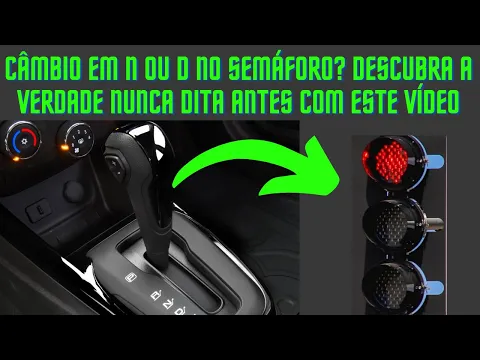
A recurring question is: does turning off the car at the traffic light save fuel or could it be more expensive than keeping the engine running?
-
Trump wanted to spend $400 million on the White House, but the courts prohibited the million-dollar construction.

-
How the Egyptians erected giant structures like pyramids, temples, and obelisks without modern technology, cranes, or engines still amazes the world and reveals the power of engineering based on ramps, levers, ropes, and colossal organization.

-
Scientists drilled nearly 8,000 meters into the ocean floor above the fault that caused the 2011 tsunami in Japan and discovered that a layer of clay 130 million years old was responsible for making the wave much worse than any model had predicted.

-
Thousands of years after causing the largest eruption of the Holocene, one of the world’s largest supervolcanoes is rebuilding itself beneath the sea south of Japan, receiving new magma and alarming scientists with its transformation.


The answer involves variables such as engine type, stop time, temperature, and vehicle model.
Energy efficiency experts say that if the stop at the traffic light lasts longer than 20 seconds, turning off the engine can be advantageous, depending on the vehicle and the situation.
Start-Stop And Fuel Economy In Modern Vehicles
Modern cars (from 2010 onwards) have the start-stop system, which automatically turns off the engine during brief stops and restarts as soon as the driver presses the clutch or brake pedal.
Tests show that start-stop can reduce urban consumption by up to 8%, according to data from Bosch, one of the suppliers of the system.
The mechanism is designed to withstand hundreds of thousands of starts without compromising the starter motor or battery.
Impact On Consumption At Traffic Lights Without Start-Stop
For cars without this technology, manually turning off the engine places more demand on the electrical system and can increase wear on the battery and starter motor.
Still, technical studies indicate that turning off the engine for more than 20 seconds can generate fuel savings, especially in vehicles with modern injection systems.
On the other hand, in quick stops, the cost-benefit is low or null, and the wear on components may exceed the savings generated.


Real Savings In Urban Centers
According to the U.S. Department of Energy, turning off the engine for just 10 seconds already compensates, from an energy standpoint.
However, for practical purposes in conventional cars, the ideal stop time for savings to be valid ranges from 2 to 3 minutes.
In Brazilian urban practice, this means that only really long stops — like intense traffic jams or toll queues — would justify manually turning off the car.
Real Quote: Boris Feldman Comments On The System
The automotive journalist Boris Feldman, from the AutoPapo portal, stated:
“If you have Start-Stop in your car and use it frequently in urban traffic, you will indeed notice a reduction in consumption.”
This statement confirms that the system serves its purpose mainly in heavy traffic in large cities.
But he warns that, in cars without this feature, manual shutdown can be risky if done repeatedly.
Influence Of Fuel And Component Wear
Diesel engines, due to heavier starts, suffer more from frequent shutdowns and should avoid the practice.
In flex vehicles fueled with ethanol, there is a risk of difficulty in restarting the cold engine, especially on cold mornings.
Additionally, the cost to replace a damaged starter motor or battery exceeds R$ 500, while the savings from a stop tend to be just a few cents.
When Is It Really Worth Turning Off?
Experts recommend turning off the car only when:
- The stop exceeds two minutes
- The vehicle does not have start-stop
- The battery is in excellent condition
- The engine is already warm
The safest and most efficient way to save fuel is still conscious driving:
- Avoid sudden accelerations and braking
- Keep tires properly inflated
- Respect the engine’s RPM limits
According to Inmetro, these actions can reduce consumption by up to 20% without risking damage to components.
Motorcycles And Shutdown: Doubled Risk
Motorcyclists also try to save, but frequent shutdown compromises battery life and safety during quick accelerations.
Therefore, it is advisable to keep the engine running during short stops, unless there is a dedicated system, such as in scooters with automatic start-stop.
Does turning off the car at the traffic light really save fuel? In some cases yes, but in most urban situations, the cost-benefit does not justify.
Do you often turn off the car during stops? Have you noticed any real difference in consumption?





-

-

-

6 pessoas reagiram a isso.