





 Portuguese
  English
  Spanish
  6 min of reading
  5 comments


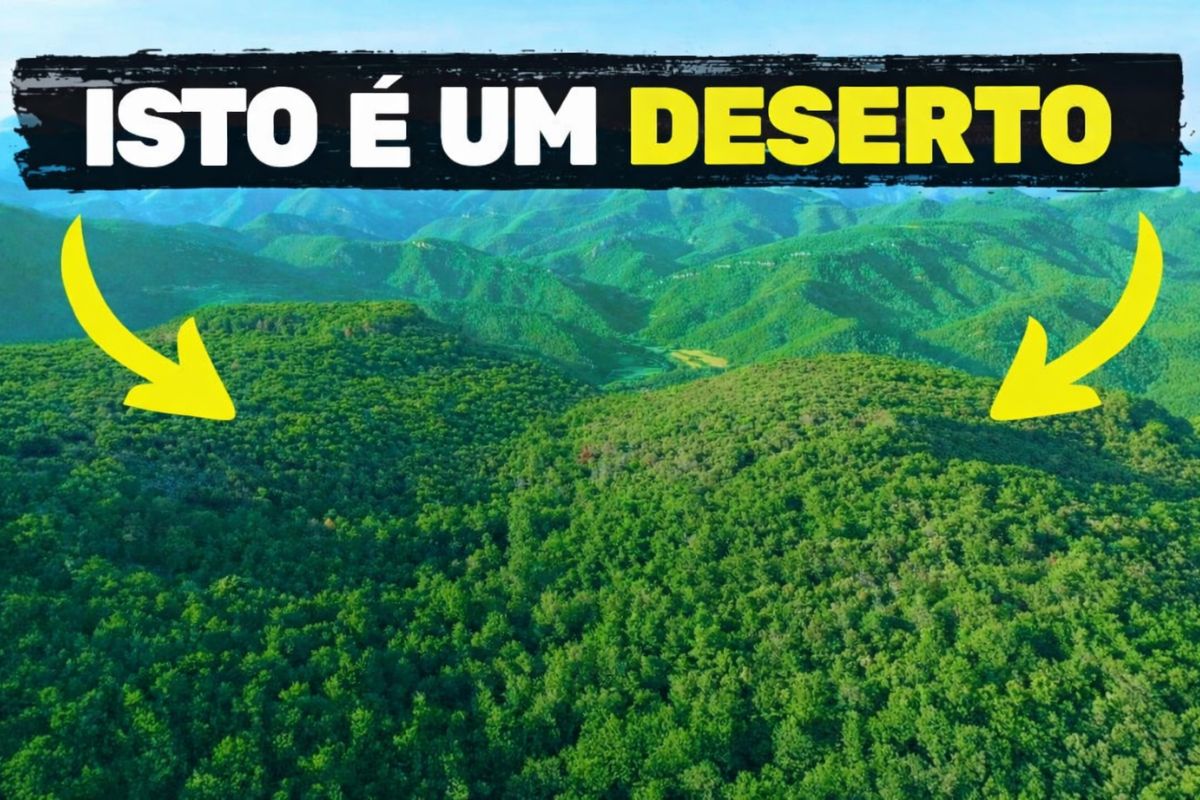


In The Muga Valley, In The Pyrenees, An Oak Forest Became Green Desert: Dense Blocks The Sun, Dries The Ground And Sucks The Water That Should Return To The Springs And To The Muga River. The Selective Cut Of 10 Thousand Trees Opened Space, Returned Light And Reduced Local Water Loss By 66%.
The Muga Valley, in Spain, looks like a paradise at first glance, but inside it has become a green desert: oaks so dense that they block sunlight, leave the ground almost without growth, and drain the water from the soil that should feed springs, streams, and the Muga River.
The proposal to reverse this seems counterintuitive and therefore controversial: cut thousands of trees to restore a forest. The idea is to open space for the ecosystem to “breathe,” allow light to return to the soil, regain moisture, and make water return to the system that sustains the river, local agriculture, and coastal wetlands that it should nourish.
Why A “Beautiful” Forest Can Become A Green Desert

The term green desert appears when the landscape deceives. Above, the canopy of the oaks looks healthy and lush.
-
With more than 635,000 doctors, Brazil sees competition increasing in large cities, and recent graduates are competing for shifts at an accelerated pace while the countryside still faces shortages.

-
The world’s first octopus farm wants to open in the Canary Islands and is already provoking an international reaction: the plan aims to produce 3,000 tons per year.

-
Drought may be creating stronger superbugs in the soil and helping antibiotic resistance reach hospitals, warns a study highlighting a problem that could grow alongside extreme weather.

-
The biggest scam in history: Napoleon’s France deceived the United States by selling them a territory that was Spanish.


On the ground, however, the scene is different: almost no growth, silence, little visible life, and a sense that the forest is “dry as a bone”.
According to the explanation presented in the Muga Valley, this happens because the extreme density of the oaks blocks light and sucks the water from the soil.

Without light and without available water, the undergrowth does not form, the soil loses vitality, and biodiversity finds no space to thrive.
The result is a uniform, stressed, and fragile forest, even though it looks “green” on the outside.
How The Muga Valley Reached This Point
The problem did not arise out of nowhere. Until the 1970s, the forest was repeatedly deforested for charcoal production.
With each cycle of cutting and regeneration, the oaks overpowered other plants and the area grew back exceptionally dense and uniform.
When charcoal production stopped, this artificial forest remained.
And it not only blocked light and suffocated the undergrowth: it also began to drain the water from the soil, preventing water from returning to the springs and streams that feed the Muga River.
What The Lack Of Water Did To The River And The Cities
The consequence appears in the river and in the life around it. In a recent drought, the basin was placed in state of emergency. 22 cities had to ration water, and the level of the nearby reservoir fell so much that it revealed an old 18th century cannonball factory.
With less water, the Muga River became too weak to sustain local agriculture and the coastal wetlands it should nourish.
The message is simple and harsh: the health of the valley and its inhabitants depends directly on the health of this forest ecosystem.
Selective Cutting: Why “Cutting Trees” Became Restoration
The proposed intervention is not described as total deforestation, but as selective cutting for habitat restoration.
The logic is to open clearings and reduce density, creating the basic conditions that a healthy valley ecosystem needs and that were missing there: flowing water, sunlight, and biodiversity.
By selectively cutting trees, the team claims to be giving space for the ecosystem to breathe.
This allows more light to finally reach the soil and helps water to circulate functionally again, strengthening springs, streams, and the Muga River itself.
What Has Changed: 66% Less Water Loss And A Ground That Comes Back To Life

The work is already associated with a direct result: reduction of 66% in water loss. The explanation provided is that, with more light and moisture, undergrowth can begin to form.
This vegetation is not a detail. It improves soil health and creates micro-habitats for countless creatures, helping to rebuild biodiversity.
A symbol of this turnaround is almost emotional: the idea that the last time that forest soil would have seen the sun was 50 years ago.
A Laboratory Of 100,000 Hectares And A Five-Year Study Plan
The Muga Valley is presented as a laboratory of 100,000 hectares that is reshaping conservation rules, with an effort described as one of the most exciting rewilding projects in Europe today.
With funding from the Planet Wild community, the cited plan is to completely transform more than 10 additional hectares of the valley into a “future-proof” habitat and conduct a scientific study of progress over the next five years, measuring everything from carbon capture to water flow and new habitats for wildlife.
The Return Of Life: Otters, Crayfish, And Even Wolves
As the valley becomes habitable again, the iconic animals of the Pyrenees begin to return. Otters and crayfish are mentioned as coming back to the river, and even wolves that have been absent for over 100 years are reappearing.
There is also a natural mechanism helping to maintain balance: deer and other herbivores eat young tree shoots, which helps prevent the forest from becoming as dense as before.
In other words, the returning life also becomes maintenance of the ecosystem.
The Missing Link In The Chain: Why Vultures Enter The Story
Even with the forest breathing, one point is treated as crucial: reintroducing scavengers into the life cycle of the valley.
Vultures are described as nature’s “cleaning team,” with ultra-strong stomach acids, up to 100 times more acidic than humans, capable of killing serious diseases like rabies, botulism, and tuberculosis, preventing outbreaks and protecting other animals, including humans.
A strong data point is cited to show indirect impact: a peer-reviewed study claims that the unintentional decimation of vultures in India led to the deaths of about half a million people in five years.
In the Pyrenees, it is mentioned that there used to be four species: Eurasian Black Vulture, Griffon Vulture, Bearded Vulture, and the endangered Egyptian Vulture.
But when Stef arrived in the valley in 2018, none of them had survived.
The Strategy That Seems Absurd: Vulture Decoys And Artificial Nests
To bring these scavengers back, an unusual solution was used: five vulture decoys installed in new artificial nests.
The logic presented is behavioral: vultures are social, so if a passing vulture “sees” others, it may stop, settle, and even nest.
It is compared to choosing a restaurant: you look for popular places. The strategy is described as “so crazy it might work,” but with method behind it.
Feeding Station And Monitoring: How To Sustain The Return In The Beginning
Decoys alone would not keep vultures in the valley, as the ecosystem is still recovering and, for now, there is not enough food.
Since vultures essentially eat dead animals, a feeding station was created with meat scraps, just enough to give an advantage while the natural food chain reestablishes itself.
The return of a community of Griffon Vultures to the valley is treated as a milestone.
To monitor their movement, a remote-controlled live camera system was also funded to monitor the birds coming to the feeding site.
A few weeks later, the return of an Egyptian Vulture, considered extremely rare, was recorded, and two of the new vultures were fitted with light GPS tags for monitoring over the next three years.
Why The Plan Is Controversial, Even With Results
The controversy arises from the clash between image and function. Cutting trees, for many people, “looks like deforestation”.
Here, the defense is that the cut is selective and aims at restoration: open space, return light, recover water, and reactivate the Muga River.
The project itself is described as holistic, involving specialists and researchers concerned with soils, area chemistry, geology, geography, and climate. And the conclusion that remains is uncomfortable: sometimes, the best for a sick ecosystem is completely counterintuitive.
In your opinion, cutting trees to reverse a green desert is an acceptable price to recover water and life in the Muga Valley, or does this type of intervention always go too far?







Sim, é válido.
Tinha que ter sido intervenção humana! E agora…de novo! A espécie humana é uma verdadeira ****!
Quero saber se o msm pode ser feito em alguma área de floresta no Brasil ou aqui é proibido pq o manejo seria muito bom pra evitar queimadas mas se for falar algo do tipo vira escândalo mundial ae tratando do Brasil