





 Portuguese
  English
  Spanish
  4 min of reading
  0 comments


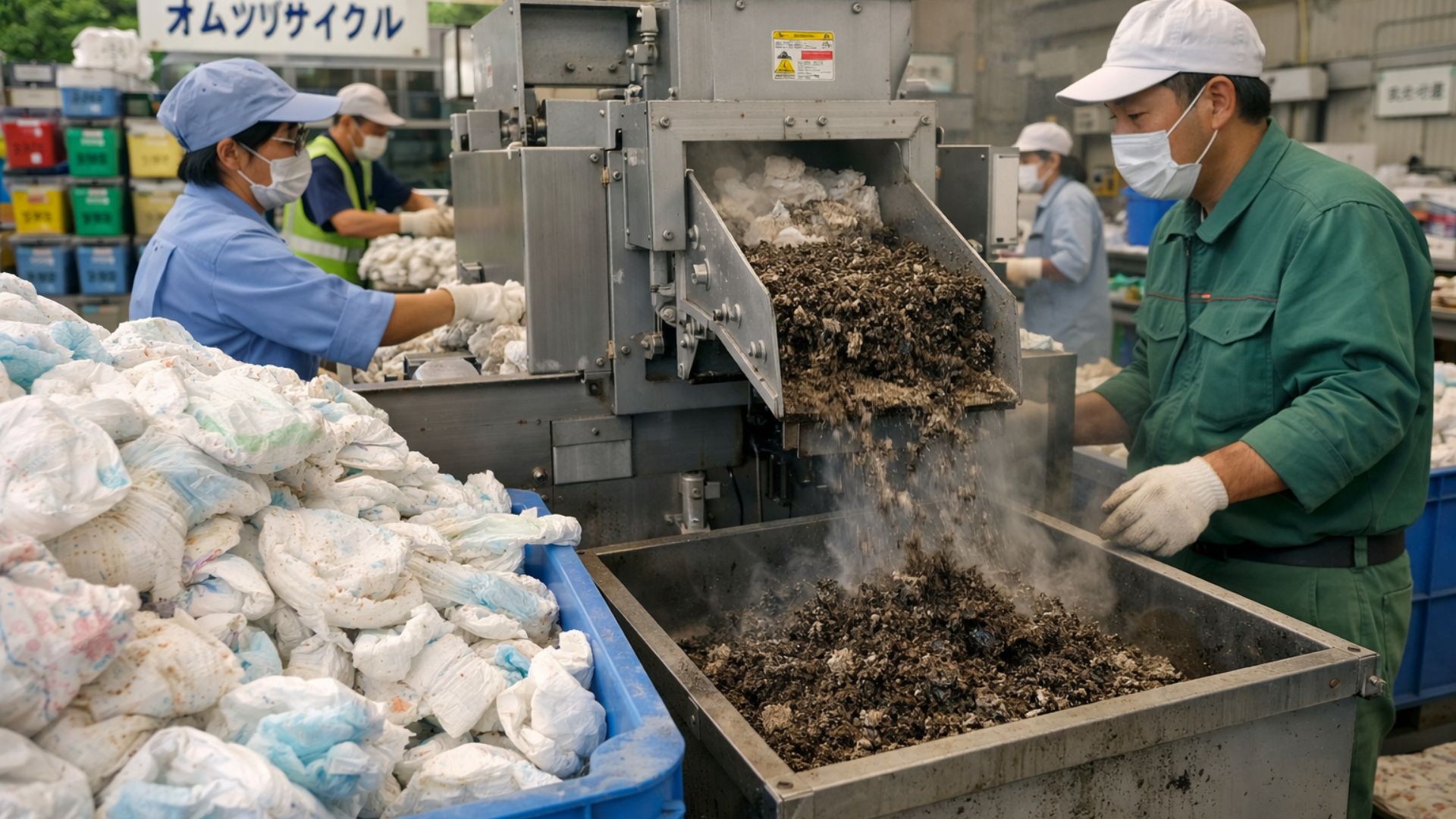
Japanese technology transforms sanitary waste into an alternative energy source and tests a new urban management model with direct impact on collection, treatment, and the reduction of public costs related to household waste.
In Japan, a test conducted by Kao has started treating used disposable diapers as an energy input, no longer viewing them solely as difficult-to-manage sanitary waste within traditional urban collection routines.
Installed in Kamikatsu, in Tokushima Prefecture, the unit developed by the company converts this material into a semi-carbonized compound with potential use as alternative fuel, reducing dependence on incineration and alleviating pressure on municipal disposal systems.
Growth of diaper waste pressures cities
This type of initiative gains relevance in light of the trend of continuous growth of this waste over the next decade, which has led authorities and companies to seek more efficient solutions for a historically neglected problem.
-
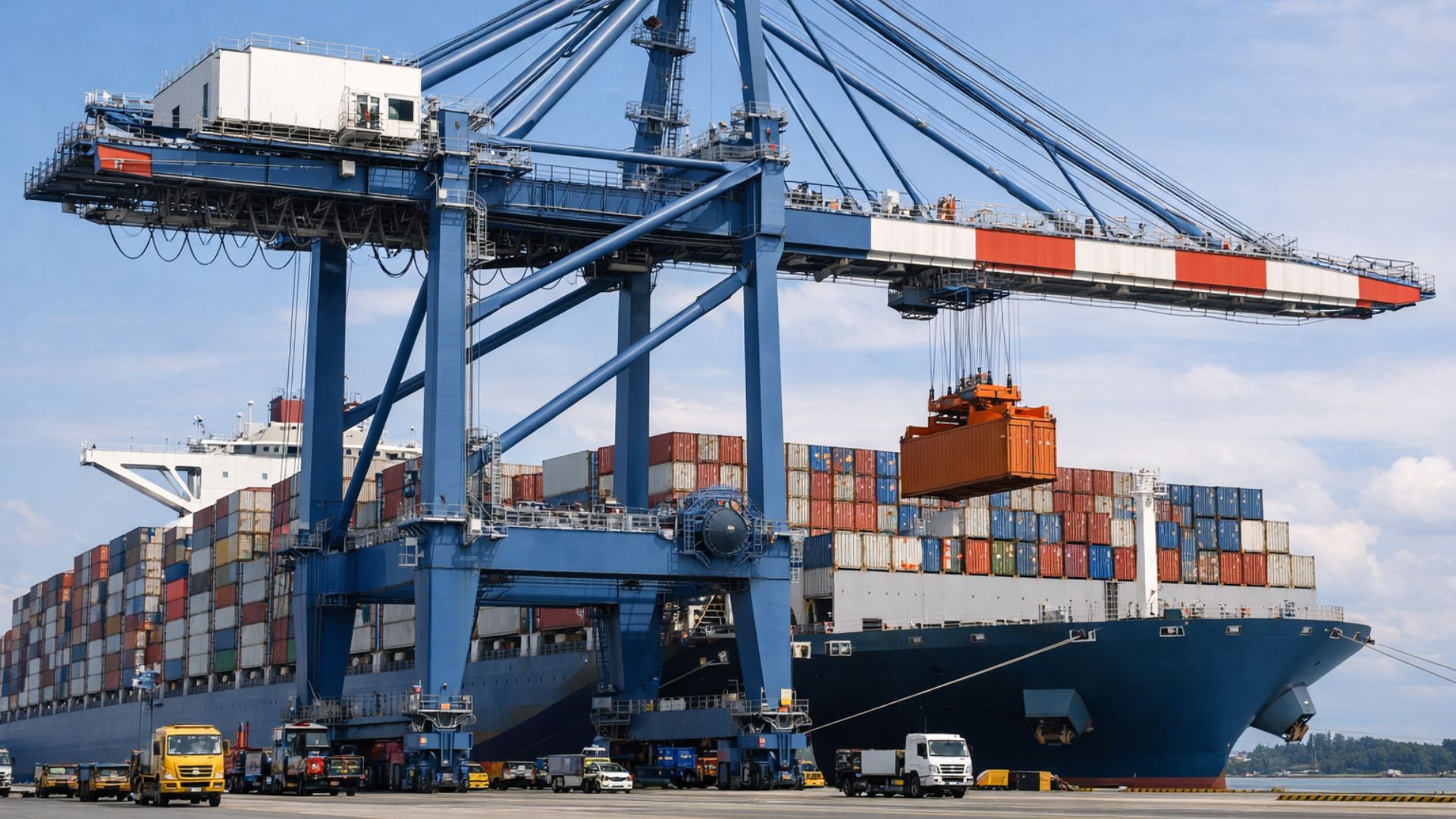
A crane with a reach of 69.5 meters and a lift of 53 meters unloads the largest container ships on the planet and accelerates the invisible machinery of global trade.
-
Hyundai presents a luxury electric SUV with up to 7 seats, a range of up to 620 km, and futuristic technologies that redefine comfort and interior space.

-
Orenburg has rivers, roads, and industrial areas covered in snow in a geometric pattern visible from space, and a NASA image reveals how the winter lasting up to 5 months and temperatures below −30 °C transform the city of over 500,000 inhabitants into an almost continuous white map.

-
They have orbited the Moon and are now returning home: the astronauts of Artemis II are making final preparations for a descent at 38,000 kilometers per hour, with a landing in the ocean scheduled for this Friday at 9 PM Brasília time.

Projections from the Japanese Ministry of the Environment indicate that the country could dispose of between 2.45 million and 2.61 million tons of used diapers by 2030, representing about 6.6% to 7.1% of the household waste generated nationally.
In light of this scenario, the topic has ceased to be peripheral and has begun to occupy a central space in discussions about waste management, especially in municipalities that already face high costs with collection, sorting, and final disposal.

In addition to the significant volume, the very profile of the material increases the complexity of treatment, as used diapers concentrate moisture, odor, large volume, and strict sanitary requirements, making both transportation and the efficiency of conventional incineration processes difficult.
Moreover, Kao emphasizes that high moisture compromises the energy performance of the burning process, while the aging population tends to increase the generation of this type of waste, further pressuring public budgets.
How the transformation into solid fuel works
Instead of going directly to incineration, the developed system uses low-temperature thermal decomposition, a process that removes moisture and transforms the diapers into a carbon-rich material with relevant energy potential.
During this stage, the material is also sterilized and deodorized, which reduces sanitary risks and facilitates handling, as well as significantly decreasing the volume of waste throughout the processing.
As a result, treatment can be carried out at the site of generation or at nearby locations, reducing the need for transportation and opening up space for new forms of energy utilization within the community itself.
Although the project in Kamikatsu represents a more advanced phase, the technology has been tested since 2021 in partnership with Kyoto University, initially in the city of Saijo, in Ehime Prefecture.
In the first practical application, installed in a daycare center, the equipment managed to reduce the weight and volume of waste generated by used diapers by about 95%, in addition to producing material with high calorific value.
This result was considered sufficient to classify the compound as a viable alternative to fossil fuels in certain applications, supporting the expansion of the project to a larger scale.
Kamikatsu becomes a real zero waste laboratory

The arrival of the system in Kamikatsu marked a new stage, focusing not only on technical efficiency but also on adapting the model to the routine of a real community.
In this phase, the second installed unit began processing 50 kilograms per cycle, surpassing the capacity of the previous version of 30 kilograms, and operating with lower energy consumption.
At the same time, the evaluation includes practical aspects of daily use, such as the ease of operation by residents and the adaptation of elderly people, a factor considered essential for the eventual expansion of the model.
The choice of the city was not random, as Kamikatsu is recognized for its advanced waste management system and for encouraging active participation from the population in the separation process.
At the Zero Waste Center WHY, residents classify their waste into 13 categories and 43 subcategories, a practice that has contributed to a recycling rate of over 80%.
In this context, the technology is being tested in an environment where citizen behavior is a fundamental part of the system, allowing for the evaluation of its viability under real usage conditions.
Public policy and demographic change drive solutions
The initiative also aligns with guidelines already established by the Japanese government, which seeks alternatives to reduce dependence on incineration in the treatment of used disposable diapers.
These guidelines include references to sanitary treatment, recycling, and thermal recovery, providing technical support for municipalities and companies to implement more sustainable solutions.
At the same time, demographic changes are altering the nature of the problem, as the aging population increases the demand for adult diapers.
Data cited by Reuters indicates that this market is expected to grow 16% by 2027, reaching 98.9 billion yen, while the children’s segment is expected to decline 8%, to 84.6 billion yen.
With this change, the volume and profile of urban waste are also transforming, requiring new strategies to deal with waste that previously had less relevance in the system.
Within this scenario, the conversion of used diapers into fuel is being treated as an operational solution to a growing challenge, transforming a historically discarded waste into energy resource with local utilization potential.






Seja o primeiro a reagir!