





 English
  Francês
  Alemão
  Italiano
  Japonês
  Norueguês
  Portuguese
  Spanish
  3 min of reading


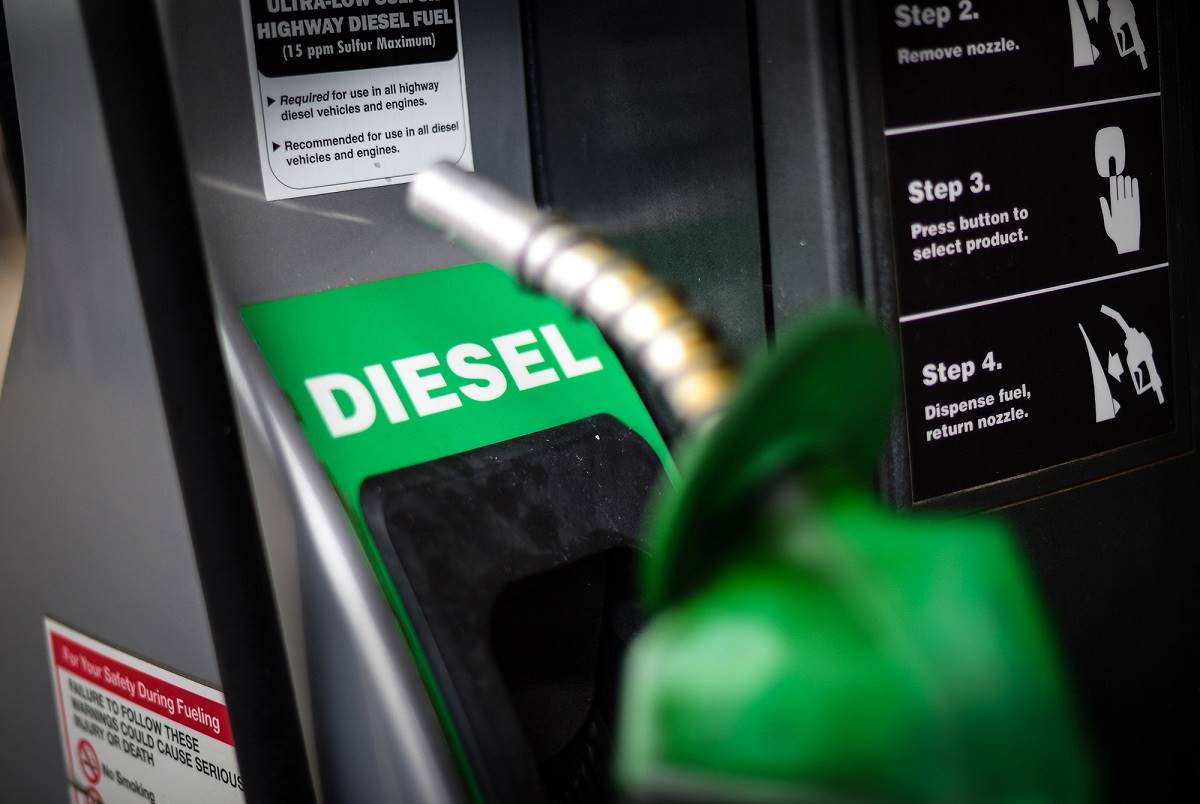
Until diesel reaches the final consumer, the journey is long. Oil must be transported from the production site to a storage terminal. This journey can range from hundreds to thousands of kilometers. Then it will be pumped through pipelines to a refinery, where a portion of the oil is converted into diesel. The refined diesel is subsequently pumped to a fuel distributor. It is at the distributor that the mixing of diesel with 10% biodiesel occurs, along with the addition of other additives that improve the fuel’s performance. Tanker trucks finally deliver the diesel to the retail station, where consumers can refuel their vehicles. Below, observe how the costs are distributed along this chain. For analysis purposes, average prices observed between March 17 and 23, 2019, were used.
1- OIL: during the analyzed period, the average price of the Arab oil barrel, one of the main references in the sector, was US$ 60. Since we primarily use domestic oil, which is produced off the coast of RJ and SP, we have a discount of approximately US$ 5 per barrel on freight, so the oil arrived at the Brazilian terminals at US$ 55. With an exchange rate of 3.9 dollars per real, the barrel cost us R$ 214.5. One barrel contains 159 liters of oil, so each liter of oil cost R$ 1.35.
-
Government unlocks R$ 554 million for a highway that has been requested for decades and accelerates the duplication of BR.

-
Without bricks, without cement, and without endless construction: the cardboard house that is assembled in modules and can be moved.

-
Billions of barrels on the equatorial margin could lead Amapá to double its oil production in Brazil — the state aims to enter the route of companies in the Campos Basin, attract investments, and boost jobs and businesses in the oil and gas sector.

-
Without bricks, without cement, and without endless construction: the cardboard house that is assembled in modules and can be moved.
2- STORAGE AND TRANSFER: transferring oil from a ship to a storage terminal and transporting it to a refinery incurs a cost. It is estimated that this cost is R$ 0.05/liter of oil.
3- REFINING: the oil arrived at the refinery at R$ 1.40 per liter. The refining costs were R$ 0.06, totaling R$ 1.46 for the refiner. After refining, 900 mL of diesel A was sold to distributors for R$ 1.93 on average. (GROSS PROFIT REFINER: R$ 0.47)
4- DISTRIBUTOR: the distributor received the 900 mL of diesel A (R$ 1.93) and mixed it with 100 mL of biodiesel (R$ 0.25), in addition to adding its additives. On the liter of diesel, R$ 0.316 of CIDE/PIS/COFINS (federal taxes and contributions) and R$ 0.58 of ICMS (state tax) apply. The total cost to the distributor is R$ 3.07. He resold it to the fuel station at R$ 3.18. (GROSS PROFIT DISTRIBUTOR R$ 0.11)
5- FUEL STATION: the final retailer received the diesel from the distributor at R$ 3.18 and resold it at R$ 3.54. (GROSS PROFIT STATION: R$ 0.36).
A summary of what was described is presented in the figure below.

It is worth noting that the values described above are an average of the prices applied in Brazil, which may vary from one state to another.
Marcelo Gauto – Industrial Chemist – Specialist in Oil, Gas, and Energy
REFERENCES CONSULTED
ADVFN. Oil. Available at: <https://br.advfn.com/commodities/petroleo.html>. Accessed in March 2019.
NATIONAL AGENCY OF OIL, GAS AND BIOFUELS (ANP). Price survey system. Available at: < https://preco.anp.gov.br/include/Resumo_Semanal_Combustiveis.asp>. Accessed in March 2019.
FUELCOMBUSTIBLES. Taxation. Available at: <http://www.fecombustiveis.org.br/revendedor/tributacao/>. Accessed in March 2019.
PETROBRAS. Diesel, price composition for consumers. Available at: < http://www.petrobras.com.br/pt/produtos-e-servicos/composicao-de-precos-de-venda-ao-consumidor/diesel/>. Accessed in March 2019.
PETROBRAS. Prices and Costs – refining costs. Available at: <http://www.investidorpetrobras.com.br/pt/destaques-operacionais/precos-e-custos>. Accessed in March 2019.









Seja o primeiro a reagir!