





 Portuguese
  English
  Spanish
  5 min of reading
  0 comments


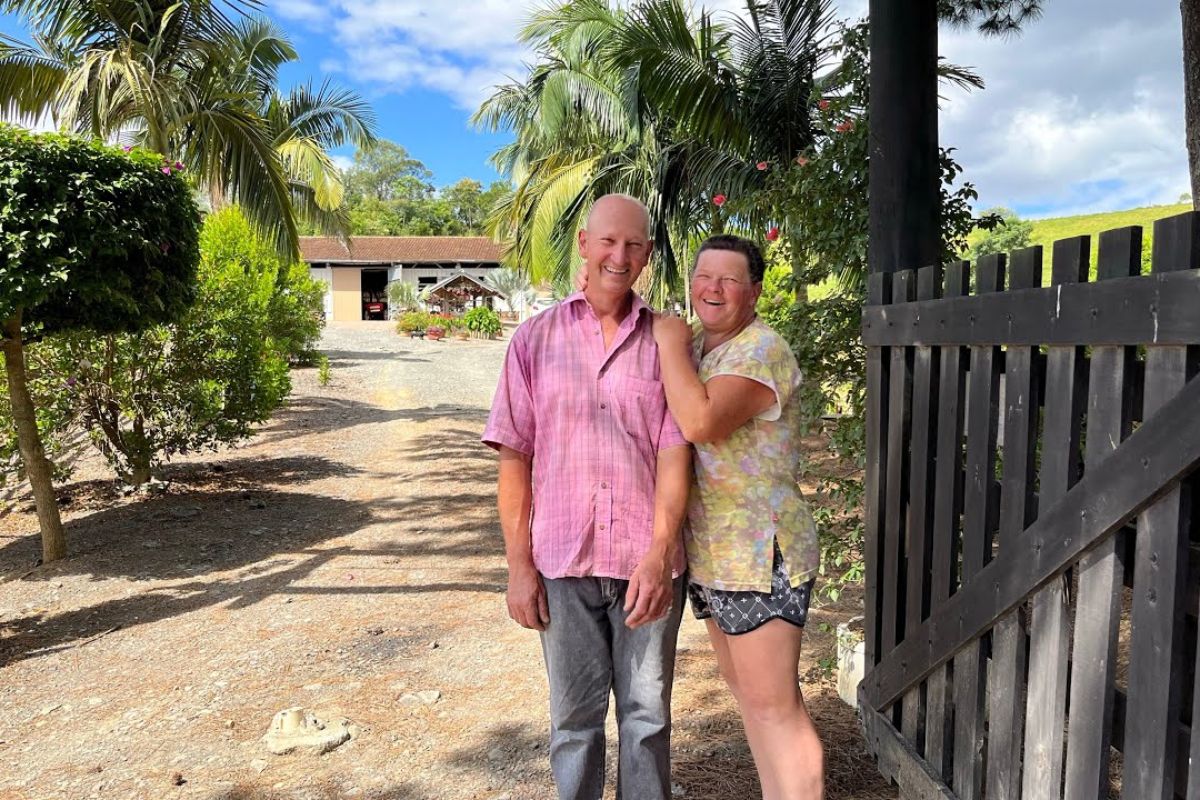
At Marli and Dionísio’s Farm, The Collection Was Born From Trash Finds and Inherited Tools, While The Production of Cucumbers Grown on 2 Thousand Vines Supports The Routine. Between Wagon, Animals, and The “No Food” Sign, The Place Becomes A Attraction and Sparks Debate About Rural Tourism.
At Marli and Dionísio’s farm, the visit described by the couple takes place on a Sunday afternoon and begins with a warning that turns into a prank: the sign “no food”, quickly read as “do not feed”. In the same conversation, dates and times of the routine come up: the day starts at 4:30 AM, goes on until noon, and the cucumber calendar runs from January to May.
The combination of museum and farm is straightforward. While Marli and Dionísio gather relics found in the trash and complain about visitors who touch and move items around, the irrigated cucumber vines support the heavy work, with harvests that can reach 370 to 400 kg of cucumbers by noon. The wagon comes in as a plan to organize visits and reduce chaos.
Relics Found in The Trash and The Design of A Domestic Museum

Marli and Dionísio’s farm has gradually turned into a museum through accumulation, selection, and restoration.
-
Italian researchers have detected what appears to be a second Sphinx buried under the sands of Egypt, and satellite scans reveal a gigantic underground megastructure hidden beneath the Giza Plateau for over 3,000 years.

-
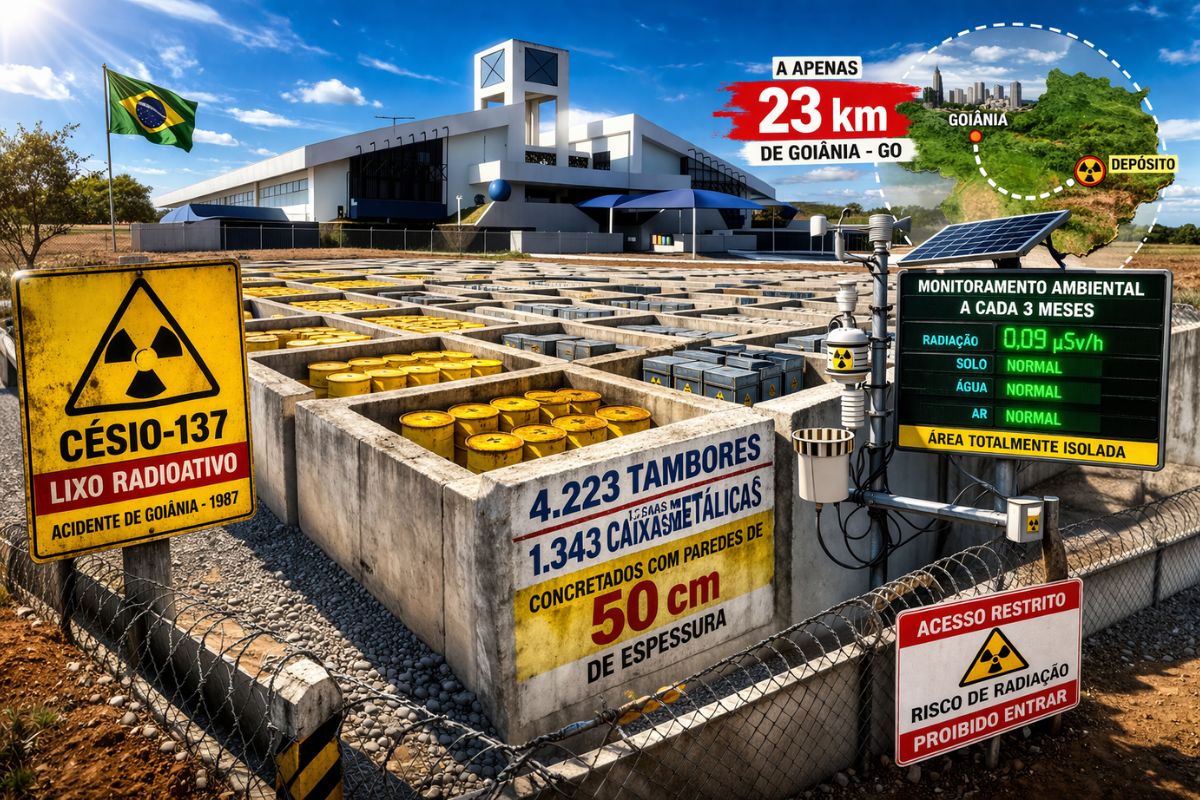
There are 4,223 drums and 1,343 metal boxes concreted with 50-centimeter walls that store the radioactive waste from Cesium-137 in the worst radiological accident in Brazil, just 23 kilometers from Goiânia, with environmental monitoring every three months.
-
Giant Roman treasure found at the bottom of Lake Neuchâtel in Switzerland reveals an advanced trade system, circulation of goods, and armed escort in the Roman Empire about two thousand years ago.

-
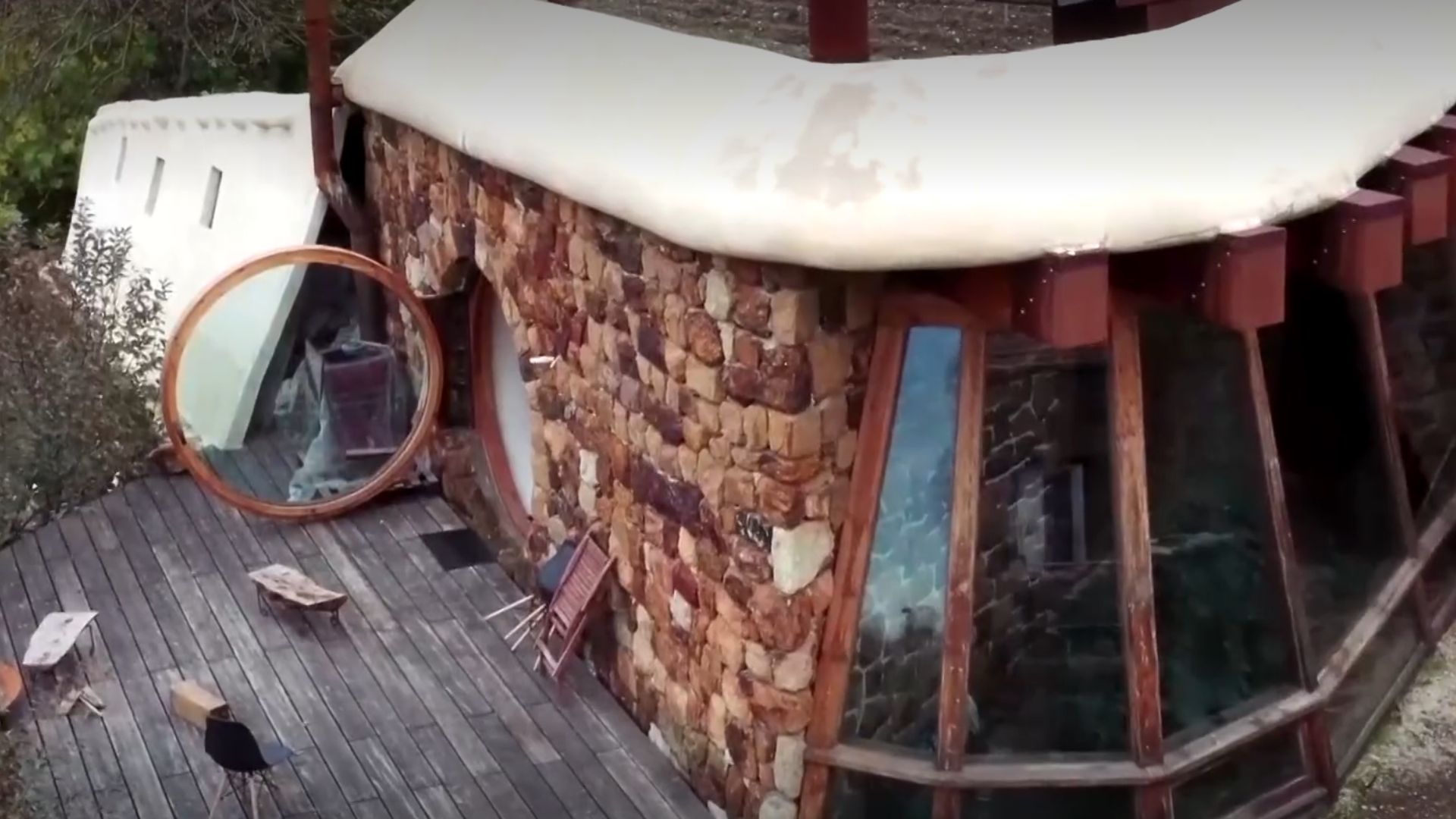
He buried 1,200 old tires in the walls to build his own self-sufficient house in the mountains with glass bottles, rainwater, and an integrated greenhouse.

The collection includes old tools, kitchen items, and rural pieces that, in many cases, were collected from the trash and restored.
The museum is not an isolated room: it spreads across the property as a narrative of work, with items displayed to be seen, not handled.
This characteristic creates a friction point.
Marli describes herself as a perfectionist and says that part of the public does not observe only with their eyes.
There are those who pick up, move items around, and replace them differently, which requires constant repositioning and increases the risk of damage.
In a domestic museum, this control becomes a daily operation, involving cleaning, visual inspection, and protecting the more fragile relics.
The “No Food” Sign and Its Practical Effect on Visitors

At Marli and Dionísio’s farm, the “no food” sign has gained fame for generating repeated reading errors.
By reading quickly, visitors understand “do not feed” and start looking for animals where there are none, especially when the warning is attached to a decorative monkey.
The episode occurs frequently enough to become a museum routine, with questions, laughter, and clarification of meaning.
The “no food” sign also serves as a measure of attention, which is relevant for museum management.
Those who do not read carefully tend to circulate in a disorganized manner, touch objects, and ignore guidelines.
That’s why the couple points to the need for clear rules: guided tours, designated areas, and signs with clear language, reducing wear and tear on the collection and noise in the experience.
Cucumber in Vines Irrigated with 2 Thousand Vines: Numbers, Techniques, and Rhythm

The cucumber production is the operational base of Marli and Dionísio’s farm.
The planting occurs in vines, with vertical training: the plant climbs, is “passed” through ribbons, and kept elevated to facilitate harvesting by aisles.
A segment described by the couple sums up to 2 thousand vines in an area of approximately 160 m², with irrigation installed to ensure water regularity.
The clearest data lies in the rhythm.
The harvest begins at 4:30 AM and can reach 370 to 400 kg of cucumbers by noon, when the volume is sorted and prepared for sale.
The technique involves phytosanitary prevention, with the application of “little pesticide” to avoid plant illness.
To protect their skin and clothes, the couple wears gloves and long-sleeved shirts, as cucumbers are rough and can damage fabrics throughout the harvest.
On the calendar, cucumbers also impose a time window.
The mentioned cycle runs from January to May. After that, the system requires a pause and reorganization of other tasks, because, in Dionísio’s words, “cucumbers bring money, but require work”.
This insight explains why the museum and the wagon must fit into schedules and periods when the farming work allows them to receive visitors.
Wagon, Animals, and Tourism: When Opening The Property Becomes A Management Decision
The wagon appears as a symbol and tool.
At Marli and Dionísio’s farm, it integrates with the set of objects and animals that attract visitors’ attention, alongside the ox cart and field circuits.
The couple talks about enhancing the tour with a wagon and a small cart, offering a route through the property, with stops at the museum and passing by the cucumber vines.
But the central debate is privacy. Marli describes the risk of a bus arriving on a Sunday afternoon and interrupting what is, at the farm, a continuous routine: harvesting cucumbers, cleaning, organizing the museum, taking care of animals.
That’s why she compares tourism to a store: it opens on defined days and times and closes when needed.
For the management of Marli and Dionísio’s farm, the rule is not antipathy, it is about protecting time and the collection.
In this design, the wagon can reduce loose circulation and concentrate visitors on a controlled path.
At the same time, it increases responsibility for safety, as a ride with a horse depends on a gentle animal and proper handling.
Therefore, viable tourism is not spontaneous: it requires scheduling, limits, signage, and monitoring to ensure that the museum does not become a disorganized deposit and that the cucumbers do not miss the harvesting window.
What The Case Reveals About Recycling, Memory, and Rural Economy
The museum at Marli and Dionísio’s farm shows that relics do not need to be restricted to formal institutions to gain social value.
By recovering pieces from the trash and displaying old tools, the couple transforms waste into memory, and the museum becomes a lesson in recycling, work, and rural identity.
At the same time, Marli and Dionísio’s farm makes it clear that memory alone does not pay the bills.
The cucumbers sustain the routine with concrete numbers, the wagon organizes visits, and the animals complete the scenery, but it all depends on management.
The “no food” sign summarizes the dilemma: without attentive reading, the visitor creates confusion; without clear rules, the museum loses control.
To transform curiosity into visits without compromising rural life, Marli and Dionísio’s farm points to a pragmatic path: define days and hours, limit access areas, and guide the public not to touch the pieces.
This decision does not eliminate the charm of the museum, of the cucumbers and the wagon, but reduces the risk of damage and protects the routine that sustains the property.
Would you visit Marli and Dionísio’s farm knowing that the ‘no food’ sign confuses and that the museum asks you not to touch the relics?










-

-

-

-

7 pessoas reagiram a isso.