





 Portuguese
  English
  Spanish
  3 min of reading
  0 comments


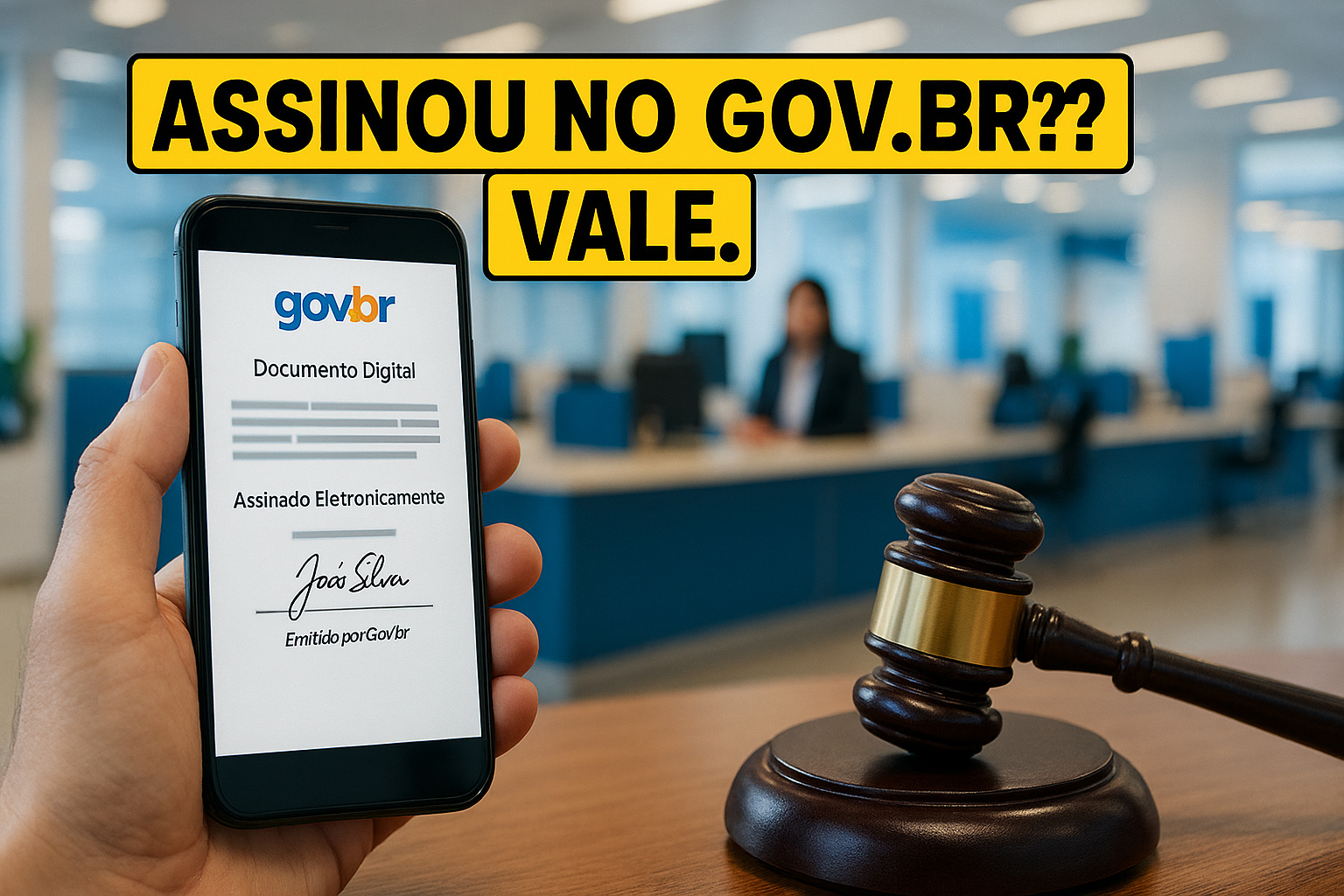
STJ Decision Confirms Legal Validity of Power of Attorney Signed by Gov.br and Waives Notarization in Certain Situations Provided for in Law 14.063/2020.
Brasília (DF) — In February 2026, the Superior Court of Justice confirmed that documents electronically signed through the Gov.br platform have legal validity, including for purposes of legal representation, and may waive notarization when the legal requirements are met. The decision was based on Law No. 14.063/2020, which regulates the use of electronic signatures in interactions with public entities in Brazil.
What Law No. 14.063/2020 Says About Electronic Signatures
Law 14.063/2020 establishes three types of electronic signature:
- Simple Signature
- Advanced Signature
- Qualified Signature (ICP-Brazil)
The signature made through Gov.br can be classified as advanced electronic signature, provided it is linked to an account with a high security level (silver or gold level).
-
The noise law will no longer be in effect at 10 PM starting in June with a new rule valid during the 2026 World Cup.

-
The Chamber opens a debate on driver’s licenses at 16 years old as part of a reform that includes around 270 proposals to change the Brazilian Traffic Code and may redesign rules for licensing, enforcement, and circulation in the country.

-
The new Civil Code could revolutionize marriages in Brazil with “express divorce” and changes that could exclude spouses from inheritance.

-
Banco do Brasil sues famous influencer for million-dollar debt and intensifies debate on delinquency, risks of seizure, and direct impact on Gkay’s credibility.



According to the legislation, the advanced signature is valid when:
- Allows unequivocal identification of the signatory
- Is linked to the holder
- Uses secure authentication mechanisms
Does Digital Power of Attorney via Gov.br Waive Notarization?
The STJ decision indicated that, in a specific judicial context analyzed, the Gov.br electronic signature was deemed sufficient to validate the power of attorney without the need for notarization. This means that:
- For digital procedural acts
- In electronic judicial environments
- When the system accepts advanced signatures
The traditional requirement for notarized signatures can be waived. However, the application may vary depending on the agency, court, or type of legal act involved.
When Can Qualified Signature (ICP-Brazil) Still Be Required?
Despite the decision, there are situations in which:
- Extrajudicial notaries
- Financial institutions
- Real estate transactions
- Public deeds
May require a qualified signature issued by an ICP-Brazil digital certificate. The difference is technical: the qualified signature uses a digital certificate issued by a certifying authority accredited in the Brazilian Public Key Infrastructure (ICP-Brazil).
Gov.br is Already Used by the Federal Revenue and INSS
The Gov.br platform already allows:
- Electronic powers of attorney to access the Federal Revenue’s e-CAC
- Digital authorizations in INSS
- Administrative representation in various public services
These services already waive physical notarization when carried out via authenticated official system.
Security Levels of the Gov.br Account
The validity of the signature depends on the account level:
- Bronze – basic level
- Silver – additional verification
- Gold – biometric or banking validation
For greater legal security, it is recommended to have a silver or gold level account.
Digitization of Bureaucracy in Brazil
Notarization has always been a traditional requirement in Brazil to validate the authenticity of signatures.
With the digitization of public services and the expansion of electronic processes, the use of advanced digital signatures has been accepted in:
- Electronic judicial processes
- Federal administrative services
- Digital protocols
The STJ decision reinforces this trend.

Legal Security and Practical Limits
Experts point out that the decision does not completely eliminate notarization in all contexts. Validity depends on:
- Nature of the legal act
- Specific regulation of the agency
- Environment (judicial or extrajudicial)
- Express requirement in law
Therefore, although there is progress, the requirement may vary from case to case.
Impact for Citizens and Companies
If applied broadly, the waiver of notarization may:
- Reduce costs with notaries
- Speed up procedures
- Facilitate digital representation
- Decrease bureaucracy
The advancement is part of the context of digitization of federal public administration. The Superior Court of Justice’s decision in 2026 confirmed that a power of attorney signed via Gov.br can have legal validity and waive notarization in certain situations provided for in Law No. 14.063/2020.
The use of advanced electronic signatures consolidates a movement towards modernization of administrative and procedural acts in Brazil, although the requirement for ICP-Brazil certificates may still be applied in specific acts.










Seja o primeiro a reagir!