





 Portuguese
  English
  Spanish
  3 min of reading
  0 comments


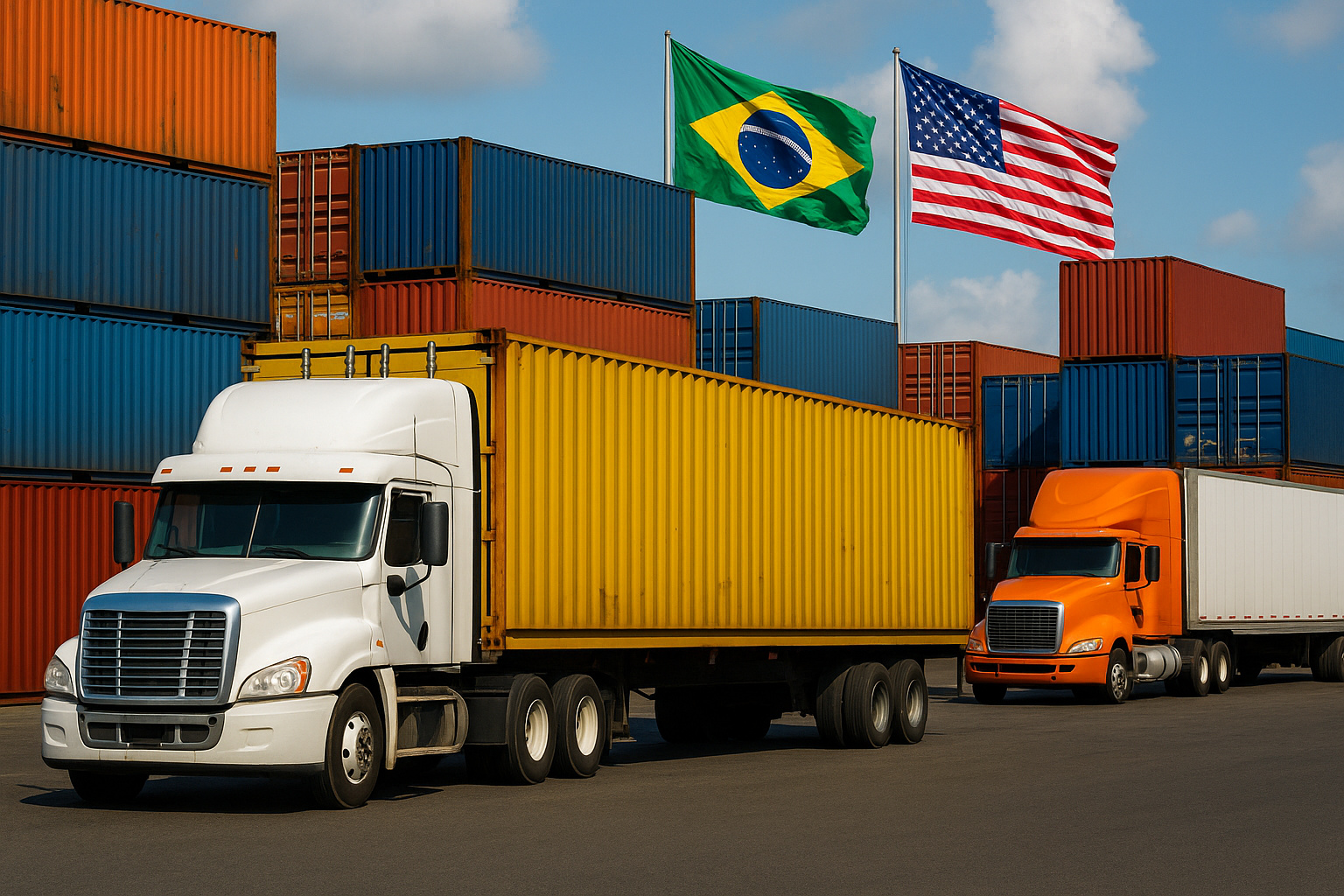
Logistics Sector Alerts as Exports Recede and Routes Are Redirected
The road freight transport faces a direct threat to its sustainability. Since July 2025, the diplomatic crisis between Brazil and the United States has caused an immediate decline in exports.
This affects strategic routes and logistics companies.
SETCESP (Syndicate of Cargo Transport Companies of São Paulo and Region) warned on July 20 of serious risks in the logistics sector. The scenario may jeopardize millions of formal jobs.
According to IPTC (Paulista Institute of Cargo Transport), more than 450,000 direct jobs are concentrated in the State of São Paulo alone.
ANTT (National Land Transport Agency) confirms the operation of over 34,000 companies in road freight transport (TRC).
-
The government puts R$ 8.6 billion on the table to change the highway (BR) with 50 overpasses, 28 bridges, 4 tunnels, and 40 km of bike lanes in 180 km of historic duplication.

-
BRL 20.1 Million Bridge Project Kicks Off: 200-Meter Construction to Improve Access in Three Cities in Minas Gerais

-
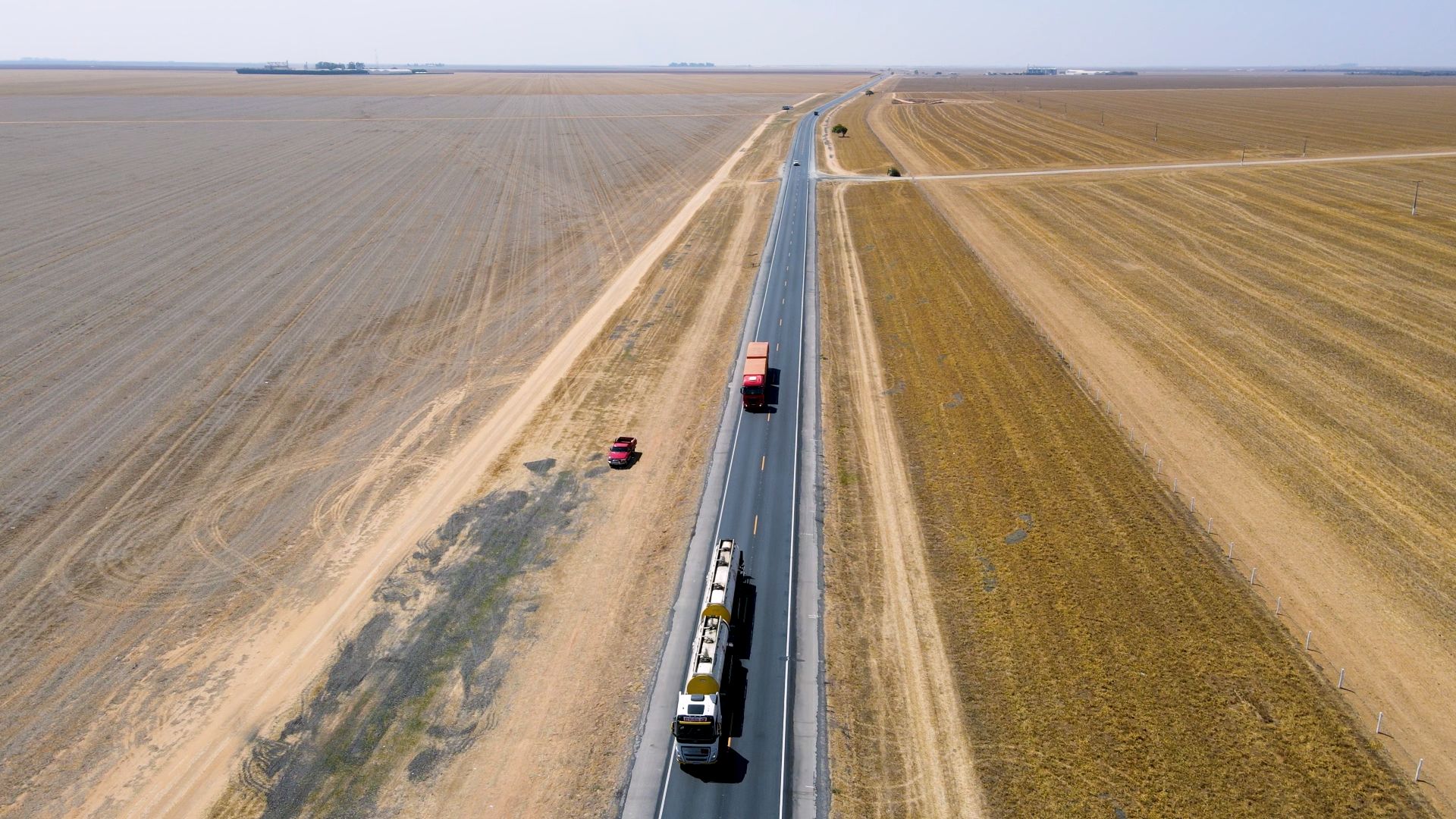
‘Endless Road’ In Brazil Is One of The Largest In The World: 145 Km Stretch On An Important Highway (BR) Crosses The West Of Bahia And Had 135.9 Km Revitalized With R$ 35.3 Million
-
Engineer From ITA Who Worked at Embraer Leads Free Flow Expansion With National Artificial Intelligence and Technology for Toll Without Barriers in Brazil

Nationally, the sector accounts for 65% of Brazil’s cargo movement. This includes port operations focused on exports and imports throughout Brazilian territory.
Cargo Flow Slows and Operating Costs Surge
In light of the current scenario, companies are already facing a significant contraction in cargo volume. The redirection of international routes has increased operating costs immediately.
The situation has raised risks for logistics businesses. Entrepreneurs report insecurity in planning new investments or expanding operations amid international instability.
With the United States representing one of the main destinations for Brazilian exports, any tension in relations causes significant and immediate impacts on the cargo sector.
The loss of cargo, associated with instability in foreign trade, threatens thousands of jobs directly linked to national logistics. The entire productive chain suffers the consequences of this crisis.
Support for the Sector Requires Immediate Resumption of Diplomatic Dialogue
The moment demands a statesman-like attitude from the federal government. The union asserts that it is essential to act with urgency, humility, and intelligence.
It is necessary to rebuild diplomatic bridges with the United States, restoring market confidence and avoiding the disorganization of the Brazilian logistics system.
According to the statement issued on July 20, 2025, political vanity cannot overshadow the collective well-being and stability of the national economy.
The Brazilian economy depends on stability, legal security, and predictability for companies to continue operating efficiently and maintaining jobs throughout the country.
The TRC is one of the pillars of Brazil’s economic infrastructure. Its fragility jeopardizes sustainable development and the country’s capacity to grow structurally.
Companies Report Losses and Investment Freezes
With the ongoing crisis, Brazilian carriers are already reporting significant losses and halting investments considered strategic for the national logistics sector.
Contracts have been suspended and fleets remain idle in various regions, while decreased demand threatens the maintenance of the operational capacity of transport companies.
In many cases, uncertainty about the future of exports prevents any strategic movement in the short term. Long-term planning has also been affected.
The contraction in trade relations impacts the economic base of hundreds of Brazilian cities, especially in logistics hubs spread across different states in the country.
Industry leaders state that without an effective and swift diplomatic solution, the effects of the crisis are likely to intensify in the coming weeks.
Union Reinforces Support for the Sector and Calls for Coordinated Government Action
SETCESP concludes its statement reaffirming solidarity with the companies that are unfortunately suffering the direct effects of the diplomatic crisis between the two countries.
Therefore, the union emphasizes the urgency of coordinated actions, as it is necessary to defend the sector, preserve jobs, and keep logistics operations running throughout Brazil.
Meanwhile, with nearly 1 million formal jobs threatened, national infrastructure remains dependent on TRC to ensure its full daily operation.
Moreover, according to ANTT and CAGED, any disruption in relations with the United States seriously compromises the performance of the Brazilian logistics system.
Therefore, resuming bilateral dialogue has become essential to protect the economy and the livelihood of thousands of families who depend on cargo transportation.










Seja o primeiro a reagir!