





 Portuguese
  English
  Spanish
  5 min of reading
  0 comments


Understand How Oil and Gas Materials Shape the Economy, Influence Industry, and Impact the Daily Lives of Millions of People Around the World.
When we talk about the influence of oil and gas materials in the market, we are addressing a much broader theme than the simple extraction and commercialization of these natural resources.
Indeed, oil and natural gas act as strategic energy sources that, in addition to shaping the development of the global economy, directly impact sectors such as:
Transport, industry, agriculture, construction, and even the daily lives of people.
-
Petrobras evaluates suspension of sales to distributors and considers canceling the cooking gas auction following guidelines from the Federal Government.
-
Lula reveals a masterstroke by Petrobras to undo a deal made by Bolsonaro, which involves the return of an important refinery that currently produces less than half of what was expected and makes Brazil dependent on international diesel.
-
A study confirms that the natural gas sector will reduce greenhouse gas emissions in Brazil by 0.5% and accelerate the energy transition by 2026.

-
Petrobras implements a severe adjustment and confirms a 55% increase in the price of aviation kerosene with a proposal for installment payments for the companies.


Therefore, their relevance is undeniable.
Moreover, from electricity generation to the manufacturing of essential products, these materials participate in various stages of the production chain, making them indispensable for maintaining economic activities.
Consequently, the growth of cities, the development of industries, and the expansion of trade heavily depend on access to and use of these resources, demonstrating that their importance goes far beyond the energy sector.
The Origin of Importance: A Historical Perspective
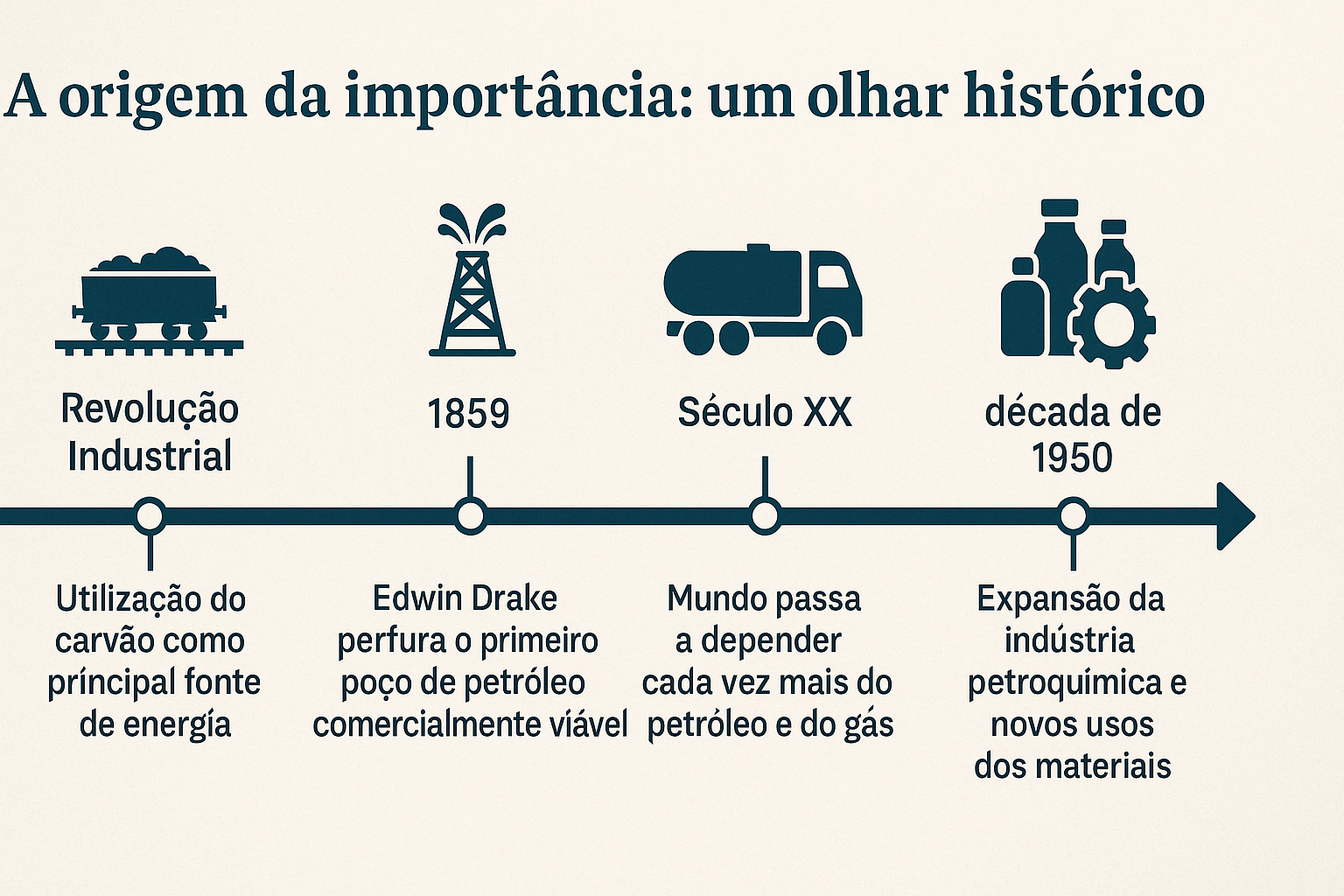
To better understand the influence of materials derived from oil and natural gas, it is important to look back into the past.
Initially, the Industrial Revolution, which began in the mid-18th century (around 1760), used coal as its primary energy source, according to the Economic History Institute (IHE, 2024).
However, starting in 1859, when Edwin Drake drilled the first commercially viable oil well in the United States, oil began to take on the role of the most efficient and versatile energy source, as highlighted by the International Energy Agency (IEA, 2023).
Furthermore, during the 20th century, the world increasingly depended on oil and gas.
According to the Organization of the Petroleum Exporting Countries (OPEC, 2024), global oil consumption grew exponentially after World War II (1939–1945).
It was a period when fuel powered tanks, airplanes, and ships, reinforcing its strategic importance.
Additionally, with the growth of the petrochemical industry starting in the 1950s, the use of these materials expanded, surpassing energy to reach the production of goods such as plastics, synthetic rubbers, fertilizers, and pharmaceuticals.
Moreover, control over oil reserves provoked significant geopolitical conflicts in the last century, such as the oil crisis of 1973, highlighting the power these materials exert not only on the economy.
But also on international relations, as reported by the Foundation for Global Strategic Studies (FEG, 2023).
Thus, countries with large reserves of oil and natural gas have gained strategic influence in the global landscape, a fact that remains very evident today.
What Are Oil and Gas Materials?
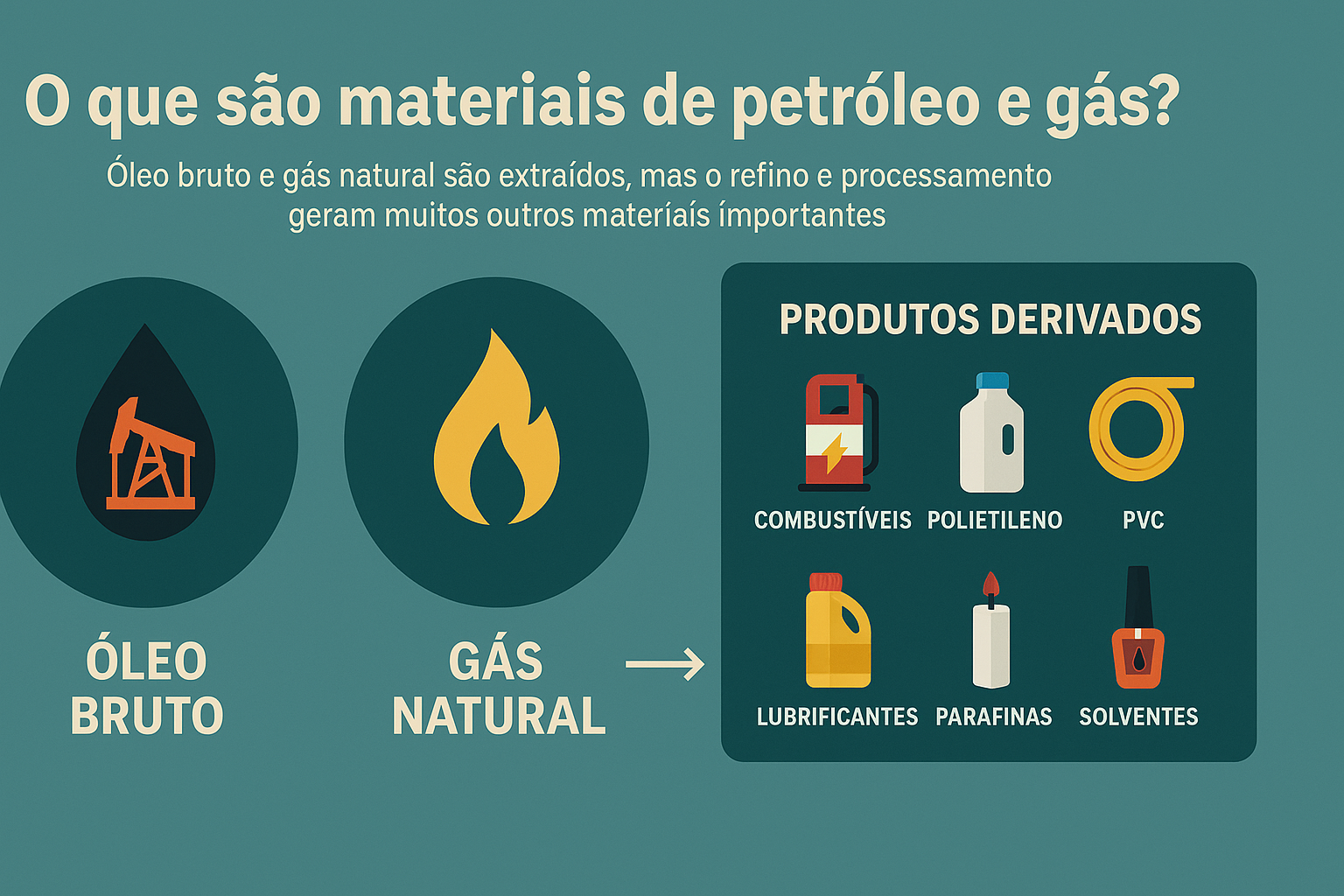
When we speak of oil and gas materials, we refer to both the extracted substances — crude oil and natural gas — as well as the products obtained through refining and processing.
Among the most well-known materials are fuels (gasoline, diesel, kerosene), but also many others of extreme economic and industrial importance, such as:
Polyethylene, polypropylene, PVC, lubricants, paraffins, and solvents, according to data from the National Agency of Oil, Natural Gas, and Biofuels (ANP, 2024).
On the other hand, these materials are not only used as an energy source. They constitute the raw material for manufacturing products that are part of our daily lives: packaging, synthetic clothing, paints, cosmetics, appliances, automotive parts, among others.
Therefore, their influence goes beyond the energy sector.
It is worth noting that natural gas, besides being a cleaner source compared to other fossil fuels, is essential for residential heating, electricity production, and as input for chemical industries.
With technological advancements, its use has become increasingly efficient, contributing to the reduction of polluting gas emissions in some regions of the world, according to a report by the International Gas Union (IGU, 2023).
The Connection to the Global Market
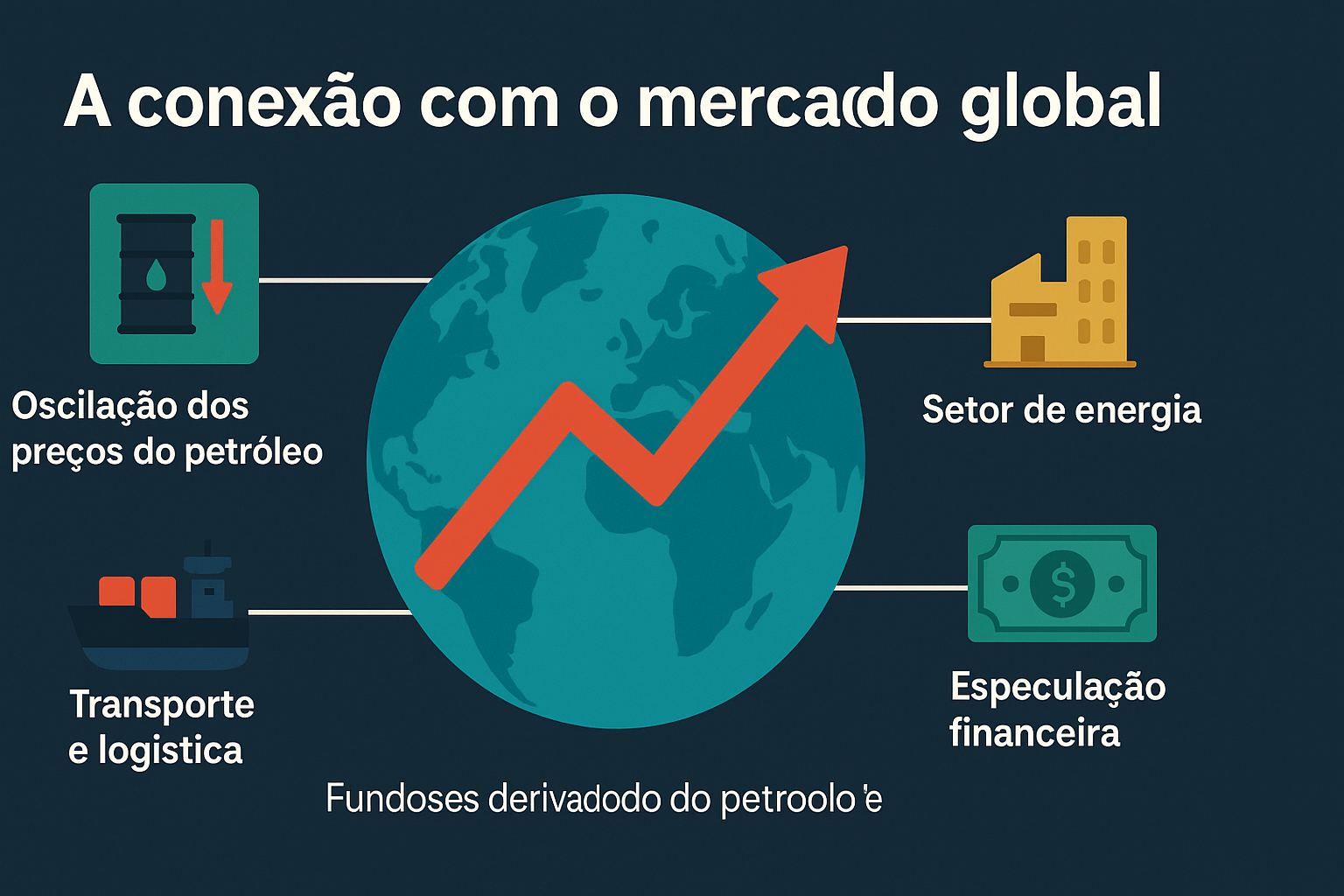
The materials derived from oil and gas strongly influence the global market for various reasons.
The main factor is the fluctuation of oil barrel prices, which directly and indirectly impacts various production chains.
As many industrial materials originate from oil, any variation in the input cost affects production and, consequently, the final prices to consumers.
Moreover, the energy sector is one of the pillars of national economies.
Producing countries such as Saudi Arabia, Russia, the United States, and Brazil have significant participation in the international trade of these resources.
Thus, the supply and demand for oil and natural gas drive billion-dollar investments and influence political, economic, and environmental decisions.
The influence also extends to the transport and logistics sector.
Trucks, ships, airplanes, and cars depend on oil derivatives to operate.
Therefore, a rise in fuel prices impacts the entire supply chain, from producer to end consumer.
This demonstrates how oil and gas materials are central to the global economic organization.
Another important aspect is the financial speculation involving future oil and gas contracts, which influences the prices practiced in the international market.
Therefore, companies and governments stay alert to trends to plan their economic strategies and ensure stability in their operations.
National Economy and Local Impact
In countries like Brazil, oil reserves, such as those in the pre-salt layer, drive economic growth and attract investments.
According to the National Petroleum Agency (ANP, 2024), discoveries and exploration of the pre-salt layer since 2007 have significantly increased national production.
Thus, oil and gas materials drive sectors such as construction (with the use of asphalt and resins), agriculture (fertilizers and pesticides), transport, and commerce.
Additionally, the sector generates thousands of direct and indirect jobs, from professionals working on platforms to workers in the chemical and distribution industries.
Hence, cities near oil hubs often develop due to these activities, demonstrating their importance in the local scenario.
Another relevant point is the tax revenue generated by activities related to oil and gas, which funds essential public services and infrastructure investments.
Therefore, this contribution reinforces the role of these materials in the social and economic development of the country.
The oil and gas materials play a crucial role in the global economy and in people’s daily lives.
With technological advancements and the search for more sustainable solutions, the future of these materials tends to be more balanced.
Nonetheless, understanding their influence in the market is essential for those who wish to grasp the global economic dynamics, industrial processes, and the directions that society may take in the coming decades.











-

Uma pessoa reagiu a isso.