






 Portuguese


Recovered in 2024 at the underwater site of Gran Carro di Bolsena, the small clay female figure, dated between the 10th and 9th centuries B.C., retains marks from the artisan and has an original function still unknown to archaeologists
A Gran Carro statuette, dated between the 10th and 9th centuries B.C., was recovered from Lake Bolsena in Italy during operations conducted in 2024. The unfinished clay piece, roughly the size of a palm, preserves fingerprints from its maker and originated from an area associated with the residential sector of the ancient settlement.

Gran Carro statuette still bears marks of its maker
The small female figure was found at the underwater archaeological site of Gran Carro di Bolsena, near Aiola.
-
Lactase Patch Promises to Transform the Routine of Those with Lactose Intolerance, but Skin Absorption Mechanism Still Intrigues Experts

-
Diver Discovers 2,100-Year-Old Roman Shipwreck with 500 Amphorae off the Coast of Sicily at 46 Meters Depth
-
Singapore Plans Underground Science City with Labs and Data Centers 80 Meters Deep, Offering Ventilation Systems, Pressurized Escape Routes, and 30% Cooling Energy Savings
-
Student Leads Team Developing Low-Cost 3D Prosthetics for Migrants and Refugees at the Thailand-Myanmar Border, Merging Engineering, Health, and Non-Electronic Solutions for Vulnerable Patients


According to the Superintendency of Archaeology, Fine Arts and Landscape, the surface still displays the fingerprints of its creator.
The piece appears rudimentary and seems to have remained unfinished. Another detail identified by researchers was a fabric impression located under the figure’s chest, indicating that the statuette may have been dressed at some point.
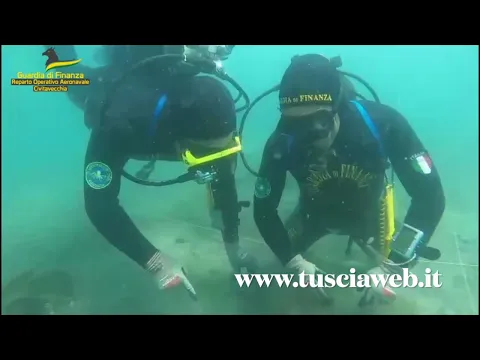
The discovery was assigned to the Underwater Archaeology Service. Italian experts in cultural heritage restoration also collaborated with government divers to retrieve and preserve the object found in the lake.
Despite the preserved elements, the function of the Gran Carro statuette remains uncertain. Similar objects are more frequently associated with funerary contexts, while this example emerged from an area described as residential.
Among the possibilities considered are a use linked to domestic rituals, a votive offering, or simply a piece that was discarded before completion.
The available material does not allow for a determination of which of these hypotheses corresponds to its original use.

Site in the lake features residential areas, wooden structures, and a cult sector
Gran Carro di Bolsena is located in a landscape that was originally dry land but became submerged after the rising water levels of Lake Bolsena.
The complex traces its origins to the Middle Bronze Age and contains significant remnants from the Early Iron Age. Research identifies different sectors at the site, indicating a more extensive organization than just a single village area.
One of these spaces is connected to the so-called stilt house area, characterized by structures built on stilts.
Another is located in Aiola, where there exists a large stone mound currently described in official documents as a cult sector.
At this site, researchers identified signs of ritual bonfires, food offerings placed in large ceramic vessels, and prestigious metal objects deposited among the stones.
This context does not confirm a ritual function for the Gran Carro statuette. However, it shows that the site hosted various activities, with houses, wooden constructions, cult practices, and offerings present in different sectors and periods.
There are also remnants of subsequent occupation or frequentation in Aiola. Coins and ceramics attributed to the Constantinople period indicate activities in the region during the late Roman period as well.
Gran Carro transitions from archaeological site to underwater attraction
In addition to the archaeological discoveries, Gran Carro has been officially presented as a submerged archaeological park aimed at visitation.
In January 2026, materials from the Soprintendenza detailed a structure focused on preserving the remains at the site itself, accompanied by various forms of access and observation.
The project includes snorkeling paths and surface observation, boats with transparent bottoms, night lighting, 3D photogrammetric recording, a resin model, and a virtual tour.
A path has also been planned for visitors with visual impairments. The municipality has begun promoting the Gran Carro Underwater Archaeological Trail, bringing the public closer to an area that houses remnants from different historical periods beneath the waters of Lake Bolsena.
This article is based on information from Italy’s Superintendency of Archaeology, Fine Arts, and Landscape and the official materials on Gran Carro di Bolsena provided in the base material, with data, numbers, and statements preserved as per the consulted content.


