





 Portuguese
  English
  Spanish
  4 min of reading
  0 comments


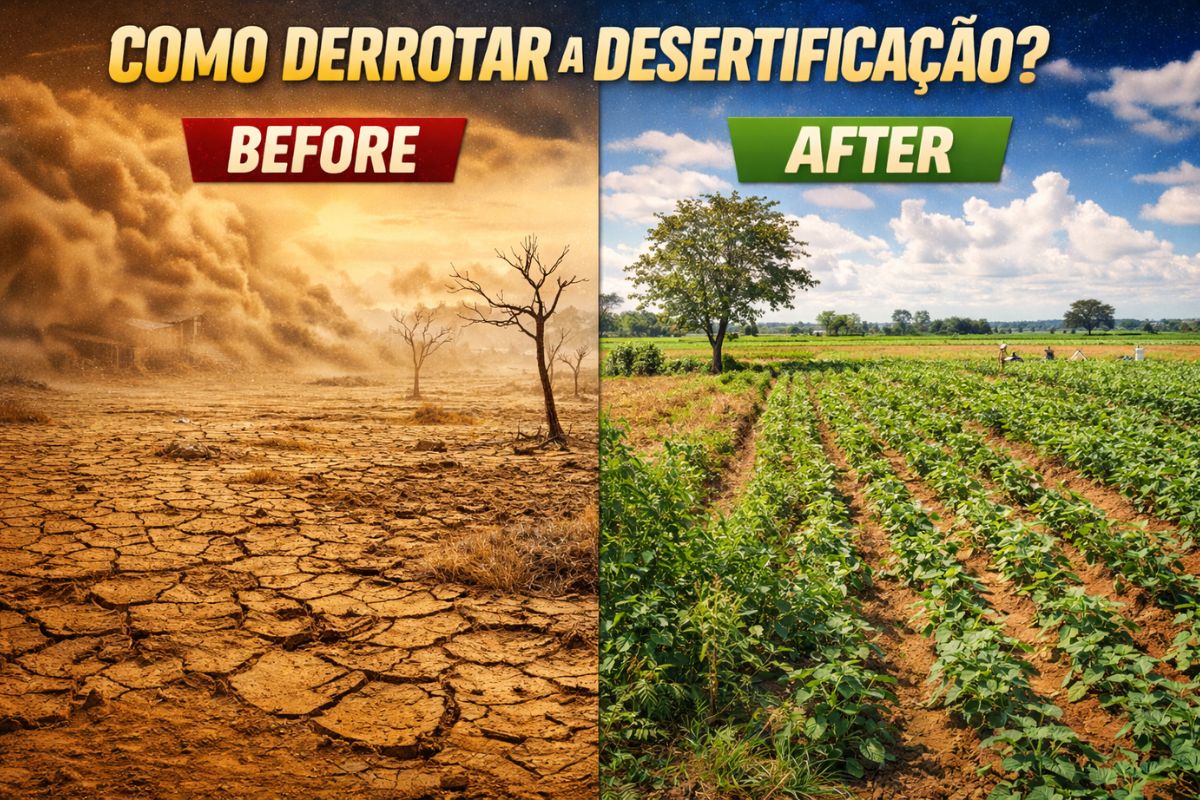
Global Desertification Is Already Turning Fertile Lands into Dust, Displacing Entire Populations and Threatening the Future of Billions, While Scientific Projects Show It Is Possible to Halt the Advance of Sand, Though at a High Cost.
Global desertification is no longer a distant problem and has begun directly affecting economies, food security, and social stability in various regions of the planet. From the silent advance of the Gobi Desert to the drought of the Aral Sea, soil degradation is already creating millions of environmental migrants and pressuring governments to seek urgent solutions.
At the same time, real-life experiences show that global desertification can be slowed and even reversed in specific areas by combining science, renewable energy, and ancient agricultural techniques adapted to modern technology. The challenge is to scale these solutions without depleting natural resources or creating new imbalances.
Global Desertification Accelerates and Transforms Habitable Landscapes into Uninhabitable Areas
Global desertification is advancing at an unprecedented pace. Fertile soils are degrading due to climate change, deforestation, intensive land use, and industrial agriculture.
-
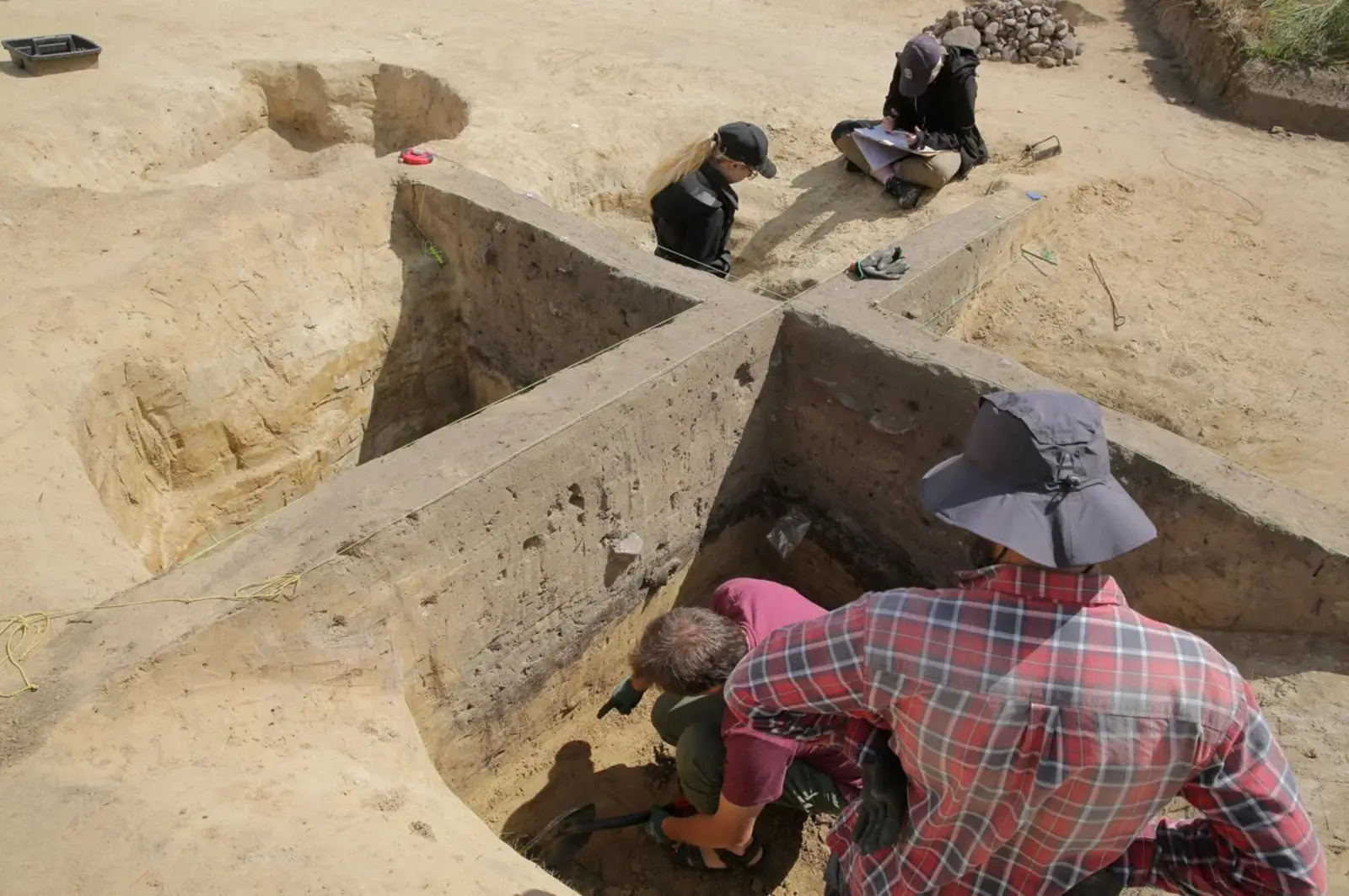
Archaeologists find lost medieval city in Poland with a central square, cemetery, forge, and more than 500 buried artifacts.
-
A massive warm air mass stretched from Brazil to near Antarctica and caused something that almost never happens: lightning and thunderstorms in Ushuaia, in the Falkland Islands, and in the South Georgia Islands.

-
Larger than a football field, with a wingspan of 117 meters, six Boeing 747 engines, and a capacity of 250 tons, the Stratolaunch Roc turns the sky into a gigantic hypersonic launch ramp and accelerates the way the U.S. tests weapons from Mach 5 to Mach 10.

-
Neuralink, the company specialized in brain chips founded by Elon Musk, announced that it intends to implant thousands of brain chips thanks to large-scale production.


By mid-century, a significant portion of the planet’s productive areas will be compromised, directly affecting populations that depend on the land for survival.
The Gobi Desert, for instance, is growing thousands of square kilometers per year, swallowing villages and forcing entire families to abandon their homes.
The phenomenon is repeated in parts of Africa, the Middle East, and Asia, turning environmental degradation into a humanitarian crisis.
Science Tries to Transform Sand into Productive Soil
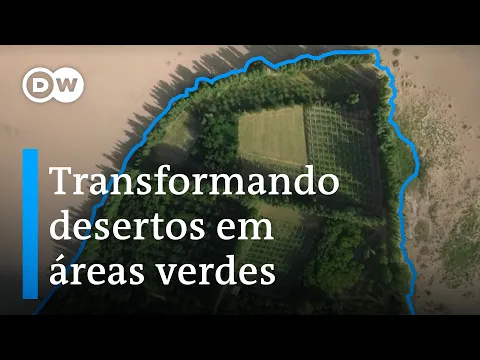

Despite the worrying scenario, science offers signs of hope. In arid regions of Saudi Arabia, circular agricultural fields are emerging in the middle of the desert thanks to deep irrigation.
These projects demonstrate that it is possible to produce food where nothing grew before, but they also reveal clear limits: intensive use of groundwater is not sustainable in the long term.
Experts warn that monoculture and excessive water extraction accelerate soil degradation, creating a cycle that could collapse in a few decades if structural changes do not occur.
Regenerative agriculture and Ancient Techniques Gain Strength
A different approach comes from regenerative agriculture. Projects that capture sudden floods in the desert and direct water to the soil can recharge aquifers and restore native vegetation.
Channels, simple dams, and intelligent use of terrain allow nature itself to work in favor of the ecosystem again.
These techniques, inspired by ancient practices, show that not all solutions to global desertification depend on high technology.
In some cases, traditional knowledge combined with modern science produces lasting results with lower environmental impact.
Solar and Wind Energy Enter the Debate Against Global Desertification
Climate models indicate that large solar and wind farms could alter wind and temperature patterns, increasing humidity and stimulating rainfall in dry regions.
In theory, this would expand vegetation cover and help contain global desertification on a large scale.
In practice, however, the trillion-dollar costs and logistical challenges make these projects unfeasible in the short term. Still, they reveal the potential of renewable energy not only as an electrical source but as a climate tool.
Reforestation Shows Concrete Results in China
In the Kubuqi Desert, reforestation techniques have transformed dunes back into green areas.
The use of adapted planting, wind protection, and selection of suitable species allowed vast tracts of land to be recovered without consuming more water than local rainfall provides.
In addition to containing global desertification, recovery has reduced sandstorms, improved air quality, and brought back animals and economic activities.
This is one of the clearest examples that reversing degradation is possible when there is long-term planning.
Reversing Global Desertification Is Possible, but Not Everywhere
Experts are direct: it will not be possible to recover all degraded areas of the planet. The financial, energy, and political costs are too high.
The priority is to halt the advance where there is still a chance of recovery and prevent healthy soils from collapsing.
Containing global warming, reducing deforestation, and changing the way land is exploited remain the pillars for confronting global desertification without creating new environmental problems.
If science has already shown it is possible to transform sand into life, the question remains: are we willing to pay the price now or will we wait for the desert to cover everything?







-

-

2 pessoas reagiram a isso.