





 English
  Francês
  Alemão
  Italiano
  Japonês
  Norueguês
  Portuguese
  Spanish
 4 min of reading
  0 comments


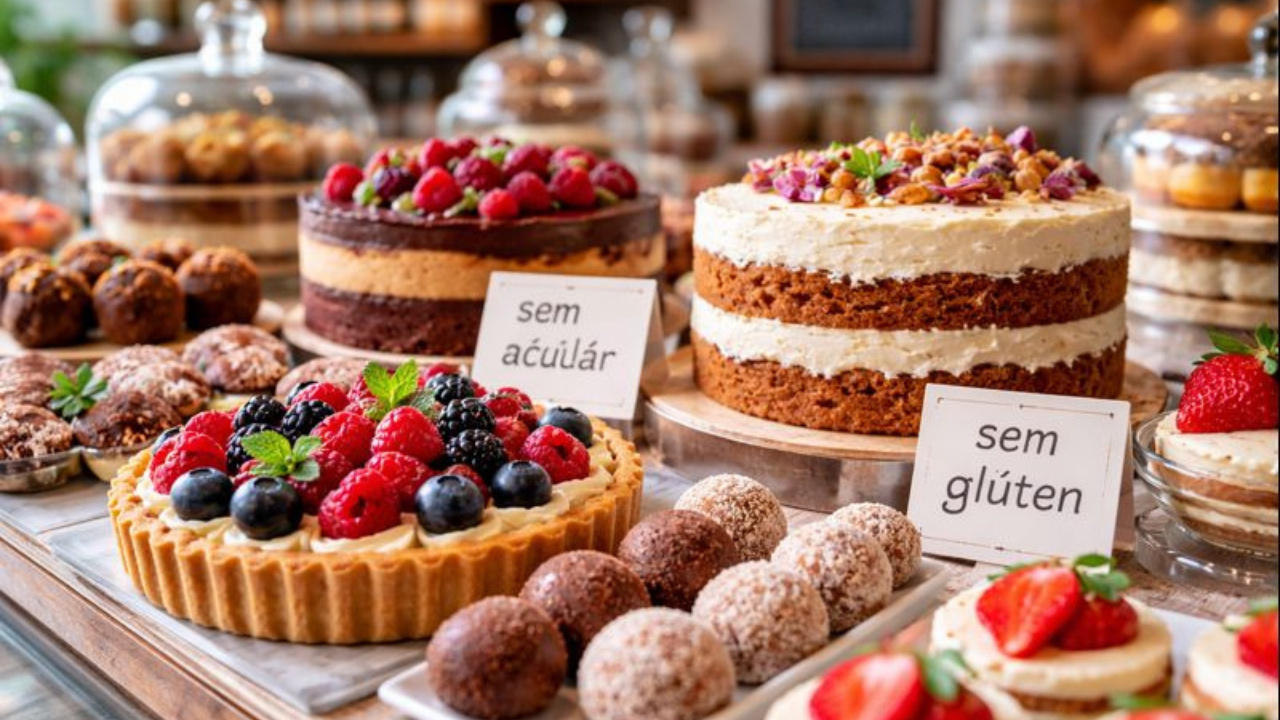
Inclusive Sweets Strengthen Gluten-Free and Sugar-Free Baking, Opening Space for Profitable and Healthy Businesses.
The expansion of inclusive sweets in Brazil shows how sugar-free and gluten-free baking have ceased to be restricted niches and become a profitable business in healthy eating.
This movement is led by entrepreneurs who combine technique, purpose, and the growing demand from consumers seeking sweets for diabetics and those with dietary restrictions.
In Pernambuco, chef Ywri Rafael exemplifies how this transformation takes place in practice by structuring a business that now earns around R$ 45 thousand per month.
-
Unemployment rises again to 5.8% at the beginning of 2026, raising alarms about the end of temporary positions and its impact on the Brazilian job market.

-
Document organization can cut invisible costs in small businesses, a simple step that prevents waste, rework, and losses in daily operations.

-
Chinese giant worth nearly R$ 4 billion that manufactures cables for electric cars, solar energy, and robotics wants to open a factory in SC.

-
Many employers do not know, but the law guarantees domestic workers a 25% increase in salary during trips, 50% for overtime, 20% for night shifts, and 17 additional benefits that can lead to labor lawsuits if not paid.

The change occurs in a scenario where more and more Brazilians live with intolerances, allergies, or diseases such as diabetes. Therefore, traditional products undergo profound adaptations without compromising flavor, texture, and presentation.
This new profile of baking addresses not only a health need but also a real economic opportunity.
Inclusive Sweets Gain Space in Sugar-Free Baking
Inclusive sweets emerge as a direct response to the food exclusion experienced by millions of people.
For years, consumers with restrictions had to give up the sweet moment, whether due to gluten, lactose, or refined sugar.
In this context, sugar-free baking strengthens by offering safe and, at the same time, appealing desserts.
The differential lies in going beyond the “diet” label and delivering a complete experience, something that attracts both those who need it and those who choose a more balanced diet.
Gluten-Free Baking and Sweets for Diabetics with Flavor and Technique
The basis of gluten-free baking requires study and adaptation.
In Ywri’s case, wheat flour was replaced with cassava flour, a traditional and accessible ingredient in the Northeast.
The sweetness comes from isolated cassava fiber, a byproduct that behaves like sugar in preparations but does not raise blood glucose levels.
According to the chef, this fiber acts similarly to sugar in the dough structure, ensuring tenderness, balance, and stability.
“The result is cakes, pies, and sweets that deliver a complete experience of flavor, balance, and texture without restrictive ingredients,” he explains.
Moreover, this technique allows for the production of sweets for diabetics that do not cause glucose spikes, enhancing food safety and consumer confidence.
From Family Need to Profitable Business in Healthy Eating
The origin of the enterprise is linked to a personal need.
The turning point occurred when Ywri discovered that his mother had become diabetic, right at the time he was studying gastronomy in Paraná.
Facing the challenge, he decided to return to Pernambuco to research alternatives that would allow her to safely consume sweets again.
What started as a family gesture transformed into a profitable business in healthy eating.
With just R$ 70, the chef began making cassava cake at home and selling it on the beaches of Recife.
He then migrated to fairs, where he found the ideal audience and solidified his brand through word-of-mouth recommendations.
Structured Growth and Professional Management
The increase in demand required organization.
The business structured production, which was previously artisanal, and began producing about 140 kilograms of dough per week and approximately 200 ready sweets.
To ensure financial sustainability, the chef’s brother, Kauan Thiago, an accounting student, became a partner and took over the administrative management.
He started managing inventory, purchases, spreadsheets, and financial control.
“According to him, the rule is simple: every purchase, whether of ingredients or equipment, needs to be aligned to avoid waste.”
With a clear division between creation and administration, monthly revenue stabilized around R$ 45 thousand.
Inclusive Sweets and the Direct Impact on Customers’ Lives
The feedback from the public goes beyond sales. Many customers report that they have started eating sweets again after years of restriction and food insecurity.
Moreover, others find in sugar-free baking a way to maintain healthy habits without giving up pleasure. This emotional connection strengthens the brand and enhances customer loyalty.
Own Store Reinforces Confidence and Transparency
With the business consolidated in fairs and delivery, the bakery advanced to the opening of its first physical store. The space was planned to be cozy, inspired by a grandmother’s house.
The glass kitchen allows customers to follow the entire production process.
Moreover, for those who depend on trust when consuming inclusive sweets, transparency is an essential part of the experience.
Inclusive Sweets Prove That Inclusion Also Generates Profit
Ywri Rafael’s journey demonstrates that inclusive sweets, gluten-free baking, and sweets for diabetics are not just a trend but a solid path within healthy eating.
Thus, with technique, purpose, and management, it is possible to turn restrictions into opportunities and build a profitable business in healthy eating that combines inclusion, flavor, and economic viability.







-

-

6 pessoas reagiram a isso.