





 Portuguese
  English
  Spanish
  5 min of reading
  1 comment


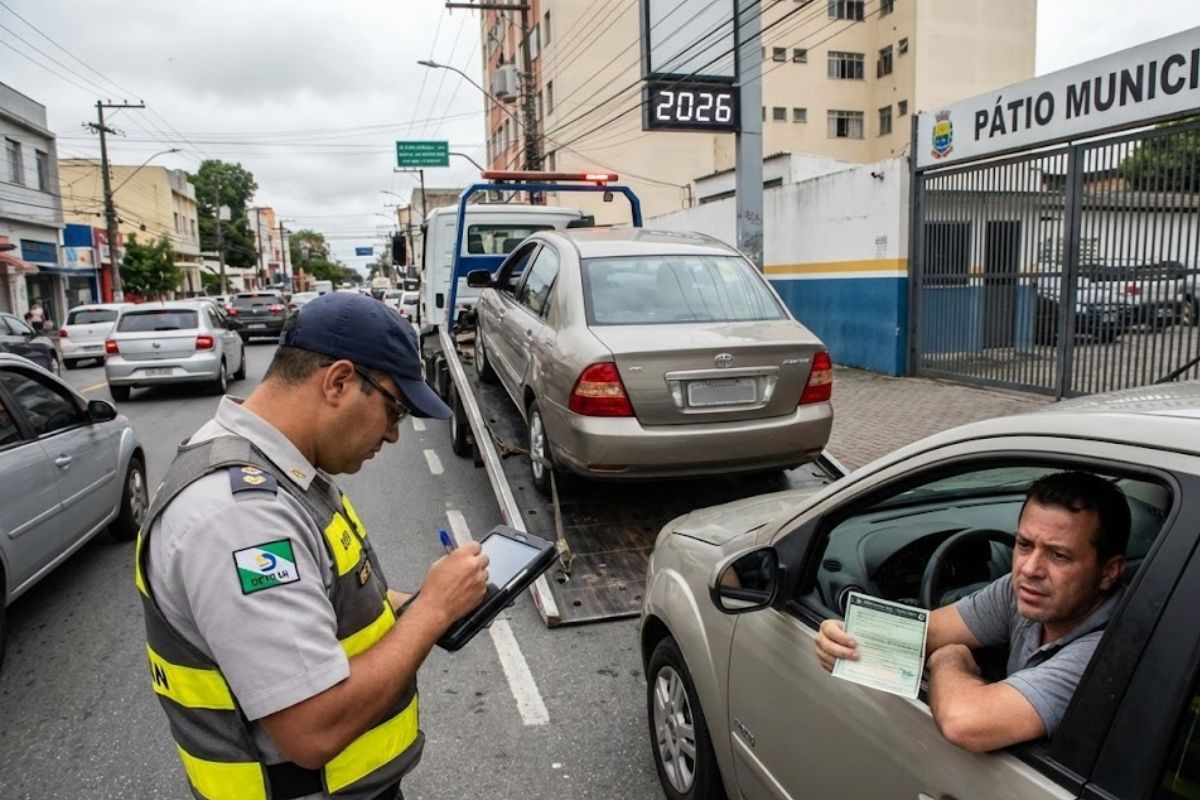


In 2026, Forgetting the Annual Licensing Becomes a Real Risk: the Severe Fine of R$ 293.47 Comes with 7 Points on the Driver’s License, Possibility of Towing, Parking Fees, Transfer Blockage, and Headaches Even for Those Who Have Already Paid the IPVA and Think They Are Current with Everything Paid in Advance.
In 2026, many drivers will enter the year worrying only about the IPVA and forget that it is the Annual Licensing that usually incurs the most painful fine during routine checkpoints. When the CRLV expires and is not renewed, the car becomes irregular in the system the day after the deadline set by Detran, even if it is in perfect mechanical condition.
Even with everything in order mechanically and the tax paid, the Brazilian Traffic Code considers it a severe offense to drive without licensing. The result is direct: fine of R$ 293.47, 7 points on the driver’s license, and real possibility of towing and impound, disrupting the driver’s day and tightening the family’s budget.
Why the Annual Licensing is the Most Critical Document for the Car
Unlike the driver’s license, which has a long validity and is usually renewed every few years, the Vehicle Registration and Licensing Certificate must be updated every year.
-
The Senate approves a bill that criminalizes misogyny, hatred, or aversion towards women, and includes the crime in the Racism Law with a penalty of up to 5 years.

-
Chamber Approves Bill That Allows Pepper Spray for Women Over 16 and Imposes Strict Rules for Purchase, Possession, and Use as Self-Defense

-
Chamber Approves Law to Combat Leucaena, Fast-Growing Plant That Dominates Land and Threatens Native Species in Various Regions of the Country

-
Asset Division: Know What Cannot Be Divided in Case of Divorce


It proves that the vehicle is authorized to circulate on public roads.
Without current licensing, the car is technically prohibited from driving, even if it is serviced, has new tires, and is in perfect order.
In inspections, what matters is what appears in Detran’s system, not the visual impression that the vehicle is well-maintained.
When the officer checks the plate and finds a delay, the consequence is automatic: the fine is issued, 7 points go to the owner’s driver’s license, and the vehicle may be towed, generating even more costs with towing and storage fees.
No Grace Period: How Inspections Handle Expired Documents
One of the most common confusions is mixing the rules of the driver’s license with the rules of the vehicle document.
The license has a grace period after expiration, but this logic does not apply to Annual Licensing.
For licensing, there is no grace period after the deadline set by Detran. The day after the indicated expiration date for the last digit of the license plate, the car is already considered irregular.
If the driver is stopped at a checkpoint, the system will show the delay and the fine will be issued immediately, with no room for negotiation.
In some situations, the driver tries to resolve it by paying the debt immediately through a banking app while still stopped at the checkpoint.
However, the update in the system is not always instant, especially on weekends or outside banking hours.
At those times, even with the payment made, the risk of towing and impound remains very high.
IPVA Current, but Guaranteed Fine: When the Car Remains Irregular
Another very common mistake is thinking that paid IPVA means the car is free to drive.
In practice, to issue the updated CRLV for 2026, the system requires the settlement of all debts linked to the vehicle:
- IPVA
- Outstanding Traffic Fines
- DPVAT Insurance, if the charge is active
- Licensing Fee
Many owners only pay the tax at the beginning of the year and forget about the document issuance fee, believing the car is regular.
This simple oversight is one of the main causes of being stopped with fines for expired licensing and vehicle seizure at checkpoints.
In addition to the immediate headache, there is another heavy side effect: without current licensing, the car cannot be transferred to another owner.
This halts sales, disrupts financing, and may cause the buyer to back out of the deal upon seeing the irregular status in the system.
CRLV-e on Cell Phone: How to Prove That the Vehicle is Licensed
The old green paper document has been replaced by the CRLV-e, the fully digital version of the licensing.
After paying all debts and the corresponding fee, the driver must download the new document in the Digital Transit Wallet (CDT) app.
Those who prefer can print the CRLV-e on standard A4 paper and keep it in the glove compartment, as long as it is the updated version.
The important thing is to always have a quick way to prove the vehicle’s regular status during inspections.
The best strategy is simple: before traveling or hitting the road, open the app and check the Licensing field.
If the displayed year is not the current year required by Detran, it’s a clear sign that you run the risk of severe fines and impound if stopped.
Some basic precautions help shield your wallet and avoid unpleasant surprises in 2026:
- Local Calendar: check your state’s Detran website and verify the expiration dates for licensing according to the last digit of the plate. Each federal unit has its own schedule.
- Full Payment: do not confuse paid IPVA with licensed car. Besides the tax, it is mandatory to pay the licensing fee and any outstanding traffic fines to release the CRLV.
- Mandatory Carrying: keep the CRLV-e updated on your cell phone, with offline access, or bring a printed copy in the vehicle. Having the document handy reduces disputes and speeds up the approach in any checkpoint.
Following this simple step-by-step avoids the most dangerous combination for drivers in 2026: expired licensing, heavy fines and car impound, even with IPVA current and the vehicle running perfectly.
And you, have you checked if your car’s licensing is updated for 2026 or do you still run the risk of discovering the fine only when stopped at a checkpoint?









Pais amaldiçoado