





 Portuguese
  English
  Spanish
  4 min of reading
  1 comment





Report Exposes How Company Linked to Communist Regime Sells Complete Digital Surveillance Packages, Collects Data on Foreign Citizens, and Installs Repression Systems in Countries Like Kazakhstan and Ethiopia — Expanding the Reach of Chinese Censorship
The export of Chinese censorship has ceased to be a theory and has become a reality. Leaked documents revealed that a company connected to the communist regime sells complete digital surveillance systems to foreign governments, including installation, operation, and even data collection.
According to a report on China in Focus, a program by Epoch Times Brazil, the investigation mentions contracts signed with countries such as Pakistan, Ethiopia, and Kazakhstan, in addition to warning that the data collected may be sent to institutions within China. The discovery raises global concerns about the silent advance of digital repression beyond Chinese borders.
Report Links Chinese Company to International Censorship
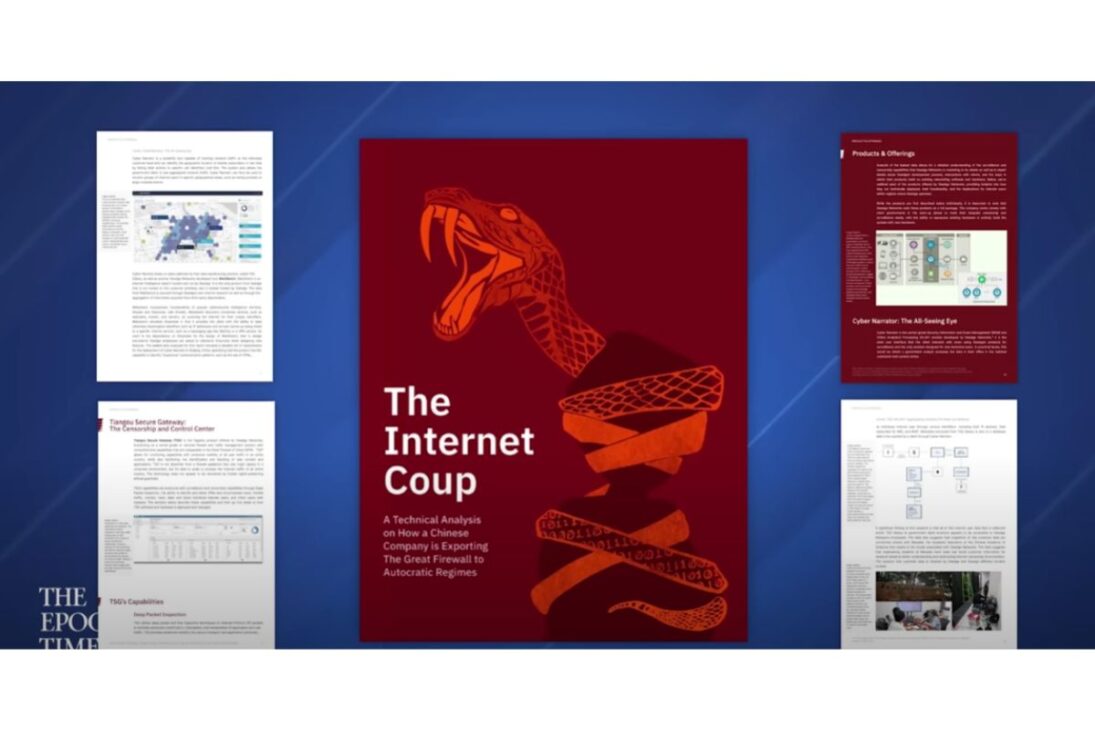
More than 100,000 leaked documents from the Chinese company Gadget Networks confirm that it is selling complete censorship systems to foreign governments.
-
How to build a floating island from scratch with reeds, giant blocks, and stakes in the lake in a process that needs to be repeated almost every day.

-
A forgotten cord on the floor of a basement in Vienna leads a plumber to a box containing 30 kilograms of gold with Mozart’s face, hidden before World War II. The treasure, worth 2.3 million euros, was just centimeters away from a worker who ignored the sign a day earlier.

-
A couple buys an old chalet, breaks the kitchen floor for renovation, and finds over a thousand coins of gold and silver hidden since the English Civil War over 4 centuries ago.

-
Rigid bags with their days numbered: new trend prioritizes comfort in 2026.


The revelation was made by researchers from the Interseclab, with support from human rights organizations.
The company offers everything from controlling what the population can access on the internet to geographical tracking of protesters.
The collection and analysis of this data occurs in direct cooperation with the Chinese government, which reinforces the allegation that the data may be used to refine repression methods.
Export of Chinese Censorship Is Already in Operation
The report indicates that the systems have already been adopted by countries such as Ethiopia, Kazakhstan, and Pakistan, as well as other unidentified governments.
The offer includes sophisticated software such as Cyber Narrator, which tracks protesters in real time, and TSG Galaxy, capable of cutting internet access based on scores assigned to online behavior.
According to the documents, within months the company achieved results that local governments could not in years.
This accelerates and standardizes the implementation of censorship, making digital repression more effective and global.
Ready-Made Solutions for Digital Censorship and Repression
Among the tools offered, the Cyber Narrator stands out, described as “the all-seeing eye.”
It tracks individuals via cell phone, identifies whether they are locals, visitors, or “potential threats,” and can cross-reference this information with activities on social networks.
The TSG Galaxy stores browsing data, call history, and monitors activities on VPNs.
Based on this, the system assigns individual scores that allow for total internet access cuts, in addition to being able to infect devices with malware and block specific applications.
Foreign Data in the Hands of Chinese Institutions
The report warns that the data captured by these systems is shared with institutions like the Chinese Academy of Sciences, which collaborates with digital repression in the country.
Researchers claim that Chinese students are already using this information to improve surveillance algorithms.
This cooperation jeopardizes the digital sovereignty of countries that adopt these systems.
Governments hiring the Chinese company may unknowingly be feeding the databases of the Chinese Communist Party.
Chinese Technology Was Built on Western Foundations
The Associated Press revealed that part of this surveillance infrastructure is based on technology provided by American companies over the past decades.
The systems have been adapted and used to persecute minorities, such as the religious group Falun Gong, frequently repressed within China.
The Interseclab points out that the Chinese company often copied Western solutions, adapting them for repressive use.
This reverse engineering made the solutions cheaper and more attractive to authoritarian governments looking to implement local censorship.
Chinese Regime Continues to Tighten Internal Control
In China, digital repression is already longstanding. The “Great Firewall,” created in 1999, blocks access to foreign sites, VPNs, and social networks like Google, Facebook, and X.
It is estimated that between 20 to 30 million Chinese use VPNs to access external information.
The government, however, has rigorously pursued users and sellers of VPNs. In 2017, young people were arrested just for sharing information on how to circumvent censorship.
Even foreigners visiting China are targeted by surveillance systems disguised as “access facilitation”.
VPNs for Foreigners: Freedom or Surveillance Trap?


Foreigners receive different treatment. At Shanghai airport, agents offer ready-to-use VPNs to tourists, promising free internet access.
According to analysts, the goal would be to maintain a friendly image for international investors and journalists.
However, experts warn: these “official” VPNs are monitored.
The Ministry of Public Security in China requires registration and can use these accesses to collect personal data from foreigners in real-time. In other words, superficial freedom with underlying surveillance.
Do you believe that this export of Chinese censorship represents a real threat to global digital freedom? Have you imagined such systems being installed in Brazil? Leave your opinion in the comments — we want to hear from those who live this experience.









I have been browsing online more than three hours today yet I never found any interesting article like yours It is pretty worth enough for me In my view if all website owners and bloggers made good content as you did the internet will be a lot more useful than ever before