





 Portuguese
  English
  Spanish
  8 min of reading
  0 comments


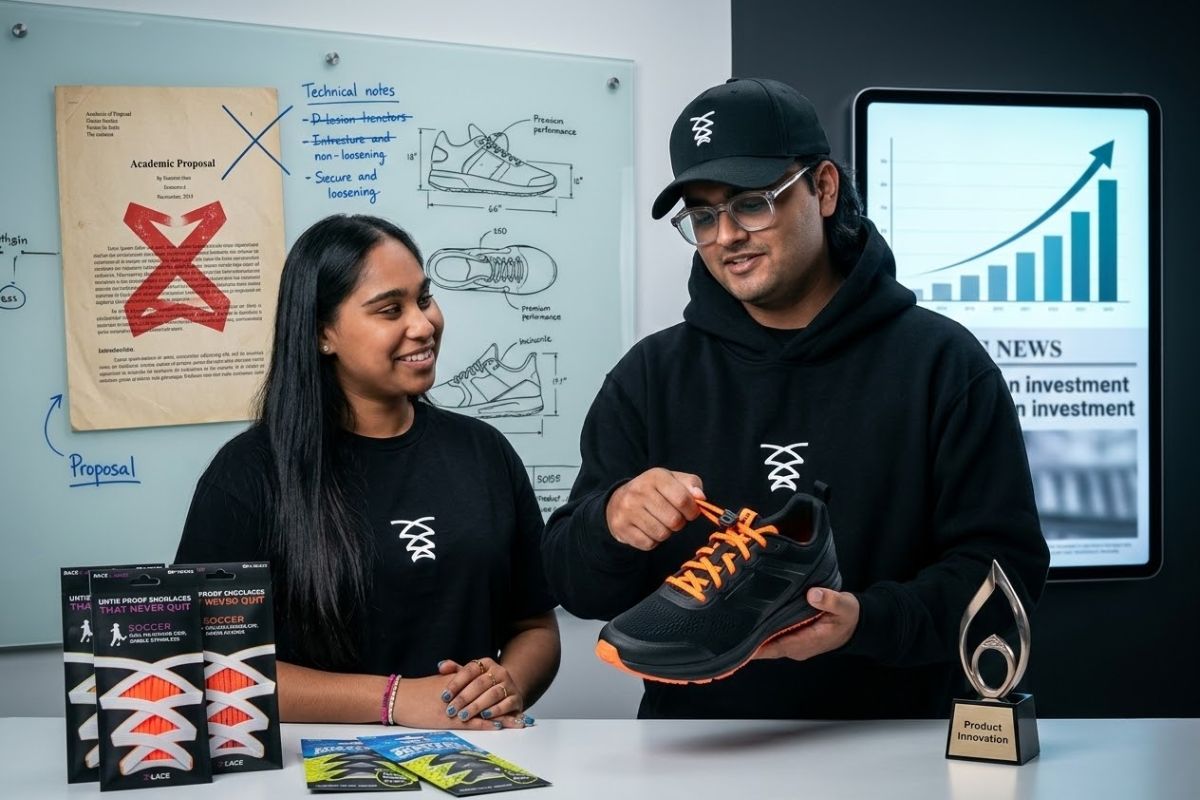
The Innovative Shoelace Company Created by Two Students from Michigan State University Emerged from a Failed Academic Project, Evolved Based on Materials Science, Became a Proof of Concept for Proprietary Technology, and Attracted Investors Leading to a Million-Dollar Deal After Appearing on Shark Tank on TV.
The innovative shoelace company created by two students from Michigan State University emerged from a point that could have hindered any entrepreneurial ambition: failing an academic assignment. Instead of abandoning the proposal, the students decided to move forward, refine the idea, and turn it into a practical solution for a common problem affecting athletes, students, workers, and anyone who relies on a secure fit in their shoes.
What seemed like a university failure became a turning point. The proposal evolved, gained technical grounding, was presented as a materials technology with real application, and ultimately reached Shark Tank, where the initiative received enough attention to culminate in a million-dollar deal. The power of this journey lies precisely in the contrast between the initial disbelief and the subsequent validation.
When Rejection Stops Being a Final Point
The story begins within Michigan State University, where two students in STEM-related fields, particularly with backgrounds in materials science, presented a project that did not convince in the academic environment at that first moment.
-
In Mexico, a 3,000-year-old Maya site with the dimensions of an entire city may have been built as a colossal map of the cosmos, created to represent the order of the universe and reveal how this people organized space, time, and rituals.

-
Japan wants to build a solar ring of 10,900 kilometers on the Moon to continuously send energy to Earth.

-
Weighing almost 1 ton, with temperatures of up to 3,000°C, the ability to launch 10,000 fragments within a radius of 1 km, capable of penetrating concrete and melting steel, Turkey’s terrifying bomb emerges as one of the most destructive non-nuclear weapons ever presented.

-
After a submarine disappeared beneath the “Doomsday Glacier,” scientists announce a new monstrous machine capable of operating at 3,000 meters depth to return to the heart of the ice and investigate a threat that could raise sea levels worldwide.

The negative evaluation could have buried the initiative, as happens with countless ideas that remain within the classroom walls. However, in this case, the rejection did not erase the project’s potential. It forced the creators to better test the proposal, refine the product’s utility, and understand where the real value lay in what they had imagined.
This detail completely changes the interpretation of the case. It is not merely about “turning a mistake into success,” but about recognizing that the initial rejection helped redefine the proposal’s focus. The students themselves acknowledged that they might not have pushed forward had they not been rejected.
The criticism, in this context, functioned as a trigger to deepen the idea, rather than a definitive sentence. Instead of insisting on a poorly received presentation, they remodeled the concept until it reached a clearer, more functional version with market appeal.
It is also notable that, according to reports, the professors transitioned from skeptical evaluators to supporters of the initiative. Some even became investors, highlighting the extent of the turnaround. This shows how the academic environment, even when failing to recognize a proposal at first, can still become a space for later validation. The central point is not the grade received, but what was done afterward.
How the Innovative Shoelace Company Works
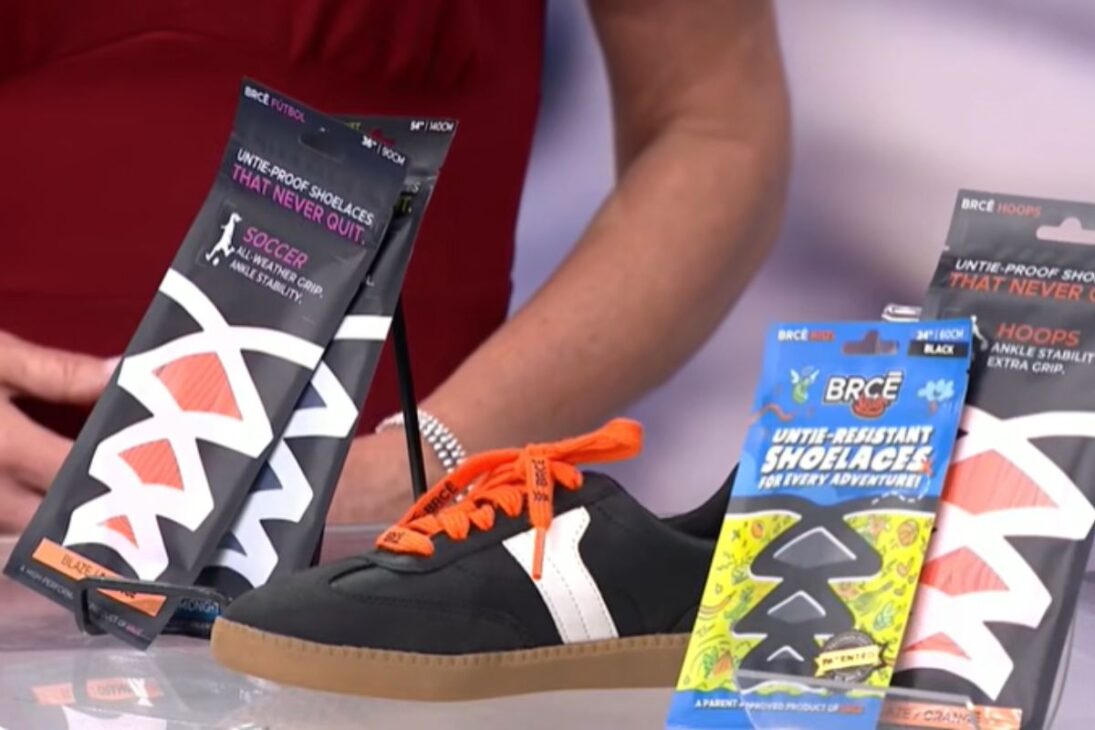
The product that brought the startup into the spotlight is, at first glance, simple: shoelaces that do not untie by themselves. But the difference lies precisely in transforming a mundane object into a functional solution based on materials engineering.
According to the explanation provided by the creators, the shoelaces maintain a similar appearance and feel to conventional models, which avoids strangeness for the user. The difference appears on a microscopic scale.
At this scale, the material operates with a type of mechanical interlocking compared to Velcro. Small grooves or protrusions interconnect when the shoelace is tied, creating a lock that prevents the knot from easily coming undone during movement.
Walking, running, or changing direction would not favor loosening the knot; on the contrary, continuous use helps maintain the firmness of the fit. The innovation is not in reinventing the act of tying, but in redesigning the material’s behavior once the knot is made.
This point is crucial because the product preserves the logic of use that people already know. It is not about completely replacing the shoelace with another system, nor requiring complex adaptation. The students state that, despite the locking mechanism, the user can still remove the knot by pulling the ends, just as they would with a regular shoelace. In other words, the proposal combines familiarity of use with greater stability, a balance that is often decisive for the adoption of new products.
The Real Problem the Startup Decided to Face
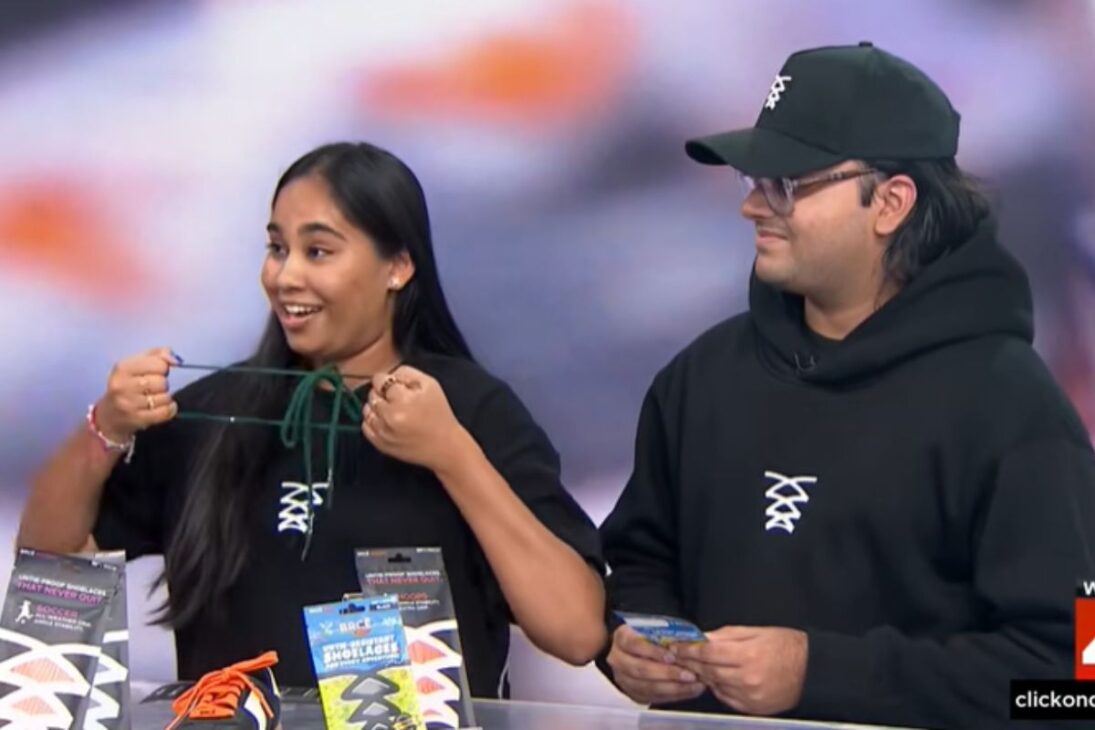
The innovative shoelace company was not built solely around a lab curiosity. It was presented as a response to a concrete problem: the risk associated with poorly fitting footwear or shoelaces that come undone during use.
In the creators’ narrative, this detail can be particularly relevant in sports environments, where sudden changes in direction, speed, and impact require constant stability of the foot within the shoe.
The students relate this issue to lateral support and the risk of ankle injuries, which they point out as a recurring problem in sports and other activities. The idea, therefore, is not only to prevent the discomfort of having to stop and tie their shoes again. The goal is to maintain the fit for a longer period, reduce instability, and make usage safer in situations where a small oversight could result in decreased performance or even injury. This transition from daily discomfort to practical functionality gives depth to the proposal.
The personal origin of the idea also helps explain why the project advanced. The creators presented themselves as former athletes who have faced ankle injuries. This means that the problem was not observed from a distance, as a mere market hypothesis. It appeared as a concrete experience.
When an innovation is born from this combination of real-life experience and technical knowledge, the chance of it finding a more consistent path tends to increase because the motivation stops being abstract.
From Shoelace to Proof of Concept for Materials Technology
One of the most relevant points in this journey is the shift in scale of the proposal itself. At a certain point, the students make it clear that the shoelaces are just the first proof of concept for something larger. The startup, according to the explanation presented, has ceased to be merely a brand of accessories and is being treated as a proprietary materials technology company. This is an important leap because it shifts the focus from the final object to the technological platform behind it.
In practice, this means that the value of the innovative shoelace company is not only in the finished product, but in the manufacturing logic, the treatment of polymers, and the engineering that allows the creation of surfaces with specific mechanical behavior.
The creators state that the innovation starts from common everyday polymers used in clothing and fabrics, which would be treated and extruded to reproduce certain functional properties. The shoelace, in this scenario, becomes the most visible showcase of a technology with broader ambition.
This understanding helps explain why investors might have seen potential beyond the immediate niche. An isolated accessory may attract attention for its practicality. A proprietary materials technology, however, suggests future developments, new applications, and greater expansion capacity.
The founders’ discourse indicates exactly this: the shoelaces would be the beginning, not the limit. For a startup born within the university, this transition is strategic because it elevates the idea from a curious product to the realm of technological platforms with multiplication potential.
Shark Tank as a Public Validation Test
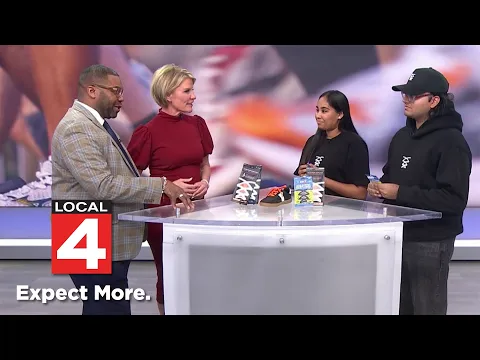

The appearance on Shark Tank was not only a moment of media exposure. It functioned as a public credibility test. The students stated that entering the program was, in itself, the realization of a long-held goal. However, the episode gained even more significance because the initial reception from the investors was not immediately positive.
Most of them, according to the account, showed resistance at first, which again reinforces the pattern of skepticism that has accompanied this story since university.
The scenario changes when their personal story, the determination of the duo, and the consistency of the proposal come into play. From that point on, what was skepticism converts into interest. The one million dollar deal comes to represent more than just a financial investment: it acts as a public validation seal for an idea that was born discredited. It is at this point that the narrative ceases to be merely inspiring and takes on concrete business weight. After all, it is not enough to appear on a business program; it is necessary to convince those willing to invest in the proposal.
There is another relevant element in this process. Shark Tank exposes the idea to a much larger audience than that reached in the classroom or in academic circles. This amplifies the symbolic value of the achievement. A rejected project, when reappears on national television and secures a million-dollar deal, completely alters the perception of what seemed promising or unviable.
What was once seen as too small to thrive is now interpreted as a solution with a market, a strong narrative, and technical backing.
What This Journey Reveals About University Innovation
The innovative shoelace company also offers a broader perspective on innovation in universities. Not every technically promising idea is born ready to convince teachers, investors, and consumers at the same time. Often, the potential exists, but it is poorly formulated, poorly communicated, or still distant from practical application.
This case shows that innovation rarely appears in its final form on the first attempt. It requires refinement, persistence, and, in many cases, a dose of contradiction between the initial judgment and the value that will be recognized later.
There is also an important lesson about simplicity. The startup’s starting point was not a massive piece of equipment, nor a technology difficult to explain to the public. It was a shoelace. But precisely because it is a common object, the challenge becomes more interesting: how to transform something mundane into a more efficient, safer, and smarter product without losing usability? When innovation manages to enhance daily life without complicating it, it tends to gain traction more easily.
In the end, the journey of these students does not diminish the importance of academic evaluation, but it shows that real innovation does not always fit immediately into traditional approval criteria. Some ideas need the shock of rejection to mature.
Others need to leave the school environment to prove they work. And some, like this one, manage to do both: born from an apparent failure and return to the discourse as proof that perseverance, technique, and adaptation can completely reshape the destiny of a proposal.
The story raises an interesting question beyond the specific case: how many ideas are discarded too soon because they have yet to find their strongest form? And, in your view, can a rejection end up pushing a project toward a better path than immediate approval?










-

Uma pessoa reagiu a isso.