





 Portuguese
  English
  Spanish
  9 min of reading
  0 comments


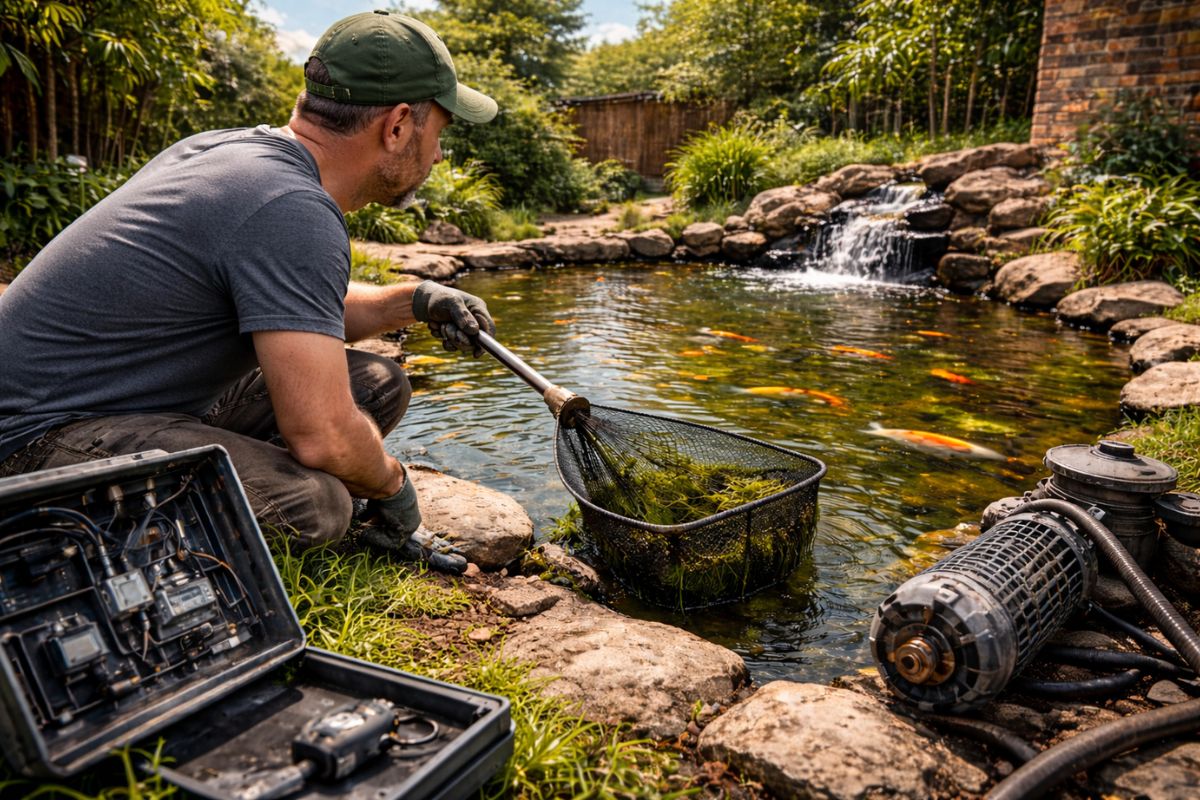
Having a Pond at Home Can Transform the Farm Into a Beautiful and Pleasant Space Year-Round, but It Also Requires Frequent Maintenance, Equipment Replacement, Energy Costs, Attention to Plants, and Preparation for Unexpected Issues That Only Arise After Construction.
Having a pond at home seems, at first glance, to be the perfect definition of tranquility. Crystal-clear water, beautiful landscaping, fish, children playing, and an outdoor area that captures the attention of any visitor. However, after two years, the reality shown by the farm owner makes it clear that the beautiful scenery comes with costs, maintenance routines, and small problems that almost never appear when someone decides to build.
Experience shows that having a pond at home is not just about the construction moment or the initial phase of enchantment. Once everything is ready, expenses begin with filtration, UV lamp, ozone, perlom, deck, plants, lighting, and energy consumption, as well as unexpected situations that require time, adaptation, and patience. The result can be very worthwhile, but only for those who understand from the beginning that beauty and maintenance go hand in hand.
Pond Maintenance at Home Becomes Routine and Cannot Be Ignored
One of the first truths about having a pond at home is that maintenance is not optional. According to reports, the main cleaning is usually done once a month, although during some periods it can be pushed to every two months.
-
New CCR concrete paving technology promises roads up to 3x more durable, less maintenance, and cost reduction in Brazil.

-
Made from recycled plastic, plastic wood is gaining space in the construction industry because it does not rot, resists moisture, and reduces maintenance costs over the years.

-
Florianópolis will receive a million-dollar BRT that will begin construction in 2026 with nearly 400 million in funding from the federal government and the Inter-American Development Bank, and the map already shows the routes for the exclusive bus corridors.

-
Without a blueprint, without an engineer, and using scrap from the dump, a father spends 15 years building an 18-room castle for his daughter, featuring tram tracks, 13 fireplaces, and over 700 m², which may now be demolished.

The process involves shutting off the water flow, directing the system so that the water drains correctly, turning off valves, and starting the replacement of the perlom, which holds much of the accumulated dirt.
Additionally, the owner still performs a general cleaning in the area, washes stones, and, when necessary, scrubs parts of the lining to prevent excess slime and slipping. All of this shows that a pond at home requires regular monitoring, even when there doesn’t seem to be any visible problem on the surface.
This point is important because many people imagine that after it is finished, the pond practically maintains itself. What experience shows is the opposite.
Even in a structure considered small, there is a minimum routine without which the water no longer maintains the same appearance and the system begins to accumulate dirt quickly.
Perlom Becomes a Recurring Cost and Almost Invisible in the Budget
Among the expenses that attract the most attention is the perlom, used to trap debris in the filtration system. In the case shown, this material costs an average of about R$ 150 and needs to be purchased frequently, typically every one to two months.
This means that the pond at home generates a recurring expense that many people don’t even consider when looking solely at the final visual.
There is the option of using washable mats to reduce the need for replacement, but this also brings another problem: the heavy work of removing, washing, and replacing the material. According to the report, cleaning these mats is quite labor-intensive and requires patience.
It is exactly in this type of detail that hidden costs arise. It is not a huge expense in isolation, but it is a continuous cost that becomes part of the routine of those who choose to keep the pond clean and functioning well.
Pond Equipment at Home Also Ages and Requires Replacement
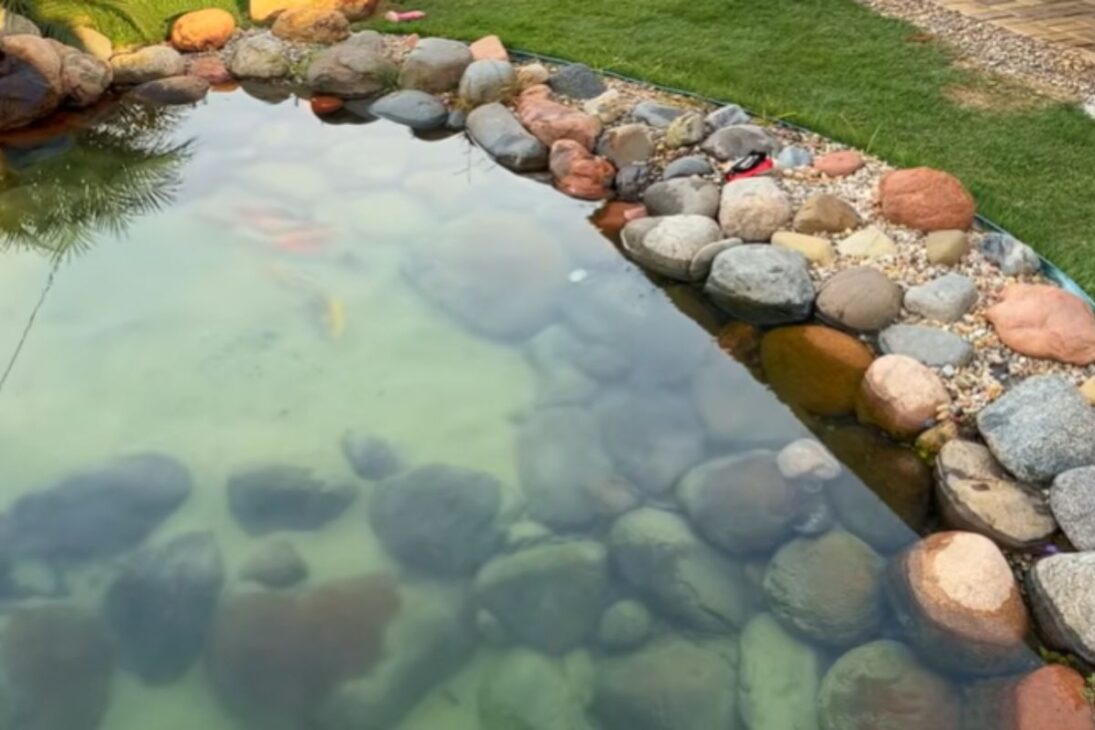
Another important lesson is that the system’s equipment doesn’t last forever. The 95 W UV lamp, responsible for helping to keep the water crystal clear, burned out in less than a year and a half, which surprised the farm owner. He himself says he didn’t imagine that this item would have such a short lifespan.
The ozone system also made the list of unexpected issues. The original equipment had a problem, needed to be taken for maintenance, and was temporarily replaced.
In this case, the final repair cost was not known at the time of the report because the budget had not been returned. Having a pond at home means living with a technical system that, sooner or later, will require paid maintenance or part replacement.
This type of expense weighs heavily because it does not appear as clearly when someone only thinks about construction. The focus is usually on size, finish, and landscaping, but the continuous operation of the pond depends precisely on these less visible components.
Deck and Surrounding Area Also Count
The costs of a pond at home are not limited to water and the filtration system. The surrounding deck, for example, also requires maintenance. In the reported case, the product used to protect the wood costs around R$ 500 per can, and the wear occurred in less than two years.
In addition to color loss, loose screws began to appear, reinforcing the need for review and reapplication of the finish. In other words, the pond does not require care only within the water. Everything that is part of the visual and structural composition surrounding it also enters the budget and requires monitoring.
This is a relevant detail because, in many projects, the deck is a central part of the aesthetic experience. It helps enhance the surroundings but also expands the maintenance of the area as a whole.
Beautiful Plants Also Generate Monthly Expenses
The plants around help transform the pond at home into a more pleasant space integrated with nature, but they also require constant care.
In the report, the monthly cost for fertilization, pruning, and basic management is around R$ 20 per month, an amount considered small but recurring.
Even though it is a modest expense compared to other items, it reinforces the idea that every part of the set requires continuous investment.
The beautiful appearance of the pond does not maintain itself. Healthy, well-cared-for green vegetation depends on fertilizer, pruning, and frequent observation to avoid pests or deterioration.
Energy Bill Increases and Needs to Be Part of the Planning
The most frequent question about a pond at home tends to be the electricity bill. In the reported case, two 25,000-liter-per-hour pumps have been running 24 hours a day for two years, in addition to the UV lamp and ozone unit.
This raised the bill to something between R$ 70 and R$ 80 per month initially, with a more recent projection of something between R$ 85 and R$ 90.
It is not an amount considered absurd by those who live with the pond, especially given the visual effect and the satisfaction of use, but it remains an important fixed cost.
Anyone who decides to build a pond at home needs to understand that the system does not operate intermittently. It relies on continuous operation, and this naturally shows up on the electricity bill.
The good news, according to the report, is that the consumption was deemed acceptable for the project’s size. Still, it needs to be included in the planning to avoid disappointment later on.
Water Bill Surprises Less Than Expected
If electricity increases more noticeably, the water bill brought less shock than imagined. The automatic replenishment system compensates for evaporation with water from the supply, but even so, the monthly difference was considered small.
The total bill is around R$ 120, including not only the pond at home but also aquariums and general use of the farm.
Previously, consumption was around R$ 80 to R$ 90, showing an increase but not an outrageous jump. Water incurs costs, yes, but it did not emerge as the main villain of the monthly budget.
This data breaks a common expectation. Many people assume that the pond will be primarily responsible for an explosive increase in the bill, but the report shows that the heaviest impact actually came from other areas.
Unexpected Problems Arise and Must Be Accepted
After discussing costs, the farm owner delves into the practical problems of having a pond at home. One of the first is the frogs, which began to frequent the area regularly.
In his case, this did not become a major inconvenience, especially since the animals help control scorpions and spiders, but they remain part of the reality.
Another problem comes from the sand in the shallow area, which, with the children’s play, ends up drifting to the deeper area. The result is the need to manually remove this material with a bucket and return it to its original place.
It is a type of maintenance that almost no one imagines before construction, but which comes to exist when everyday use begins.
There was also a loss of fish. One specimen became ill and died after the animals were placed almost all at once. This shows that the decision to introduce aquatic life into the pond enhances the charm but also brings risks and additional responsibilities.
Choosing Plants Can Become a Headache

One point that the report addresses quite clearly is choosing vegetation. Some plants used in the space have been noted as toxic to dogs, while others have thorns that have caused minor accidents with children.
This type of situation reinforces that having a pond at home is not just about aesthetics. The choice of species needs to consider who lives there, such as children and pets. A beautiful plant can become a real problem if it is not compatible with the household routine.
Additionally, nearby trees also bring another side effect. In times of leaf drop, the system receives a larger load of debris, which ends up going to the filter and increasing the cleaning requirement.
Pond Lighting at Home Can Become a Persistent Problem
Among the most frustrating unexpected issues reported is the lighting. The project started with six lamps, but within a few months, several stopped working. After a complete replacement, the problem quickly recurred, and the system continued to show failures.
At the moment described, only three of nine lights were operational, and even then at a weak intensity. This led to the conclusion that it might be necessary to invest in a kit specifically designed for ponds, with a structure better suited for this type of installation.
Pond lighting at home may seem like an aesthetic detail, but when it fails, it directly affects the night experience and generates extra costs.
This is another example of hidden expenses. The problem is not always in the pond itself, but in the complementary systems that are part of the project.
Despite the Problems, the Pond at Home Delivers Benefits Hard to Ignore
Even with so many costs and surprises, the reported balance is positive. The farm owner claims he does not regret choosing a pond over a pool at home. For him, the space looks beautiful year-round, even in the cold, and continues to be a focal point of the property in any season.
He also values the connection with nature, the presence of fish and frogs, and how his daughter interacts with this environment. There is also a sense of peace at night and the social use of the space when visitors and children arrive. The pond becomes a living part of the house, not just a leisure item.
In comparison to a pool, the evaluation is that the pond comes with its own problems but also avoids some costs and headaches typical of chlorine maintenance, green water, and coverings in cold periods.
Pond at Home Is Worth It, but Only for Those Who Are Prepared
The main conclusion from the report is that a pond at home can be very worthwhile, provided the decision is made with awareness.
It is not a structure that is just about the visual charm of the first day or the beautiful effect seen online.
There is monthly maintenance, fixed energy costs, material replacement, risk of equipment failure, care for plants, debris from leaves, attention to fish, and small problems that will arise over time.
Those who build thinking they will have only a beautiful scene may end up disappointed. Those who build knowing they will have work tend to enjoy it much more.
In the presented case, the owner not only says he would do it again, but he also claims he would choose the pond over a pool again.
The difference is that today, he talks about it knowing the behind-the-scenes, the hidden costs, and the real routine that accompanies this type of project.
In your opinion, is having a pond at home more worthwhile than building a pool, or do the costs and unexpected issues weigh too heavily in that choice?








-

-

4 pessoas reagiram a isso.