





 Portuguese
  English
  Spanish
 4 min of reading
  56 comments


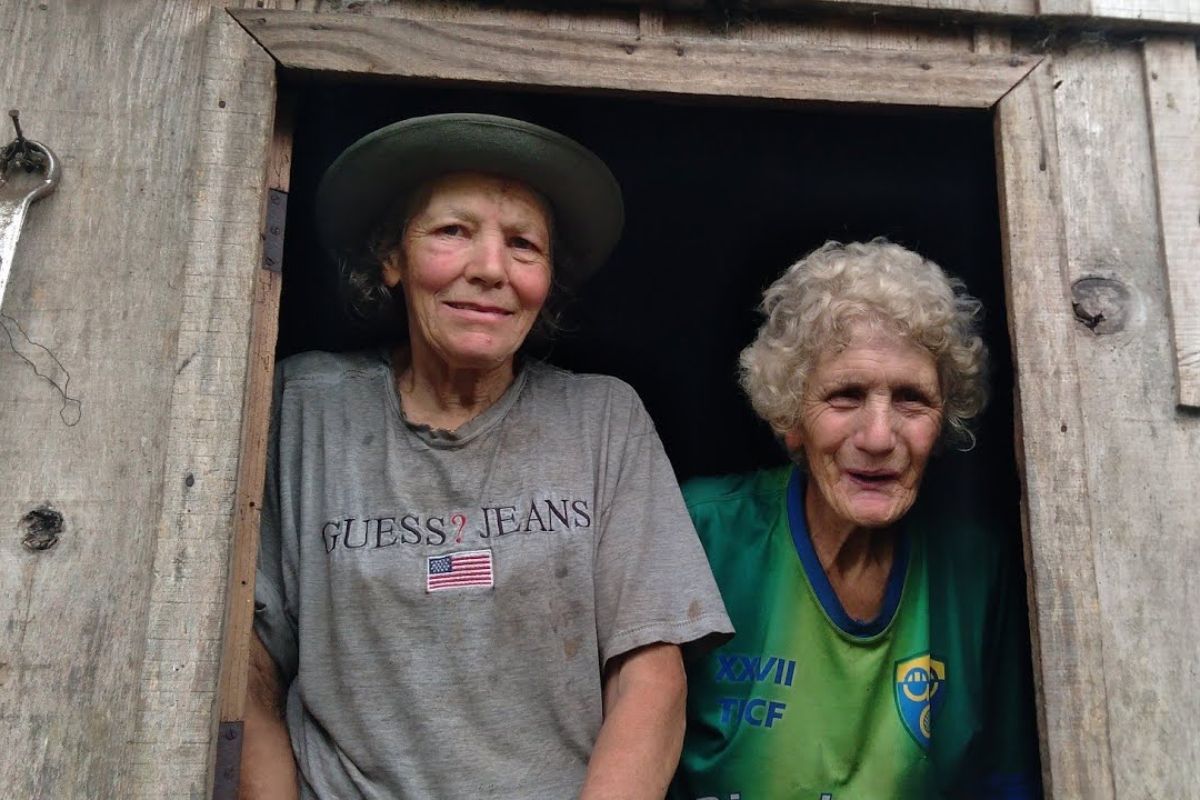


In The Catarinense Mountain Range, Sisters Aged 72 and 73 Live Alone On A Productive Farm, Supported By An Organic Garden Over 1 Hectare, Eggs, Cheese, And Milk Brought To The Weekly Fair. They Reject Industrial Medicines, Trust In Medicinal Plants, And Report Fear Of Isolation And Abandonment Every Day Here.
The sisters aged 72 and 73 live alone in a rural work routine that combines food production with a fixed sales schedule, with a fair once a week. The record was made in the locality of Tencílio Costa, in the Catarinense Mountain Range, where the garden spreads around the house.
In addition to production, they describe self-care based on medicinal plants and state that they do not take “outside medicine,” maintaining a daily green juice. The story also highlights one sister’s journey as a teacher for 28 years before the definitive return to the farm.
What Sustains The Sisters Aged 72 And 73 Living Alone In The Countryside

The sustainability described in the account appears as a daily practice: deriving sustenance from the land, reducing purchases, and maintaining food and income from what comes out of the garden and the fields.
-
Nikola Tesla said that intelligent people tend to have fewer friends, and now science partially confirms this: a study with over 15,000 people showed that for the more intelligent, socializing too much can even reduce life satisfaction.

-
A superyacht worth US$ 17 million is delivered in impeccable condition, sets out to sail, and hits a bridge in the Bahamas just two hours later.

-
Residents of Australia woke up to a sky completely red like blood before the arrival of Cyclone Narelle, which hit the coast with winds of 250 km/h, tearing off roofs and lifting iron dust in a scene they described as apocalyptic.

-
New 100% clean fuel produced in Brazil could retire diesel.


The garden functions as a living stock, with continuous harvesting and varied offerings.
Among the items mentioned to take to the fair are kale, beetroot, green beans, figs, and corn, varying according to the week.
Milk plays a central role in this domestic economy: they milk and take it to the fair, mentioning the preparation of cheese and curd balls as a way to make use of the production.
Weekly Fair: Fixed Commitment And The Pressure Of The Rural Calendar

The fair appears as a rigid routine.
When asked about frequency, the sisters assert that they go to the fair once a week and that there is always something to take.
This regularity forces the garden to deliver in short cycles.
Production turns into a schedule, as what’s ready determines what goes to the stand and what remains for consumption and repurposing.
The logic also serves as a control for losses: what doesn’t sell at the fair can return to the kitchen or be transformed, as happens with the recipes and dairy products mentioned on the farm.
Medicinal Plants And The Choice Not To Use Industrial Medicines

The most striking point of the account is the relationship with health.
The sisters state that they make their own medicine and that they do not take “outside medicine,” describing homemade preparation and a daily morning routine of green juice.
In the cited example, there is the use of elderberry combined with other ingredients in the juice, associated with daily care, including mention of diabetes.
For them, medicinal plants are not a supplement, they are a method. The statement connects food and treatment by asserting that the earth provides food and “medicine.”
Garden Management: Fertilization, Waste Disposal, And The Rule Of Not Burning
The management described includes repurposing waste for fertilizer and the explicit decision not to use fire, refraining from burning organic material on the farm.
There is also a direct critique of pesticides.
The interviewee states that she avoids pesticides in the garden and seeks to keep at least “80%” of more natural food on the plate.
The cost of this path appears in the physical effort: the record mentions difficult weeding and the need for a sharp tool to keep the weeds down, describing the work as continuous.
What Is Planted And What Is Raised On The Farm
Diversity is not limited to vegetables.
The account mentions items such as sweet potatoes, squash, and marigold, reinforcing the variety of harvest and use.
In terms of livestock, there are four cows for milk and birds for egg production, along with references to pigs and calves as part of the farm routine.
Biography: Teacher For 28 Years And Return To The Field
The interviewee presents herself as a primary school teacher and reports teaching for 28 years, often in the countryside, with experience in school gardens to support school meals.
She states that she was born there, left to work in nearby municipalities, and returned to live with her sister, emphasizing that her sister “never left here.”
This background helps explain why the sisters aged 72 and 73 live alone and keep the operation of the farm concentrated on the two of them, even with occasional support from family members living outside.
The Tension Point: Fear Of Isolation And A Call For Appreciation
Even with productive autonomy, the account exposes vulnerability.
The interviewee states that she fears being alone and asks people to value their work and not leave the two isolated.
The request appears alongside environmental concern: she mentions soybean planting in the surrounding area and expresses fear of pollution associated with pesticides, pointing out risks to the garden and health.
The story shows that the autonomy of the sisters aged 72 and 73 living alone rests on four pillars: garden, fair, milk, and medicinal plants.
It works, but requires daily effort and does not eliminate the risk of isolation when the social network around weakens.
If you live near elderly producers, a realistic approach is to buy at the fair, offer logistical help, and strengthen the garden as work and as food.
Do you know any story where the garden, the fair, milk, and medicinal plants sustain the elderly in the countryside?







Deus abençoe essas irmãs e as proteja tsmbem.
Parabéns pras irmãs saúde e força pra terem sempre disposição e fé para permanecerem nessa tarefa.
São muito corajosas. Parabéns! Admirável por ainda dar conta de trabalhar na terra, sem ajuda de alguém. Aparecer nas redes sociais requer outros cuidados, pois há pessoas de má fé que pode se aproveitar por estarem isoladas, e por serem já de idade.