





 Portuguese
  English
  Spanish
  4 min of reading
  0 comments


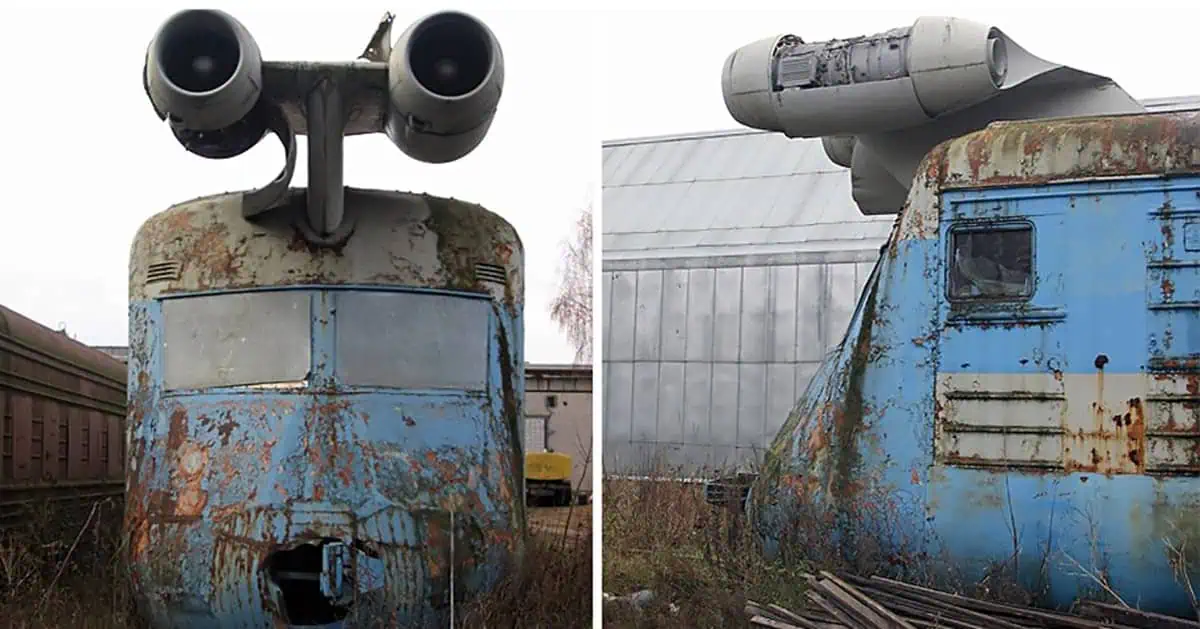
During The Cold War Technology Race, The Soviet Union Decided To Dare With An Unlikely Project: A Jet-Powered Train. The Idea Was To Reach Impressive Speeds, But The Experiment Was Soon Considered Impractical. Decades Later, The Prototype Rusts Silently In A Scrapyard, As A Symbol Of An Era Of Excess And Bold Inventions.
In a factory yard in northern Moscow, a strange rusty car catches attention. It looks like a fusion of a train and an airplane. The nose resembles a fighter jet. On top, two aircraft engines complete the unusual appearance. This is the Speedy Wagon Laboratory, the legendary Soviet jet-powered train.
An idea as bold as it was improbable, which today rests like a ghost from an era marked by the Cold War technology race.
A Crazy Idea Born From Rivalry
In the 1970s, the Soviet Union was still basking in the glow of Yuri Gagarin’s achievement in space. But the focus was not just on the stars.
-
A British startup creates tires that generate electricity in electric vehicles when passing over potholes, speed bumps, and cracks.

-
Scientists have created robots made with living cells that have their own nervous system, swim on their own, explore the environment, and self-organize without any genetic engineering, and now they want to do the same with human cells.

-
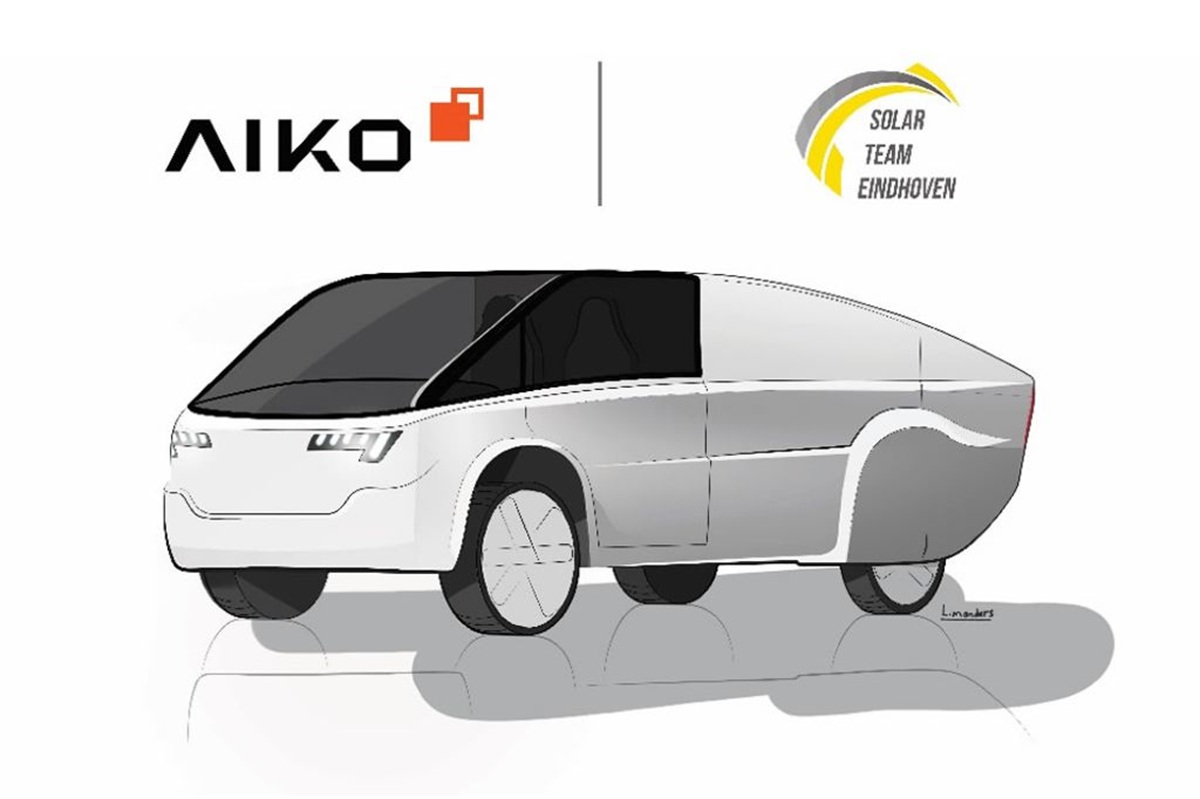
Students create a solar-powered ambulance that operates without a plug, without fuel, and still keeps medical equipment running in remote areas.
-
French “ghost” submarine lost in World War II reappears after more than 80 years on the seabed near the coast of Spain.


There was a competition on firm ground: the rails. While the world talked about Japanese bullet trains, Soviet engineers wanted something even faster.
The inspiration came from across the Atlantic. In 1966, the United States tested the M-497 Black Beetle, a train with jet engines that reached 296 km/h.
The experiment was simple in theory: take a lightweight car and attach two aircraft engines to the front. And it worked. The model was never adopted on a large scale, but it left a mark. Literally.
The Soviets did not want to fall behind. They decided to build their own version. They took an ER22 electric car, adapted two AI-25 turbojet engines from the Yak-40 plane, and thus the Speedy Wagon Laboratory was born.
An experimental train with an aerodynamic nose, tail cone, and reinforced brakes. All to achieve high speeds.
Fast, Loud, And Expensive
The project was bold. And for a time, promising. After tests with models in a wind tunnel, the real train hit the tracks in 1970.
It reached speeds of up to 260 km/h. At the time, it was faster than Japan’s first bullet trains. Quite an achievement.
But problems arose quickly. First, the cost. The jet engines consumed too much fuel. Operating the train became very expensive.
Then, there was stability. Ordinary tracks were not built to withstand jet engine blasts. Minor flaws in the tracks turned into enormous risks. And lastly, the noise.
The jets were so loud that they disturbed those living near the line. It was impossible to sustain such a project for long.
Five Years To The End Of The Line
Still, the Soviets persisted. For five years, they conducted tests, even on public rails. But the reality was harsh.
The Soviet Union’s infrastructure could not keep up with the project’s ambition. The tracks would need to be completely overhauled, with reinforced concrete, for the train to run safely.
At the same time, the country’s economy was already showing signs of difficulty. There were other priorities. The dream of the jet train was sidelined, until it was decommissioned.
In the 1980s, the Speedy Wagon Laboratory was left in a railway yard in Saint Petersburg, where it began to rust. A silent end for a noisy machine.
The American Black Beetle also did not have a long life. But to this day it holds the record for the fastest jet train in North America.
Neither project became commercially viable. They were good ideas on paper, difficult in practice.
A Strange But Useful Legacy
Despite everything, the Soviet experiment left a legacy. The data collected from the tests helped in the development of high-speed trains in the future. An example is the Troika trains, used in Russia years later.
In 2008, the front part of the train was restored. It received new paint and was placed on a pedestal, in front of the Tver Carriage Works factory.
It became a monument. A reminder of a time when engineers tried to push boundaries, even without knowing exactly where to.
Today, bullet trains are common in countries like Japan, France, and China. They use electricity, modern tracks, and realistic designs.
The Speedy Wagon Laboratory, on the other hand, remains a reminder of when ambition spoke louder than feasibility. A prototype that never became a product. But that dared to accelerate before its time.






-

-

2 pessoas reagiram a isso.