





 Portuguese
  English
  Spanish
  6 min of reading
  0 comments


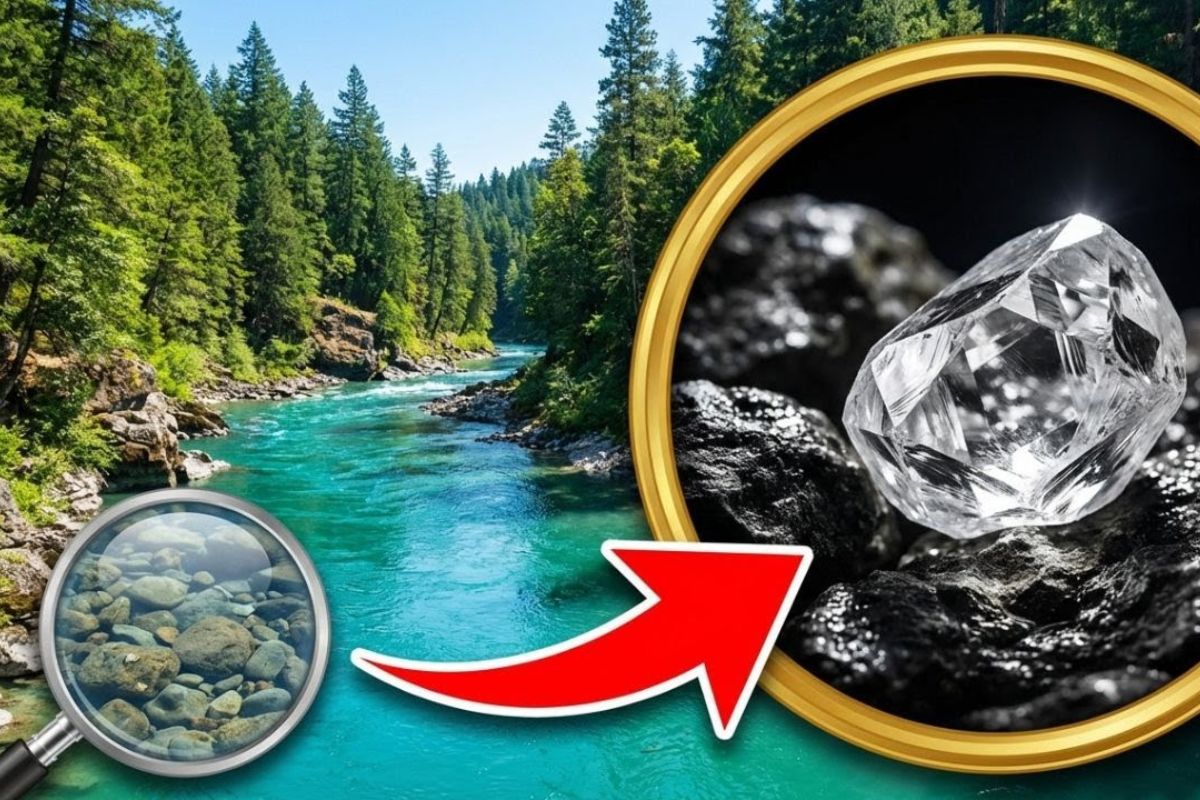
In Flowing Water Rivers, Geology Functions As A Natural Filter: Light Materials Go Ahead, The Heavier Ones Get Stuck In Curves, Cracks And Gravel Bars. It Is At These Points That Gems, Quartz, Topaz, Diamond And Gold Can Appear, Especially After Floods And Receding Water Levels Throughout Brazil.
Millions Of People Cross Rivers And Waterfalls Without Imagining That The Riverbed Can Concentrate Gems, Especially Where The Current Curves, Creates Whirlpools And Deposits Heavy Gravel. For Prospectors, Geologists And Curious Individuals, The Difference Between “Ordinary Stone” And Gem Starts With Reading The Terrain, Not Luck.
Estimates Attributed To The National Mining Agency Indicate That 80% Of The Brazilian Territory Would Have Potential For The Occurrence Of Gems And Gold In Fluvial Environments. The Explanation Is Geological: More Resistant And Dense Minerals Survive Transportation By Water For Thousands Of Years And Accumulate Where The Energy Of The Current Decreases, As If The River Were Creating An Invisible Map Of Concentration.
Where Water Concentrates Value

In Rivers, The Current Functions As A Sieve By Gravity.
-
Friends have been building a small “town” for 30 years to grow old together, with compact houses, a common area, nature surrounding it, and a collective life project designed for friendship, coexistence, and simplicity.

-
This small town in Germany created its own currency 24 years ago, today it circulates millions per year, is accepted in over 300 stores, and the German government allowed all of this to happen under one condition.

-
Curitiba is shrinking and is expected to lose 97,000 residents by 2050, while inland cities in Paraná such as Sarandi, Araucária, and Toledo are experiencing accelerated growth that is changing the entire state’s map.

-
Tourists were poisoned on Everest in a million-dollar fraud scheme involving helicopters that diverted over $19 million and shocked international authorities.


During Flood Periods, Sediments Are Remobilized; When The Water Recedes, New Gravel Bars Appear And “Reorganize” What Was Buried, Creating Observation Windows That Did Not Exist Weeks Before.
This Mechanism Helps To Understand Why Reports Of Finds Of Gems, Quartz, Topaz, Diamond And Gold Tend To Arise After Heavy Rains.
The Critical Point Is Not The Amount Of Visible Stones, But The Type Of Deposit: Inner Curves, Cracks In The Rock Bed, Depressions And Sections With A Sudden Change In Water Velocity, Where Heavy Materials Get Trapped.
How To Read Gravel: Weight, Color And Shine

The Simplest Reading Starts With Relative Weight. Dense Materials “Sit” At The Bottom Of The Gravel And Resist Natural Washing, While Light Materials Are Pushed Ahead.
Therefore, Deposits With Concentration Of Heavy Minerals Tend To Exhibit Dark Grains, Compact Fragments, And Pebbles Polished By Prolonged Friction.
The Shine Also Provides Clues, But Comes With Traps. Quartz Can Reflect A Lot Yet Still Have Low Commercial Value In Most Cases; Meanwhile, The Raw Diamond May Go Unnoticed If It Is Covered With Film And Mud.
Comparing Pieces In Hand, Observing Against Light And Separating “Water Reflection” From Mineral Shine Is Often More Efficient Than Just Looking For Eye-Catching Color.
Quartz And Topaz: Abundance And Comparative Tests

The Quartz Is Cited As The Most Abundant Gem In Brazilian Rivers And Appears In Varieties Such As Clear, Smoky, Pink, Green, And Blue Crystals.
The Same Reference Indicates That Well-Crystalline Specimens Can Reach R$ 100 Per Kilo For Cutting, While Most Circulates In Lower Ranges, Targeted For Collection And Decoration.
Even In Quartz, There Are Exceptions That Change Interest. Internal Inclusions Can Create Patterns That Enhance The Stone, And The Habit Of Examining Translucent Stones Against The Light Helps Differentiate The Common From The Collectible. Gems Do Not Always “Shout”, Often They Only Appear When The Light Reveals The Interior.
The Topaz Enters As A Leap In Density And Hardness. There Is Mention Of A Density Around 3.5 For Topaz And 2.6 For Quartz, Creating A Sensation Of “Extra Weight” In Similarly Sized Stones, In Addition To Greater Scratch Resistance.
The Quoted Values Range From R$ 100 Per Kilo To Above 1,000 For High-Quality Blue Topaz.
The Imperial Topaz, Associated With Minas Gerais, Is Described As One Of The Most Valuable Gems In The Country, Potentially Exceeding R$ 1,000 Per Gram When Faceted.
Caution Here Is Technical: Color And Shine May Seem Discreet In Raw State, So Golden Hues And Glassy Shine Are Treated As Indicators, Not Guarantees.
Garnet, Sapphire And Diamond: Rarity, Hardness And Risk Of Confusion
The Garnet Appears As A Find That Is Difficult To Confuse When It Emerges In Gravel: Wine Red Color, High Weight For Its Size, And Crystals That Can Become Rounded After Fluvial Wear.
There Is Reference That Translucent And Bright Red Garnets Can Be Worth R$ 200 Per Gram When Cut, With Mention Of Varieties Such As Almandine, Grossular And Spessartine.
Sapphire And Ruby Are Positioned At The Top Of Rarity, Linked To The Corundum Mineral And Hardness 9 On The Mohs Scale. The Reference Notes That In Brazil, These Gems Appear More In Mountainous Areas And Reach Rivers Through Prolonged Erosion, With An Estimated Minimum Price Of R$ 4,000 Per Kilo In Raw State.
The Observable Point Is The High Hardness And Maintenance Of Shine Even After Rolling, As Well As Possible Inclusions With Optical Effects.
The Diamond Is The Most Extraordinary Find And Also The Easiest To Overestimate. There Is A Description Of Frequent Octahedral Shape And Density Around 3.5, In Addition To The Principle That Only Another Diamond Can Scratch A Diamond.
Even When “Popular Tests” Appear, Responsible Reading Avoids Quick Conclusions: Screening Starts With Shine, Shape, Hardness And Behavior In Separation By Gravity, But Confirmation Requires Specialized Assessment.
Gold In The Bed: Gravity, Pan And Retention Points
The Gold, Although Not A Precious Stone, Is An Inevitable Part Of The Conversation About Gems In Rivers. There Is Mention Of Price Around R$ 300 Per Gram In Raw Form And Cases Of Nuggets, Including Reference To A 50g Nugget Sold For R$ 50,000 In 2024.
There Is Also Mention Of A 15% Increase In Artisanal Gold Production In 2025, Reaching 100 Tons Annually, According To The National Mining Agency.
From A Physical Point Of View, The Gold Tends To Concentrate Where The Water Loses Velocity, Being Much Denser Than Common Sediment.
Internal Curves, Inlets, Depressions In The Rock Bed, And Areas Of Meeting Currents Are Described As Retention Points Where Heavy Materials Get Trapped.
The Pan Is Cited As A Traditional Method Of Gravity Separation, Based On Eliminating Light Sediments And Keeping Dense Materials At The Bottom.
Legality, Environmental Impact And Safety: The Side That Almost Nobody Discusses
The Search For Gems In Rivers Has A Clear Legal Limit. There Is Mention That Any Mining Activity, Even Amateur, Requires Authorization From ANM, And That Protected Areas Are Prohibited For Extraction.
This Layer Matters Because The Interest In Gems And Gold Often Grows Faster Than Information About Licenses, Responsibilities And Supervision.
The Environmental Aspect Is Also Sensitive. The Reference Notes That Illegal Mining Pollutes Rivers With Mercury And Mentions That 30% Of Amazon Rivers Would Be Affected According To Ibama Data From 2025.
At The Same Time, The Search For Mineralogy And Mineral Tourism Is Cited As Growing, With An Increase Of 20% In 2025, Reinforcing The Need For Technical Education To Reduce Damage.
There Is Also The Factor Of Physical Safety, Frequently Ignored In The Narrative Of Finds.
Flowing Water, Slippery Stones And Level Variations Require Caution, Planning And Respect For Local Signage. Identifying Minerals Is Different From Extracting, And The Risk Increases When Curiosity Becomes Improvised Excavation.
In The End, The Chance Of Finding Gems, Quartz, Topaz, Diamond And Gold Depends More On Consistency And Reading Of Deposit Than On A “Lucky Day”.
The Same Reference Reminds That Many Amateurs Spend Days Or Weeks Looking For A Single Valuable Piece, And That Basic Knowledge Improves Screening, But Does Not Eliminate Rarity.
When You Pass By A River, What Catches Your Attention The Most: The Shine In The Water Or The Weight Of The Gravel? And If You Have Ever Found Quartz, Topaz, Diamond Or Gold Somewhere, What Detail Made You Trust It Was Not Just An Ordinary Stone, And Where Do You Draw The Line Between Curiosity And Environmental Responsibility?










-

-

2 pessoas reagiram a isso.