





 Portuguese
  English
  Spanish
  10 min of reading
  0 comments


With 56,000 Inhabitants and 2 Million Square Kilometers, the Island Has 80% of Its Territory Covered by Ice, Economy Linked to Fishing and a Race for Critical Minerals. The US Has Had Its Eyes on Greenland Since World War II, and the Melting in the Arctic Exposes Rare Lands, Licenses, and Unprecedented Geopolitical Disputes for Global Power.
The US Has Its Eyes on Greenland at a Time When the Melting of the Arctic Changes the Perspective on Territory, Defense, and Critical Minerals. With About 56,000 Inhabitants in 2 Million Square Kilometers and 80% Covered by Ice, Most of the Population Concentrates on the Southwest Coast, While the Interior Remains Dominated by the Ice Sheet.
At the Same Time, the Economy Heavily Depends on Fishing, Which Represents Over 90% of Exports, but the Melting Opens Access to Rare Lands and Other Critical Minerals. Amid Promises of Revenue, Logistical Obstacles, and Environmental Risks, the Island Becomes a Strategic Piece in a Dispute Involving Denmark, the United States, China, and Mining Companies.
A Huge Island, Few People, and Ice Everywhere

Greenland Appears in the Data as the Largest Island in the World and Also as One of the Least Populated Places on the Planet, with About 56,000 People.
-
From sertanejo star to international investor: Ana Castela invests millions in a mansion in the USA, creates a themed accommodation in Orlando, and shows that the “boiadeira” also wants to grow away from the stage.

-
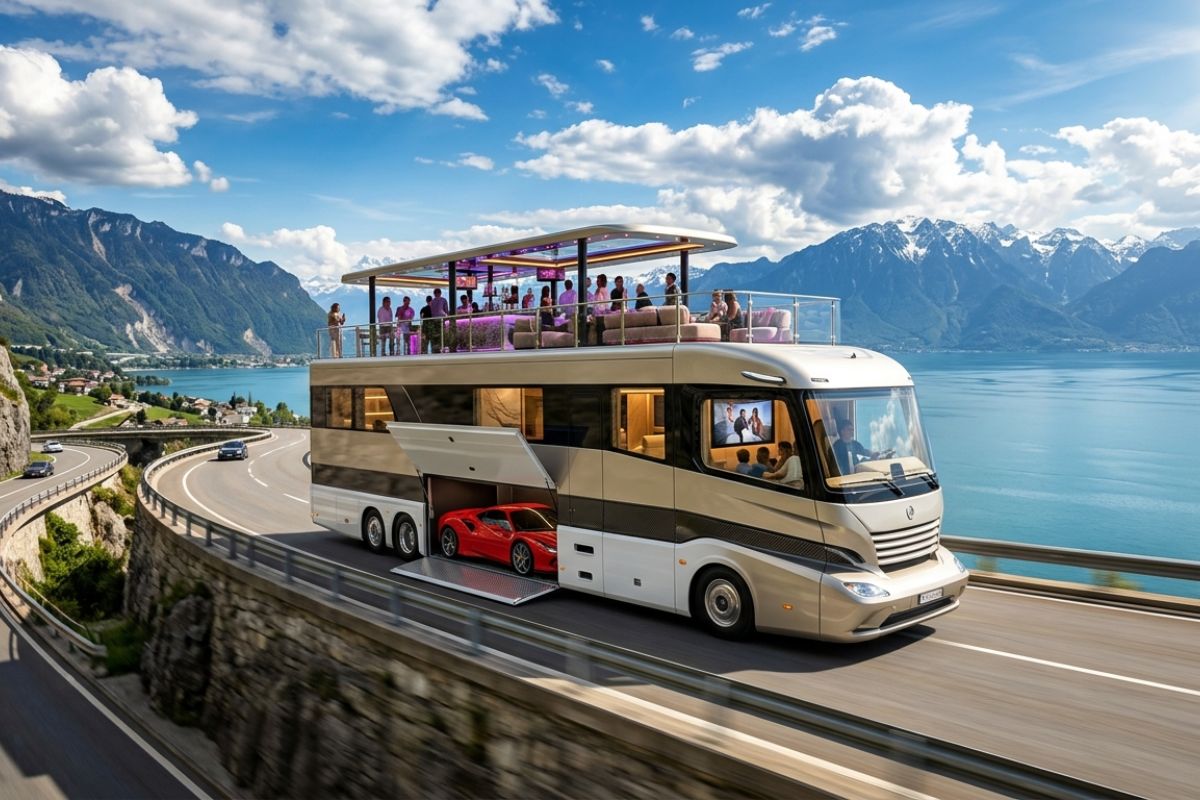
The 10 most stunning motorhomes in the world: a $3 million trailer with a rooftop nightclub and garage for a Ferrari, “palaces on wheels” with Italian marble, private cinema, and five-star hotel luxury for billionaires.
-
Trump wanted to spend $400 million on the White House, but the courts prohibited the million-dollar construction.

-
How the Egyptians erected giant structures like pyramids, temples, and obelisks without modern technology, cranes, or engines still amazes the world and reveals the power of engineering based on ramps, levers, ropes, and colossal organization.

The Territory Covers 2 Million Square Kilometers and Approximately 80% of the Surface Is Covered by Ice, Pushing Cities and Towns to the Coastal Strip, Mainly in the Southwest.
This Physical Landscape Matters Because The Melting Is Not Just a Climate Issue.
In the Arctic, the Retreat of Ice Affects Access, Cost, and Viability of Projects, Including Critical Minerals and Rare Lands.
The Melting Also Changes the Landscape Itself, with Reports of Greener Areas and Wetlands Expanding, Especially Outside the Core of the Ice Sheet.
The Bond with Denmark and the Turning Point of Self-Government

Even Geographically Part of North America, the Island Has Been Under Danish Control for About 300 Years and Was a Colony Until the Mid-20th Century.
In the Account, the Distance to Denmark Is Stated to Be Almost 30,352 Kilometers, a Detail Used to Show How Administration Has Always Involved a Remote Territory.
The Political Turning Point Mentioned Is 2009, When Greenland Gained Self-Government.
From Then On, the Narrative Emphasizes That The Mineral Resources Are Under Local Government Control, Not Denmark’s, a Relevant Point When Discussing Why the US Is Eyeing Greenland and How This Interest Translates into Investment, Licenses, and Influence.
Why the US Has Been Eyeing Greenland Since World War II
The Military Interest Appears as a Historical Thread: During World War II, After Germany Annexed Continental Denmark, the United States Installed Military Bases and Radio Stations in Greenland.
After the War, American Troops Remained, and a Space Base Referred to as Pituffik Began Construction in 1943 and Has Been Used Since 1951.
The Account Also Mentions a Defense Agreement with Denmark in 1951, Which Granted the US an Important Role in Defending the Territory, Including the Right to Build and Maintain Bases.
The Strategic Justification Is Straightforward: In a Nuclear War Scenario, Missiles Could Cross the Arctic Aiming at the US, and the Island’s Position in the Arctic Is Treated as Critical for Warning and Monitoring.
Attempts to Purchase and the Shift in Focus to Critical Minerals
Even Before the Current Debate on Melting and Rare Lands, the Account Points to Attempts at Purchase.
In 1867, After Acquiring Alaska from Russia, the US Tried to Buy Greenland from Denmark Without Agreement. In 1946, the Mentioned Proposal Was 100 Million Dollars, Again Rejected.
During Donald Trump’s First Term, There Is a Record of an Attempt to Purchase, and in 2019, an Agreement with Greenland to Boost the Mining Industry Emerged.
It Is at This Point That the Focus Shifts from Maps to Subsoil: The US Is Eyeing Greenland for Critical Minerals, Especially Rare Lands Linked to Wind Turbines, Electric Cars, and Military Use.
Rare Lands, Cavan Feld, and the Billion-Dollar Bill of a Mine
Experts in Natural Resources Are Cited as Sources of the Assessment That the US Is Likely Keeping an Eye on the Mining Potential, Mainly for Rare Lands in the Southwest.
The Mentioned Deposit Is Cavan Feld, Described as One of the Largest Unexplored Deposits of Rare Lands and Uranium on the Planet, with Concentrations of Metals Like Thorium and Neodymium.
The Deployment Scenario Is Expensive. If the Open-Pit Mine Received the Green Light, the Estimated Cost Would Be Around 7.5 Billion Dollars.
The Indicated Operator Is the Australian Transition Energy Minerals, but the Account Also Highlights That, So Far, There Is No Active Extraction on Site, Even with Mapping and Research Conducted Over the Last Century.
The List of Resources and the Bottleneck of Turning Subsoil into Production
In Addition to Focusing on Rare Lands, the Island Is Described as Rich in Precious Metals, Such as Gold and Platinum, and a Range of Non-Ferrous Metals, Like Zinc, Iron, Copper, Nickel, Cobalt, and Uranium.
Graphite and Associated Deposits Appear, with Areas Not Well Explored in the Northeast and Center, In Addition to Mentions of the Gardar Province in the South and Promising Zones in the South.
Two Numbers Reinforce the Abundance Narrative.
A Danish Study Is Cited as Identifying 31 of the 34 Minerals Classified as Critical by the European Union Found in Greenland, Including Lithium and Titanium.
In Another Count, Greenland Is Described as Having Deposits of 43 of 50 Critical Minerals Used in Various Technologies.
Meanwhile, Experts Estimate That the Demand for Minerals and Metal Resources Could Quadruple by 2040, Increasing the Pressure for Critical Minerals and Rare Lands.
However, the Account Stresses a Contrast: There Is Only One Active Commercial Mine, Called White Mountain, North of the Capital.
The Explanation Involves Decades of Licensing, Extraction, and Transportation, Difficult Processing of Rare Lands Trapped in Complex Minerals and, in Some Cases, Association with Uranium, Which Faces Strict Control on the Island.
Politics, China, Uranium, and the 2021 Turnaround
The Dispute Is Not Just Geological.
The Account Describes That Greenland Leaders in the 2010s Encouraged Foreign Mining Companies’ Interest, Including Chinese Firms, Before Leasing the Project to Transition Energy Minerals.
When the Chinese Shenghe Resources Acquired a Significant Stake in the Company, It Raised Concerns in Denmark, the European Union, and the US, for Fear of Chinese Expansion in the Rare Lands Market.
The Breaking Point Cited Is April 2021.
After Early Elections, a New Government Approved a Law Banning Uranium Mining, and the Same Year Prohibited Further Activity in the Oil and Gas Sectors.
The Interpretation Attributed to the Minister of Natural Resources Is That the Environmental and Climate Impact of More Oil and Gas Extraction Was Too High Compared to the Potential Financial Benefit.
Licenses, Minimum Infrastructure, and the Average Time of 16 Years
Even with Critical Minerals, Greenland Appears as a Place Where Executing Projects Is Slow.
In February 2025, the Given Picture Is of Only One Exploration License with American Participation, While Canada and the UK Together Hold 20 Licenses.
At the Same Time, 100 Blocks for Prospecting Would Have Already Been Issued, Spread Across the Territory, and the Account Mentions Drilling in 170 Locations, Compared to 12 Points a Decade Ago.
The Practical Barrier Is Described in Detail: Opening a Mine in Greenland Takes an Average of 16 Years.
Companies Need to Build Roads and Ports from Scratch Because There Is Almost No Infrastructure.
The Repeated Data Is Less Than 159 Kilometers of Roads on the Island, and Outside Cities, Movement Would Be by Water or Air.
In an Arctic of Strong Winds, Floating Ice, and Communication Failures, the Melting Alters Access but Does Not Eliminate Costs, Delays, and Operational Risks.
Scarce Labor, Low Unemployment, and Pressure for Migrants
The Difficulty Is Not Just in Roads and Ports.
The Account States That the Labor Market Is Extremely Closed, with an Unemployment Rate of Only 2%, and Mentions a Per Capita GDP of US$ 577,000 as an Indicator of High Income in a Small Territory.
The Described Consequence Is Direct: Almost Everyone Is Already Working, and Mining Projects Face a Shortage of Workers.
In This Context, the Expansion of Mining Appears Dependent on Migration.
The Logic Presented Is That, for Greenland to Capture Revenue from Critical Minerals and Rare Lands, It Would Need to Attract Labor from Outside.
The Melting, by Itself, Does Not Solve This Bottleneck, Even When It Changes Physical Access in the Arctic.
Bankruptcies, Abandoned Projects, and Investment Risks
The Account Lists Examples of How Risk Does Not Always Turn into Profit.
The Ruby and Sapphire Mine Associated with Greenland Ruby Reportedly Filed for Bankruptcy in 2023 with a Debt of 71 Million Dollars, Seeking Restructuring and New Investors.
It Is Also Stated That Diamond Searches Over the Years Have Not Found Commercially Viable Deposits.
There Is Also a Political Component.
Transition Energy Minerals, After the Changes of 2021, Halted Plans and Demanded the Right to Develop the Deposit or Compensation Up to 11.5 Billion, an Amount Described as Nearly 10 Times the Country’s Average Annual Budget.
This Shock Reinforces Why Investors Remain Cautious, Even When the Global Discourse on Critical Minerals and Rare Lands Seems Irresistible.
Tanbreeze, Diplomatic Pressure, and the Target of Heavy Rare Lands
In the Most Recent Chapter, American and Danish Authorities Have Reportedly Pressured the Miner Tanbreeze Not to Sell the Largest Rare Metals Depository to Companies Linked to China.
CEO Greg Barnes Is Cited as Having Been Contacted Repeatedly Until He Sold Tanbreeze Mining to the New York-Based Company Critical Metals, in an Agreement Described as Complex and Expected to Be Finalized by the End of This Year.
The Operating Plan Appears with Numbers: Tanbreeze Aims to Mine 500,000 Metric Tons of a Mineral Called Udite Annually, with a Goal for 2026. Barnes Reportedly Received 5 Million Dollars in Cash and 211 Million in Critical Metals Shares, Although the Account States That Chinese Proposals Were Higher.
The Deposit Is Described as Containing About 30% of Heavy Rare Elements, Associated with Defense Purposes, and Critical Metals Has Reportedly Talked with Lockheed Martin and Planned Future Negotiations with RTX.
Investors, Tech Giants, and the Showpiece Effect of Mining
The Dispute for Critical Minerals Has Also Gained a Financial Showcase Component.
The Account States That Bill Gates and Jeff Bezos, Along with Some Trump Allies, Including the Secretary of Commerce, Have Invested in Companies Involved in Mining and Exploration in Greenland.
The Implicit Message Is That the Topic Has Shifted from Geological Niche to the Radar of Great Fortunes and Strategic Industrial Chains.
This Movement Reinforces a Central Point: When the Melting Exposes Opportunities in the Arctic, Rare Lands Projects Become Viewed as Assets of Power, Not Just Ventures.
And It Is in This Climate That the US Is Eyeing Greenland, Trying to Influence the Destiny of Licenses and Projects That Could Supply Energy Transition and Defense.
The Local Reaction and the History of Environmental Contamination
The Population Is Small, but the Internal Debate Is Significant.
The Account Describes That About 56,000 People Live on the Island and That 90% Are Inuit.
Two Concerns Stand Out: Ensuring That Greenlanders Are the Main Financial Beneficiaries and Preventing Mining and Extraction from Increasing Environmental Damage in an Environment Already Pressured by Melting.
The Mining History Is Used as a Warning.
The Account Describes That Tailings and Residual Rock Were Dumped Along Rivers and Coastlines, and Scientists Have Found High Levels of Metals in Various Levels of the Local Food Chain, from Spiders to Fish and Shellfish, Near Dumping Areas.
Recovery Would Be Slow Due to Climate, Low Temperatures, and Low Salinity.
Lead and Zinc Mines Developed in the 1970s Are Cited as Still Contaminated After More Than 50 Years, with Fish, Mussels, and Seaweed Still Testing Positive for Toxins.
Melting, Greener Landscape, and the Mathematics of Ice Loss
The Climate Aspect Comes with Numbers.
The Account States That, Over the Last Three Decades, About 1.6% of the Ice Sheet Has Melted, and This Corresponds to an Area Larger than Wales, Larger than Albania, and Slightly Smaller than Belgium.
In Another Measure, 28,500 km² of Ice Melted Over 30 Years.
The Complete Calculation Presented Is This: the Total Area of the Island Is About 2.16 Million km², and the Ice Sheet Covered 1.76 Million km², About 81%. After the Cited Loss, the Total Coverage Would Drop to 79%.
The Melting Is Also Associated with Rising Sea Levels and the Albedo Effect, with the Exchange of Bright White for Green and Dark Rock Reducing Solar Light Reflection, Which Would Increase Global Warming.
The Base Beneath the Ice, the Nuclear Legacy, and 56 Hidden Lakes
The Arctic Also Carries Military Legacies.
In 2024, While Scanning the Frozen Surface of Northwestern Greenland, a NASA Scientist Reportedly Discovered by Chance a Structure Described as a City Beneath the Ice: the Camp Century Base, Operated from 1959 to 1967.
It Is Associated with the Iceworm Project, Which Planned to Launch Missiles Hidden Inside the Ice Sheet, Idea That Was Not Approved by the Danish Government.
The Problem Noted Is the Legacy.
The Complex Reportedly Used a Nuclear Reactor and Left Radioactive, Chemical, and Biological Waste Beneath the Ice, Expecting It Would Never Melt.
A 2016 Study Is Cited as Estimating That the Ice Sheet Over the Site Could Collapse in 75 Years If Fossil Fuel Use Is Not Controlled, Creating Pressure for Cleanup and Potentially Triggering Political Disputes Between Denmark and the US.
In Aerial Records, the Account Mentions the Identification of 56 Lakes in Greenland That Had Not Been Studied Before, When It Was Believed There Were Only Four in the Area.
Additionally, Subglacial Lakes Are Described as Bodies of Water Beneath the Ice, With Roles in Sea Level and Understanding Water Flow, Ranging from 160 Meters to 5.8 Kilometers.
The Hypothesis Raised Is That More Warming May Transform Surface Melting Water into Lakes and Streams and Activate Subglacial Systems.
What This Board Reveals About Power and Resources
When Everything Is Combined, the Plot Becomes a Map of Pressures: Melting in the Arctic, Critical Minerals, Rare Lands, Minimal Infrastructure, Political Risk, and a Population That Wants Control over Its Territory.
In This Scenario, the US Is Eyeing Greenland for Defense and Access to Strategic Chains, While Trying to Prevent Rare Lands Projects from Falling into China’s Orbit.
To Follow This Topic Clearly, It Is Worth Observing How Licenses, Mining Laws, and Decisions on Uranium Evolve Until 2026, In Addition to the Advancement of Projects Such as Tanbreeze and Environmental Discussions.
In Your View, Will the Melting in the Arctic Weigh Heavier than Critical Minerals and Rare Lands, or Should Geopolitical Dispute Dominate the Future of Greenland?








-

-

-

-

-

28 pessoas reagiram a isso.