





 Portuguese
  English
  Spanish
  4 min of reading
  3 comments


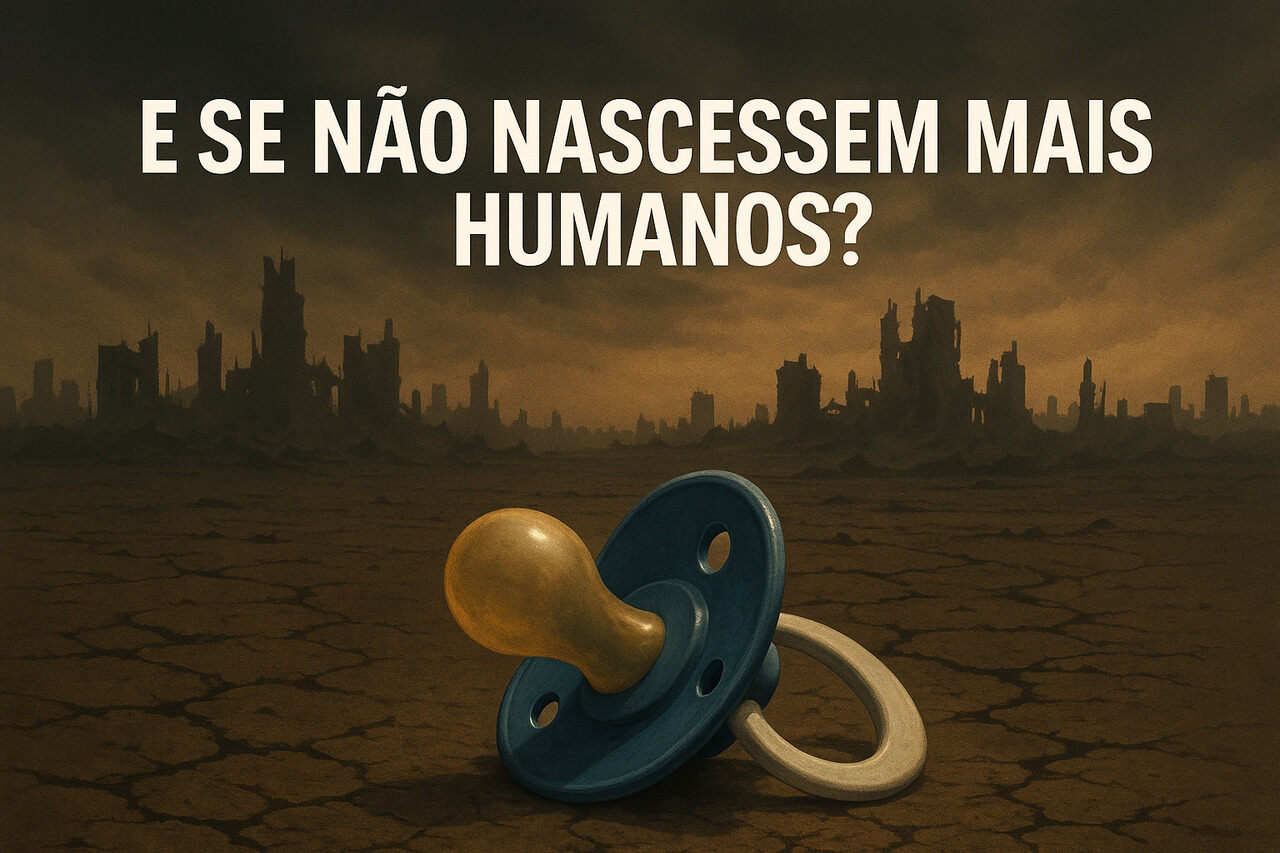


What Would Happen If Humans Stopped Having Children? Experts Warn of Social Collapse, Scarcity, and the End of Civilization in 80 Years
If, for some reason, humans stopped having children all of a sudden, the future of civilization would be threatened. At first, the change would be slow. The elderly would die off, and nobody would be born to replace them. Over the years, this process would lead to social collapse.
The population would decrease gradually. With fewer young people, there would not be enough individuals to perform essential jobs. This would directly affect areas like health, food, and production. Even with fewer mouths to feed, food scarcity would become a reality.
This scenario, according to experts, would lead to the ruin of civilization. Instead of a hundred years, it is likely that there would not be many humans left in 70 or 80 years. There would be a lack of food, drinking water, medicine, and basic items for survival. Common services today would cease to exist.
-
Friends have been building a small “town” for 30 years to grow old together, with compact houses, a common area, nature surrounding it, and a collective life project designed for friendship, coexistence, and simplicity.

-
This small town in Germany created its own currency 24 years ago, today it circulates millions per year, is accepted in over 300 stores, and the German government allowed all of this to happen under one condition.

-
Curitiba is shrinking and is expected to lose 97,000 residents by 2050, while inland cities in Paraná such as Sarandi, Araucária, and Toledo are experiencing accelerated growth that is changing the entire state’s map.

-
Tourists were poisoned on Everest in a million-dollar fraud scheme involving helicopters that diverted over $19 million and shocked international authorities.


The reason? The absence of young people. They are the ones who create, produce, care for others, and keep everything running. Without them, the world would collapse.
Catastrophes and Dystopias
Although it seems unlikely, a sudden halt in births could occur in the event of a catastrophe. One example would be a disease that causes infertility in all people of reproductive age. This type of scenario has already been explored in fiction.
The author Kurt Vonnegut, for example, wrote the book Galápagos, which talks about a world where no one can have children anymore.
Other works also address this. This is the case of The Handmaid’s Tale, by Canadian Margaret Atwood, and The Children of Men, by British P.D. James. Both depict societies facing the end of fertility, with suffering and disorder.
These stories are referred to as dystopian. They take place in difficult futures marked by fear, oppression, and the collapse of order.
From Abundance to Scarcity
During the 1960s and 1970s, the fear was different. Many people believed that the problem would be overpopulation.
The population growth was frightening. Various books and movies depicted a world with too many people and few resources.
Today, the scenario has reversed. The global population continues to grow, but at a slower pace. According to experts, it is expected to reach 10 billion people by the 2080s. In 1974, it was 4 billion. Today, it is 8 billion.
In the United States, for instance, the population is at 342 million. This represents an increase of 200 million since the 1930s. But the numbers could decline. It all depends on the balance between births and deaths.
Fewer Children, More Deaths
In 2024, about 3.6 million babies were born in the U.S. In 2004, there were 4.1 million. At the same time, the number of deaths increased. In 2022, it was 3.3 million, compared to 2.4 million twenty years earlier.
This kind of change requires attention. There must be a balance between young and old. Young people innovate, produce, and drive the economy. Meanwhile, older individuals often need help with basic tasks, such as cooking or dressing.
Many activities also depend on people under 65. These are physical, technical, and even creative jobs. Aging without renewal could affect all sectors.
The number of children per woman has been declining in many countries. This occurs due to personal choice, social, and economic changes. Countries like India and South Korea report more significant declines.
This decline could be offset by immigration. But cultural and political barriers hinder this path. Another point of concern is male fertility, which is also declining. This could worsen the future scenario even further.
The Example of the Neanderthals
The human species, Homo sapiens, has been on Earth for at least 200,000 years. But, like other animals, it is not immune to extinction. A close example is the Neanderthals.
They lived about 400,000 years ago. They coexisted with modern humans but vanished approximately 40,000 years ago. Homo sapiens managed to adapt better, feed their families, and have more children.
If humans were to disappear, other species could thrive. However, this would mean the end of human achievements in science, art, and culture.
To ensure a future, experts advocate for urgent action. Among these are combating climate change and preventing wars.
Moreover, it is essential to protect biodiversity. A planet with many types of animals and plants is healthier for everyone — including humans.
With information from The Conversation.









Quanto mais LGTV menos filhos. É isso. E viva a diversidade!
😅🤣🤣😂😂🤣😅😅😅🤣😂😂😂😅🤣😂😂😂😂🤣🤣🤣😂,se for o caso,so passa sua mãe e irmã,que a gente engravida elas, nao seja por isso gad0 imbeciliz@d0 😂🤣😅🤣😂😂😂
Ahhh,seus pastores ped0s estão conseguindo engravidar as crianças,adorador de pneus hipocrita??????😂😂😅😅😅🤣😂😂😂,so não esqueça de colocar a mãe na roda p gente encher ela de leite
Palhaçada